





- by Natalie Adams
How Long to Steep French Press Coffee for Perfect Flavor
- by Natalie Adams
The standard steep time for French press coffee is 4 minutes. This gives you balanced extraction, enough time to pull rich flavors and oils from your grounds without crossing into bitter, over-extracted territory. After steeping, break the crust that forms on top, skim off the foam, and press slowly to finish.
This guide is for anyone brewing French press at home, in camp, or on the road who wants consistently great coffee without guesswork. Whether you're new to immersion brewing or troubleshooting bitter or weak cups, you'll learn exactly how timing, grind size, and technique work together.
French press brewing is full immersion; your grounds sit directly in hot water the entire time, extracting continuously. Unlike pour-over methods where water flows through and drains away, every second your coffee steeps affects what ends up in your cup.
Steep too short and you'll get weak, sour coffee that tastes underdeveloped. The water hasn't had time to extract the sugars and oils that create body and sweetness. Steep too long and you'll pull out bitter compounds and astringent flavors that overwhelm everything else.
The 4-minute mark hits the sweet spot for most beans and grind sizes. It's long enough to extract the good stuff- the aromatic oils, balanced acidity, and rich mouthfeel that make French press coffee distinctive- without tipping into harsh bitterness. This timing has been the industry consensus for years because it consistently delivers balanced cups across different beans and roast levels.
Start with a 1:15 coffee-to-water ratio by weight; that's roughly 32 grams of coffee to 475 grams of water, though anywhere from 1:14 to 1:16 works depending on your strength preference. Use coarse grounds, similar to the texture of raw sugar or sea salt.
Heat your water to 195–205°F (93°C ± 3°C). If you don't have a thermometer, bring water to a boil and let it sit for 30 seconds. Pour all the water over your grounds, saturating them completely. Place the lid on with the plunger pulled all the way up, and start your timer.
At the 4-minute mark, remove the lid and use a spoon to break the crust of grounds floating on top. Skim off the foam and any loose grounds sitting on the surface; this simple step dramatically reduces sludge in your final cup. Replace the lid and press slowly, taking about 20–30 seconds to depress the plunger. Stop just below the water line rather than compressing the grounds at the bottom, which can agitate sediment.
Pour immediately into your mug or a thermal carafe. Leaving coffee sitting on the grounds continues extraction, leading to bitter, over-extracted coffee within minutes.
Yes, and some brewers prefer it. A 9–10-minute steep is an alternative method that produces lower acidity and a stronger body. This technique, popularized by coffee experts like James Hoffmann, involves steeping for 4 minutes, breaking the crust and skimming, then waiting another 5–6 minutes before pressing.
The extended time allows more complete extraction while the coffee cools slightly, which reduces perceived acidity. You'll get a heavier, more intense cup with less brightness. This works particularly well with darker roasts where you want to emphasize chocolate and caramel notes over fruity acidity.
The trade-off is time; you're committing to a slower morning routine. And if your grind is too fine or your water too hot, that extra time can still push into bitterness. This method requires more precision than the standard 4-minute approach.
In 2026, some French presses now feature double-filter systems that prevent over-extraction even if coffee sits for up to an hour. These designs isolate the brewed coffee from the grounds after pressing, solving the traditional problem of leaving your pot on the counter. But for standard single-filter presses, stick to your target steep time and decant immediately.
Shorter steeps, around 3 minutes, produce brighter, more acidic coffee with lighter body. You're extracting fewer of the heavier compounds, so you'll taste more of the coffee's fruity or floral notes if it's a light roast. The cup will feel thinner and may lack the richness French press is known for.
This can work if you're brewing a naturally bright, high-acidity coffee and want to emphasize those characteristics. But for most beans, 3 minutes leaves you with underdeveloped flavors, sour notes without the balancing sweetness that comes with full extraction.
If you consistently find 4-minute brews too heavy or bitter, the issue is more likely your grind size (too fine) or water temperature (too hot) rather than steep time. Adjusting those variables first usually solves the problem without sacrificing proper extraction.
Grind size is the most important variable after time itself. Coarse grounds, the standard for French press, extract more slowly because water has less surface area to work with. This is why 4 minutes works: it gives coarse particles enough time without over-extracting.
If you grind too fine, you'll over-extract even at 4 minutes. Fine particles have more surface area exposed to water, so they release flavors faster, including bitter compounds you don't want. Your coffee will taste harsh and muddy, and you'll get more sediment in your cup. The solution isn't shorter steep time; it's coarser grinding.
Inconsistent grind size causes uneven extraction. Some particles over-extract while others under-extract, giving you simultaneously bitter and sour flavors. A quality burr grinder produces uniform particles that all extract at the same rate, making your timing more predictable and your coffee more balanced.
If you're grinding at a coffee shop or buying pre-ground, specify "coarse grind for French press." At home, aim for a texture that looks and feels like coarse sea salt. When you pinch grounds between your fingers, you should feel distinct particles, not powder.
Water temperature affects extraction speed, but the recommended range of 195–205°F is designed to work with the 4-minute standard. Within this range, you don't need to adjust your timing.
If your water is cooler, say, 185°F, extraction slows down. You might consider adding 30–60 seconds to compensate, though you're better off just heating your water properly. Cooler water also extracts fewer oils, giving you a thinner body even with longer steeping.
Water above 205°F extracts more quickly and removes more bitter compounds. If you're accidentally using boiling water (212°F), you'll over-extract at 4 minutes. But again, the fix is water temperature, not timing. Let your kettle cool for 30–45 seconds after boiling before pouring.
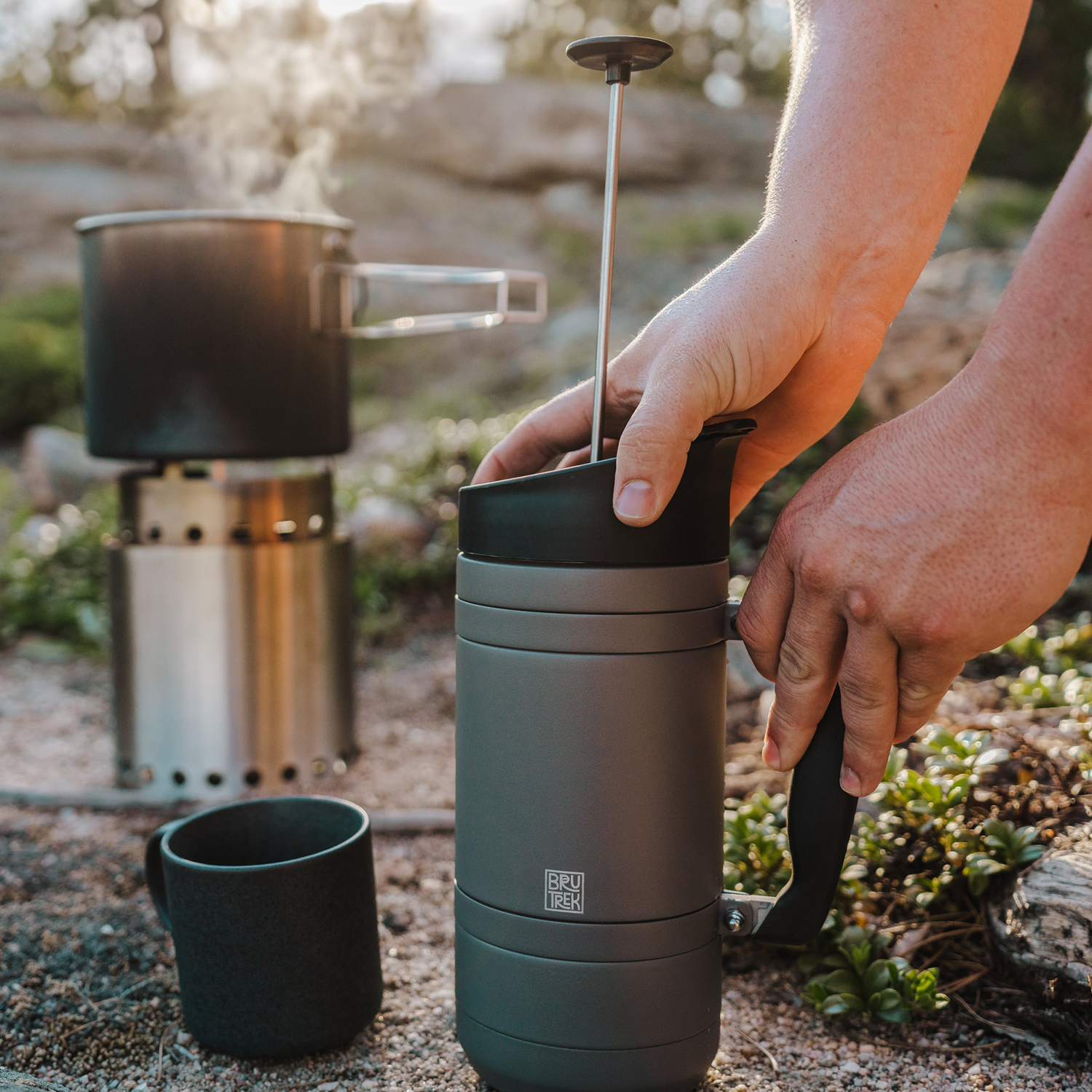
Consistent water temperature matters more than precise temperature. If you're brewing outdoors with a camp stove or using a BruTrek® portable brewing system, focus on heating water to a rolling boil. That's your visual cue for the right range, and 4 minutes will work reliably.
Roast level influences flavor profile, but the 4-minute standard works across light, medium, and dark roasts. The difference is what you'll taste, not how long you should brew.
Light roasts are denser and extract more slowly, but they also have more inherent acidity. Four minutes gives you bright, complex flavors without sourness. If you want to reduce that brightness, try the longer 9–10 minute method rather than shortening the steep; shorter times will just make light roasts taste grassy and underdeveloped.
Medium roasts hit their stride at 4 minutes. You'll get balanced sweetness, moderate acidity, and good body. This is where the standard timing shows its strength; it's optimized for the roasts most people brew most often.
Dark roasts are more porous and extract faster, but they also have less acidity to begin with. Four minutes still works, though you might prefer the longer steep method to emphasize their heavy body and low-acid character. Just watch for bitterness; dark roasts are more prone to harsh flavors if you over-extract or use water that's too hot.
Storing your beans properly affects extraction more than roast level. Coffee loses flavor compounds within weeks of roasting, especially once it's ground. An Airscape® canister uses a patented valve system to remove air from the container, preserving freshness during multi-day trips or between brewing sessions. Fresh beans extract more predictably and taste better at any steep time.
Muddy, sludgy coffee comes from fine particles making it past the mesh filter into your cup. The standard 4-minute steep doesn't cause this; poor technique and grind quality do.
Breaking the crust and skimming removes most floating fines before you press. At the 4-minute mark, use a spoon to gently stir the top layer, breaking up the cap of grounds. Then skim off the foam and loose particles sitting on the surface. This single step eliminates most of the sediment that would otherwise end up in your cup.
After skimming, wait another 4–5 minutes before pressing. This lets remaining fines settle to the bottom. When you press, stop just below the water line rather than pushing all the way down. Compressing the grounds at the bottom agitates sediment back into the coffee.
Pour slowly and stop before you reach the bottom of the pot. That last ounce or two contains most of the remaining sludge; leave it behind. This technique, demonstrated in detailed brewing guides throughout 2026, produces "unbelievably clean" French press coffee that rivals pour-over clarity while keeping the rich body that makes immersion brewing special.
Your grinder matters too. Blade grinders produce inconsistent particle sizes with lots of fines. A burr grinder, even an inexpensive manual one, creates uniform coarse grounds that stay in the filter where they belong. If you're serious about French press, upgrading your grinder improves your coffee more than any timing adjustment.
Use an actual timer, your phone, a kitchen timer, or a watch. Guessing leads to inconsistent results because 4 minutes feels different depending on what else you're doing.
Start timing the moment you finish pouring all your water over the grounds. Don't start when you begin pouring; that adds 15–30 seconds of variable time depending on how fast you pour. Consistency matters more than precision down to the second, but you need a reference point.
If you're brewing outdoors or traveling, a simple digital timer works better than trying to track time on your phone while managing other camp tasks. Some portable brewing systems integrate timers, but a basic countdown timer costs a few dollars and removes all guesswork.
Set up your routine so you're ready to break the crust and skim right at 4 minutes. Have your spoon ready, your mug or carafe nearby. The cleaner your technique, the better your coffee tastes, and that starts with consistent timing you don't have to think about.
Yes, but only if you're using a French press designed for it. Standard glass presses lose heat quickly, which slows extraction and can leave you with lukewarm coffee by the time you press. Insulated presses maintain temperature throughout the steep, giving you more consistent extraction and hot coffee when you pour.
Thermal designs also solve the "leaving coffee on grounds" problem. Some insulated presses let you remove the brewing chamber after pressing, separating the finished coffee from the grounds so the extraction stops. This means you can brew a full pot, press at 4 minutes, and pour cups over the next hour without bitterness developing.
If you're using a standard glass press, preheat it by filling with hot water for 30 seconds before brewing. This keeps your brew temperature stable through the 4-minute steep. Then decant into a thermal carafe or insulated mug immediately after pressing to keep it hot without continuing extraction.
For backcountry or road trips, a durable insulated press handles temperature swings better than glass. You can brew at camp in cold weather without your coffee going lukewarm before it's done steeping. Just stick to the same 4-minute timing; the insulation maintains temperature, not accelerating extraction.
Steeping for more than 4 minutes without a specific long-steep method leads to over-extraction. You'll taste bitterness, astringency, and harsh flavors as water pulls out compounds you don't want. If coffee grounds remain in contact with water after pressing, they continue to extract and become increasingly bitter. Always decant immediately after pressing unless you're using a double-filter system designed to prevent continued extraction.
Two minutes is too short for proper extraction with coarse grounds. You'll get weak, sour coffee that lacks body and sweetness. The water hasn't had time to extract the oils and sugars that create balanced flavor. If your coffee tastes too strong at 4 minutes, adjust your coffee-to-water ratio or grind size rather than shortening steep time.
Bitterness at the standard steep time usually means your grind is too fine, your water is too hot (above 205°F), or you're using stale beans. Check your grind first; it should look like coarse sea salt, not sand. Let boiling water cool for 30 seconds before brewing. And make sure your beans are fresh, ideally within a month of roasting. Store them in an airtight container to preserve flavor compounds.
Don't stir during the 4-minute steep; it agitates grounds and creates more fines in your final cup. The only stirring you need is breaking the crust at the 4-minute mark before skimming. Some brewers give grounds a gentle stir immediately after adding water to ensure even saturation, but this is optional. The key is leaving coffee undisturbed during the actual steep.
Set a timer for 4 minutes starting when you finish pouring water. When the timer goes off, break the crust on top and skim the foam. If you're using the cleaner-cup method, wait another 4–5 minutes for fines to settle, then press slowly. There's no visual cue; timing is the only reliable way to know when extraction is complete.
Four minutes of steeping delivers balanced French press coffee across different beans, roasts, and brewing conditions. Break the crust and skim at the 4-minute mark, press slowly, and pour immediately to avoid over-extraction. If you want lower acidity and a heavier body, try the 9–10-minute method, but keep your grind coarse and your water at 195–205°F regardless of timing.
Your grind quality and bean freshness affect your results as much as timing does. Coarse, consistent grounds extract evenly. Fresh beans stored properly give you the flavors you're steeping for in the first place. Master these fundamentals and your French press will reward you with rich, clean coffee whether you're brewing in your kitchen or at camp. Ready to upgrade your brewing setup? Explore our French presses and Airscape® storage solutions designed to keep coffee tasting as good on day ten as on day one.
Travel Coffee Press – OVRLNDR®

How Long Does Wine Last After Opening? A Guide by Wine Type
Gifts for Wine Lovers: Practical Picks They'll Actually Use
How Many Scoops of Coffee Per Cup? A Measuring Guide for Every Brewer

What Is Argon Gas Used For? How It Keeps Coffee, Wine and Pantry Goods Fresh
Can You Store Coffee and Cannabis Together? A Side-by-Side Storage Guide
Share:
Preserve the Quality & Aroma of Your Cannabis Stash, Even in Bulk
Brewing Espresso-Style Coffee in a French Press