





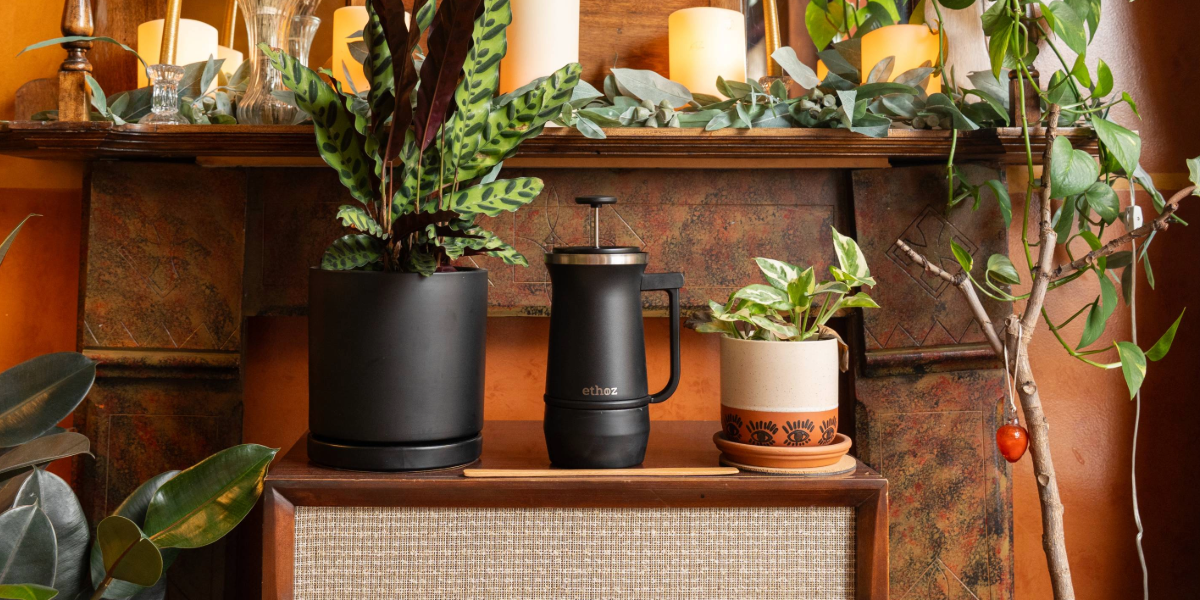
- by Madeline Staples
5 Summer Cold Brew Recipes to Make in Your French Press
- by Madeline Staples
Hot coffee is a year-round staple, but summer calls for something smoother, colder, and a lot more refreshing. Cold brew fits that bill perfectly, and your French press is already the easiest tool you own to make it.
This guide covers everything you need to know to make great cold brew at home, plus five recipes built for warm weather, from a classic concentrate to a coconut version that tastes like vacation in a glass. We'll also cover what to look for if you want to bring the ritual with you, since a good camping French press turns "cold brew at home" into "cold brew anywhere this summer takes you."
Cold brew is made by steeping coarse coffee grounds in cold or room-temperature water for 12–24 hours, rather than brewing hot and pouring over ice. That slow, steep extraction process extracts fewer bitter compounds, which is why cold brew tastes naturally sweeter and smoother than iced coffee, and it's over 60% lower in acidity than hot-brewed coffee, making it easier on sensitive stomachs.
A French press is the simplest way to make it. Steeping and straining happen in the same vessel, so there's no separate filter, pitcher, or pour-over setup to manage. Add grounds, add water, wait, plunge, pour.
Every recipe below starts from the same base concentrate. Here's the formula:
Ratio: 1:8 coffee to water by weight for a standard concentrate (use 1:6 for an extra-bold base if you plan on diluting heavily with milk or ice).
Grind: Coarse, similar to a standard French press grind. Fine grounds will over-extract and turn muddy.
Roast: Medium-to-dark roasts bring out the smooth, chocolatey notes cold brew is known for.
Steep time: 12–24 hours. Room temperature gives a bolder cup; the fridge gives a milder one.
|
French Press Size |
Water (fl oz) |
Coffee (g) |
|
16 oz |
~16 |
~59 g |
|
20 oz |
~20 |
~74 g |
|
24 oz |
~24 |
~89 g |
|
32 oz |
~32 |
~118 g |
|
48 oz |
~48 |
~178 g |
Once you've got your concentrate, here's where it gets fun.
The foundation recipe, and still the best way to taste what a good bean can do.
Combine grounds and cold water in your French press using the ratio above.
Stir to fully saturate the grounds, cover (don't plunge), and steep 12–24 hours.
Plunge slowly, then dilute the concentrate 1:1 with cold water, milk, or oat milk over ice.
A tropical twist that makes a regular afternoon feel like a beach day.
Brew your concentrate as above.
Pour over ice and top with coconut milk instead of regular milk or water.
Add a splash of vanilla extract or vanilla syrup and stir well.
Garnish with a sprinkle of toasted coconut flakes if you're feeling fancy.
An unlikely pairing that works surprisingly well, bright, sweet, and bittersweet all at once.
Fill a glass with ice, then pour in equal parts cold-brew concentrate and fresh lemonade.
Stir gently (don't shake, it can get foamy) and add a lemon wheel for garnish.
For a stronger coffee presence, use a 2:1 cold brew-to-lemonade ratio instead.
Dessert-adjacent and very hard to stop drinking.
Whisk 1–2 tablespoons of chocolate syrup or cocoa powder with a splash of warm water until smooth.
Stir into your cold brew concentrate, then pour over ice.
Top with milk of choice and a final drizzle of chocolate syrup.
The same great concentrate, built for a cooler instead of a fridge.
Brew a strong concentrate at home the night before your trip (a 1:6 ratio holds up better during longer steeps and travel).
Store it in a sealed carafe or bottle in your cooler.
At camp, pour over ice or cold stream-cool water and dilute to taste, no extra gear, no extra mess.
This is also where the right French press matters most. A press built for actual travel, not just one you happen to be using outside, makes the whole process easier.
If cold brew is becoming part of your camping routine, it's worth having a French press that's actually built for it, rather than hauling your kitchen counter version into a pack. A few things matter most when you're picking gear that needs to survive a cooler, a tailgate, or a dusty trail:
Durability: Look for a stainless-steel camping French press rather than a glass one. Steel won't shatter if it gets knocked around in a cooler or bounced in the back of a car.
Temperature control: A double-wall camping French press keeps cold brew cold for hours in the heat, which matters a lot more at a midday trailhead than it does in your kitchen.
Size and weight: A portable French press for camping should be compact enough to fit in a pack or cooler without eating up all your space.
Leak-proof design: Anything riding in a cooler or backpack needs a screw-on, leak-proof lid, not just a press-fit one.
If you want to skip the comparison shopping entirely, our best camping French press picks are built specifically around these criteria: stainless steel, double-wall insulated, and sized for everything from a solo trip to a full campsite.
Batch it. Cold brew concentrate keeps in the fridge for up to a week, so brew once and build different drinks from it all week.
Keep your beans fresh. Cold brew is only as good as the coffee you start with, an airtight, opaque canister like the Airscape® keeps beans from going stale between brews, whether you're storing a bag or buying in bulk.
Don't skip the dilution. Concentrate is meant to be cut. Straight from the press, it's stronger than most people actually want to drink.
Bring backups. If cold brew is becoming a camping staple, a second small French press or a travel mug with a built-in press means you're never without your fix, even if the main press is busy steeping the next batch.
Cold brew is one of the easiest upgrades you can make to your summer coffee routine, and your French press is already equipped to handle it, no extra equipment, no extra trips to the coffee shop. Whether you're mixing up a coconut version on your porch or packing a camping French press for a weekend at the lake, the same simple steep-and-plunge method gets you there.
How to Store Pre-Rolls So They Don't Dry Out
How to Store Dry Dog Food: Keep Kibble Fresh to the Last Scoop
Sustainable Food Storage Containers That Actually Work
Glass vs Plastic Storage Containers: Which Is Right for You?
Best Way to Store Cannabis Buds: Complete 2026 Guide
Share:
How to Store a Kilo of Cannabis at Home Without Losing Potency
The Perfect Pair: Airscape® and Your Moka Pot