





- by Madeline Staples
How to Keep Cheese From Molding: Paper, Plastic Wrap and Cheese Vaults Compared
- by Madeline Staples
To keep cheese from molding, control moisture and contamination. Take cheese out of its plastic, store it in a breathable wrap or a container that wicks moisture away, keep the fridge at 40°F or below, and use clean hands and a clean knife every time you cut it. Moisture trapped against the surface is what lets mold take hold, so the wrap you choose matters more than most people think.
This guide is for anyone tired of throwing out half-eaten cheese because a fuzzy green spot showed up before they got to it. If you've tried plastic wrap, zip-top bags and foil and still find mold within a couple of weeks, the problem usually isn't the cheese. It's the storage. This guide covers why mold grows, when moldy cheese is still safe, and how the common storage methods compare.
You'll learn:
Mold spores are everywhere: in the air, on your hands, on cutting boards and on the inside walls of your fridge. You can't keep them away from cheese completely. What you can control is whether they find the conditions they need to grow.
Mold needs three things: food, moisture and time. Cheese supplies the food. Time is on mold's side once a wedge has been opened. Moisture is the factor you can do the most about.
When cheese sits in a sealed wrapper, the moisture it releases has nowhere to go. It collects on the surface and on the inside of the wrap, creating a damp film that's perfect for spores. That's why mold so often shows up first along the cut face or wherever the plastic has been pressed tight against the cheese.
Temperature swings make it worse. Every time cold cheese warms slightly, on the counter during dinner or in the fridge door, condensation forms. Repeat that a dozen times and you've given mold a steady water supply.
It depends on the cheese. The USDA's guidance on mold draws a clear line between hard and soft cheeses.
Hard and semi-hard cheeses like cheddar, Parmesan and Swiss are dense enough that mold has trouble growing deep into them. The USDA says you can cut away at least 1 inch around and below the mold spot, keeping the knife out of the mold itself, and then rewrap the cheese in fresh covering.
Soft cheeses are a different story. Cottage cheese, cream cheese, Neufchâtel and chèvre should be thrown out if they grow mold, because their high moisture lets mold spread through the cheese where you can't see it. The same goes for any crumbled, shredded or sliced cheese.
Some cheeses are made with mold on purpose: Brie, Camembert, Roquefort, Gorgonzola and Stilton among them. That mold is safe. But if a Brie grows mold that isn't part of its white rind, the USDA recommends throwing it out. On a firm blue like Stilton, unfamiliar surface mold can be cut away like it would be on any hard cheese.
Plastic wrap is the most common way people store cheese, and it's one of the worst. It feels protective because it's tight. That tightness is the problem.
Plastic doesn't breathe. When it's pressed against cheese, it traps every bit of moisture and gas the cheese gives off. The surface turns slick and sweaty within days. That damp layer is exactly where mold gets started.
There's a flavor cost too. Cheese is mostly fat and protein, and fat picks up flavors easily. Many people notice a plasticky taste on the surface of cheese that has been wrapped for a week or two. You'll also end up throwing away a new sheet of plastic every time you cut a piece and rewrap.
Plastic wrap is fine for a day or two, or for a cheese you'll finish quickly. For anything you want to keep for weeks, it works against you.
Cheese paper is what most cheese shops wrap their cheese in, and it's a real improvement over plastic. It's usually two layers: a porous outer paper and a thin inner coating that holds in enough moisture to keep the cheese from drying out while still letting it breathe.
It works. Cheese wrapped in good cheese paper will usually stay fresher and less sweaty than cheese in plastic. If you buy cheese from a shop that uses it, keep that paper and rewrap the cheese in it.
The trade-offs are practical. Cheese paper is single use, or close to it. Once it's absorbed fat and moisture, it should be replaced. Folding it neatly takes some practice, and it needs tape or a sticker to stay closed and to remember what's inside. It also does nothing to keep a pungent cheese from scenting your fridge. If you go through a lot of cheese, you'll go through a lot of paper.
Wax paper and parchment are the classic home substitutes for cheese paper. They're more breathable than plastic, and they're better than nothing. The usual method is to wrap the cheese in parchment or wax paper, then put it loosely in a partly open bag so it doesn't dry out.
Their weakness is the opposite of plastic's. They let in so much air that cut faces can dry out and crack over a couple of weeks, especially on harder cheeses. The extra bag helps, but now you're juggling two layers.
Beeswax wraps are a popular reusable option. They breathe somewhat, they cling to the cheese, and you can wash and reuse them for months. They're a good fit for hard cheeses. Some people find they transfer a faint honey or wax note, and they need to be washed in cool water, since heat melts the coating.
Vacuum sealing works well for one job: keeping unopened or bulk cheese for a long time, especially hard cheese you plan to freeze or cook with. Removing the air slows oxidation and keeps out spores.
For opened cheese you're eating day to day, it's the wrong tool. A vacuum seal presses the plastic tight against the cheese and traps moisture even more completely than plastic wrap does. Living cheeses like Brie and washed rinds can't breathe at all, and many will develop off flavors. You'd also need to reseal it every time you cut a piece.
This is one place where we'll be straightforward about our own products. At Planetary Design, we make Airscape® canisters that push air out of coffee and dry goods through a one-way valve. For coffee beans, removing oxygen is the whole point. Cheese needs the opposite. It wants gentle airflow and a way to get rid of extra moisture, not an airless seal. That's why we don't recommend Airscape for cheese, and why we carry a different product built specifically for it.
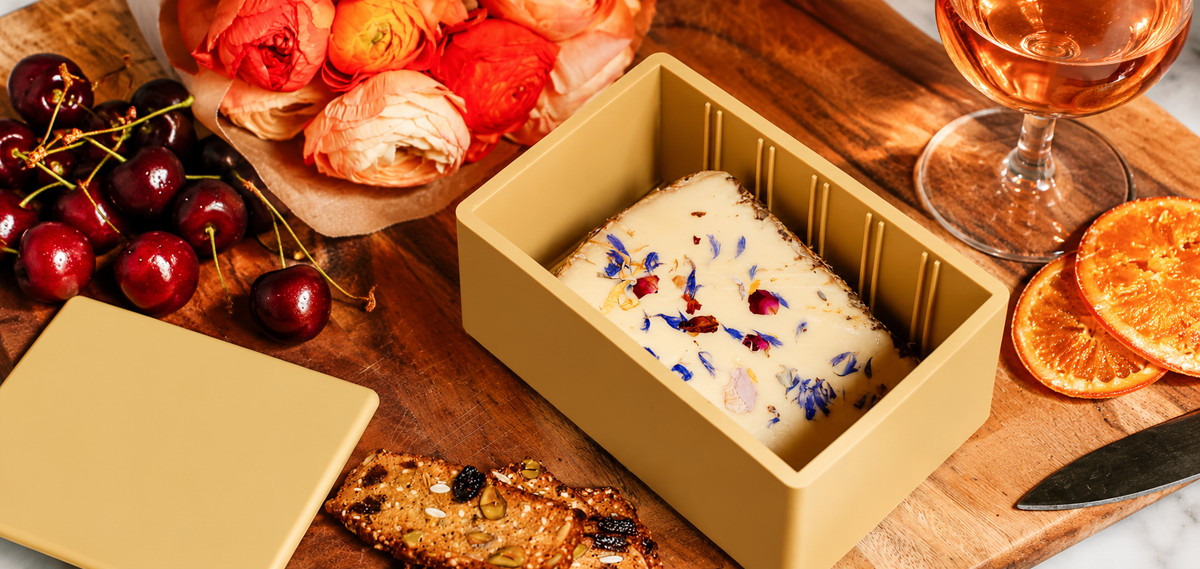
A cheese vault is a reusable container designed to recreate the conditions of a cheese cave inside your fridge. The one we carry is the CapaBunga Cheese Vault, made from food-grade silicone that doesn't add any flavor to the cheese.
It goes after mold's moisture supply in two ways. The base is designed to wick excess moisture away from the cheese, so the surface doesn't sit in its own dampness. The lid is shaped so that any condensation that forms on the inside of the top is directed away from the cheese instead of dripping onto it. That second point matters more than it sounds, since drips from the lid are a common way for mold to land on cheese stored in an ordinary box.
You put the cheese in unwrapped, set the lid on top and store it in the fridge. There's nothing to fold, tape or throw away. The vault also contains odors in both directions, so fridge smells stay off the cheese and a ripe cheese doesn't take over the fridge.
Third-party testers have taken notice. When Taste of Home put the Cheese Vault through a storage test, the reviewer reported no signs of mold on her cheese after 40 days.
Every method has a place. The right one depends on how long you plan to keep the cheese and what kind of cheese it is.
| Method | Moisture control | Breathability | Reusable | Contains odors | Best for |
|---|---|---|---|---|---|
| Plastic wrap | Poor, traps moisture | None | No | Somewhat | Cheese you'll finish in a day or two |
| Cheese paper | Good | Good | Rarely | No | Any cheese, if you rewrap often |
| Wax paper or parchment plus bag | Fair | High | No | Partly | Hard cheeses, short to medium term |
| Beeswax wrap | Fair | Moderate | Yes | No | Hard and semi-hard cheeses |
| Vacuum sealing | Seals moisture in | None | No | Yes | Unopened or bulk cheese, freezing |
| Silicone cheese vault | Good, wicks moisture away | Moderate | Yes | Yes | Opened wedges you'll enjoy over weeks |
Freezing stops mold growth, but it changes cheese. Ice crystals break up the texture, so most frozen cheeses come out crumbly. Hard and semi-hard cheeses like cheddar, mozzarella blocks and Parmesan freeze reasonably well if you plan to shred, melt or cook with them afterward.
Soft and fresh cheeses usually don't freeze well. Brie, ricotta and cream cheese turn grainy or watery when thawed. And freezing won't fix a cheese that's already starting to go. Freeze it while it's fresh.
If you want to keep eating a cheese as it is, on a board or with crackers, the fridge is the better place for it. Good fridge storage gives you weeks with hard cheeses without the texture trade-off.
Storage does most of the work, but a few habits make a noticeable difference.
Use a clean knife every time. A knife that just cut bread, fruit or a different cheese carries spores straight onto the cut face. Handle the cheese by the rind or with a piece of paper so your fingers don't touch the cut surface.
Before you put cheese away, blot any surface moisture or oil with a paper towel. If the cut face has a thin dried film, scrape it lightly with a knife to expose fresh cheese. Cheesemongers do this with wedges in the display case.
Keep the fridge clean. Mold spores build up on shelves, drawers and door seals. The USDA suggests cleaning the inside of the fridge every few months with a tablespoon of baking soda dissolved in a quart of water, then rinsing and drying.
Keep cheeses apart. Blue cheese mold spreads readily to other cheeses it touches. If you store two small pieces in one vault, use the divider to keep them separate. One comes with every Cheese Vault, and extras are available if you lose one or want to divide more than one vault.
Wrapping cheese tightly in plastic is the first and most common mistake. It feels like the most protective option, but it traps the exact moisture mold needs. Most people who say their cheese "always molds" are storing it this way.
Reusing the same wrap is the second. A sheet of paper or plastic that's been on cheese for a week has absorbed moisture and fat and may already be carrying spores. Rewrapping in it just moves the problem back onto the cheese.
The third mistake is leaving cheese out too long. A cheese board that sits out for three hours warms all the way through, and when it goes back in the fridge, condensation forms on every surface. Take out what you'll eat, and put the rest back promptly.
The fourth is cutting moldy cheese the wrong way. Slicing straight through a mold spot drags spores across the fresh face. Cut around and below it, keeping the knife out of the mold, as the USDA recommends, then move the cheese to a clean wrap or container.
The fifth is ignoring the fridge itself. A dirty crisper drawer, a fridge set too warm, or cheese stored in the door all raise the odds of mold, no matter how well the cheese is wrapped.
Why does my cheese mold so fast in the fridge? The most common reason is moisture trapped against the cheese, usually by plastic wrap or a sealed bag. Temperature swings from storing cheese in the door, or from leaving it out on the counter, add condensation. Moving cheese to a breathable wrap or a moisture-wicking container in a drawer usually makes a big difference.
Does wrapping cheese in foil prevent mold? Foil is slightly better than plastic for some hard cheeses because it doesn't press as tightly against the surface, but it doesn't breathe either. It can also react with salty or acidic cheeses over time. Cheese paper or a cheese vault is a better choice for anything you plan to keep more than a few days.
Can you cut mold off cheese and still eat it? For hard and semi-hard cheeses like cheddar and Parmesan, yes. The USDA recommends cutting at least 1 inch around and below the mold spot. Soft cheeses, fresh cheeses, and shredded, crumbled or sliced cheese should be thrown away if they grow mold.
Does vinegar stop cheese from molding? Some people wipe hard cheese rinds with a cloth dampened in vinegar to slow surface mold, and it can help for a short time on very hard cheeses. It can also change the flavor of the surface. Controlling moisture through good storage is the more reliable fix.
What is the best container to keep cheese from molding? Look for a container that lets cheese breathe and moves excess moisture away from it, rather than one that seals it airtight. A silicone cheese vault with a moisture-wicking base and a lid that directs condensation away from the cheese is designed for exactly this.
Mold isn't bad luck. It's what happens when spores meet moisture and time. You can't get rid of spores, and you can't stop time, but you can take away the moisture. Get cheese out of plastic, give it a little air and a way to shed dampness, keep it cold and steady, and handle it cleanly. Do that and most cheese will last until you've finished it.
If you're still sorting out the basics, like where in the fridge each cheese belongs and how long different styles last, start with our guide on how to store cheese in the fridge.
When you're ready to skip the plastic for good, the CapaBunga Cheese Vault gives each wedge a reusable, cave-like home that wicks moisture, keeps odors contained and washes clean in the dishwasher. Shop the Cheese Vault collection at Planetary Design.

Travel French Press Guide: How to Brew Great Coffee Anywhere
Why Is My Coffee Bitter? How to Fix Over-Extracted French Press Coffee
How to Keep Cheese From Molding: Paper, Plastic Wrap and Cheese Vaults Compared

How to Store Cheese in the Fridge: A Guide by Cheese Type

How to Reseal a Wine Bottle Without the Cork: Caps, Stoppers and Toppers Compared
Share:
How to Store Cheese in the Fridge: A Guide by Cheese Type
Why Is My Coffee Bitter? How to Fix Over-Extracted French Press Coffee