





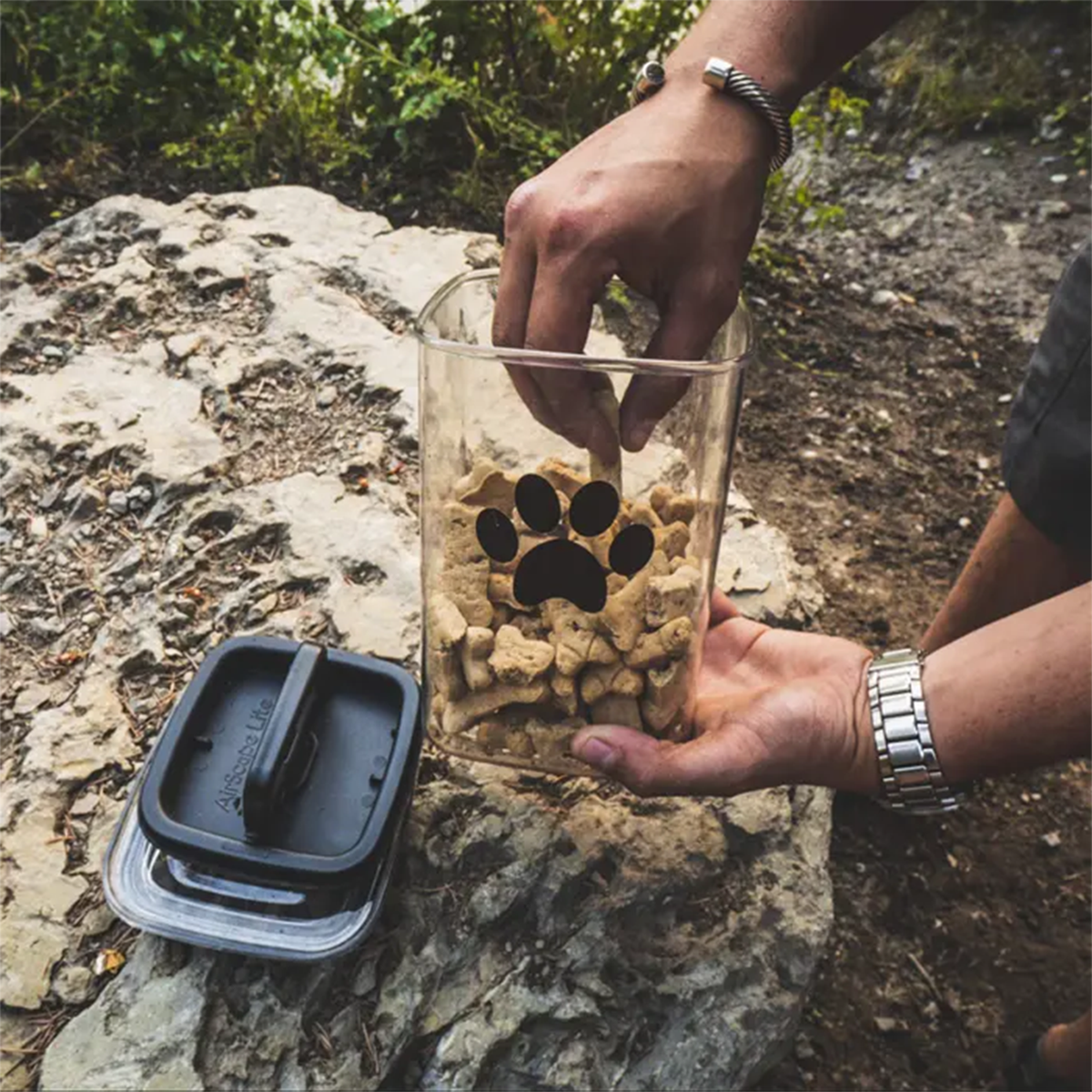
- by Madeline Staples
How to Store Dry Dog Food: Keep Kibble Fresh to the Last Scoop
- by Madeline Staples
The best way to store dry dog food is in a sealed container that limits oxygen exposure, kept in a cool, dry place below 80°F, with the bag's lot number and best-by date saved for reference. Oxygen is the real enemy here: kibble is coated in fat, and once the bag is open, that fat starts oxidizing and turning rancid long before the food looks spoiled.
This guide is for dog owners who buy kibble in larger bags to save money, only to watch their dog lose interest halfway through. It's also for anyone who's opened a bin and caught that sour, stale smell and wondered whether the food was still safe. We'll cover what actually makes kibble go bad, what the FDA recommends, which containers work, and how to set up a storage system that keeps the bottom of the bag as fresh as the top.
Here's what we'll cover:
Dry dog food goes bad mainly because the fats in it oxidize. Most kibble is sprayed with fat after it's cooked and shaped, which is what makes it smell and taste appealing to dogs. That same fat coating is the most fragile part of the food. When it's exposed to oxygen, it breaks down into compounds that smell sour, stale, or "off," and it keeps breaking down every time the bag is opened.
This is why a dog will happily eat the first week of a new bag and then start refusing the same food a few weeks later. The kibble hasn't changed color, it isn't moldy, and it isn't wet. It's rancid. Dogs have a far sharper sense of smell than we do, and they often notice the change well before you can.
Moisture and heat are the other two factors. Heat speeds up oxidation, which is why a bag stored in a hot garage goes stale faster than one kept in a pantry. Moisture is a different problem: damp kibble can grow mold and bacteria, which is a food safety issue rather than just a freshness one. Pests round out the list, since an open or loosely clipped bag is an easy target for ants, pantry moths, and rodents.
Many premium and "natural" dog foods use mixed tocopherols (a form of vitamin E) as preservatives instead of synthetic ones. They work, but they're generally less durable than the synthetic alternatives, which means storage matters even more for these foods. A preservative slows oxidation. It doesn't stop oxygen from getting to the fat in the first place.
The FDA's guidance for pet owners is simple and worth following. The agency recommends storing dry pet food somewhere cool and dry, below 80°F, because heat and moisture break down nutrients. It also advises keeping dry food in its original bag with the top folded down tightly.
The original bag matters for two reasons. First, many kibble bags are built with barrier layers that help hold fat in and keep air and moisture out. Second, and more important for safety, the bag carries the UPC, lot number, and best-by date. If your dog gets sick or a recall is announced, that information is how you, your vet, and the manufacturer figure out whether your specific bag is affected.
Pet food makers add a practical guideline on top of this. Purina suggests using opened dry food within two to three months when it's stored properly, and notes that the best-by date only applies to unopened packaging. Once you open the bag, the clock starts over, and how you store it determines how fast that clock runs.
Most people store kibble in one of three ways: in the clipped original bag, in an airtight bin (with or without the bag inside), or in an airless container that removes oxygen. Each one handles the four threats (oxygen, heat, moisture, and pests) differently.
The clipped original bag is the baseline. It keeps the label with the food and the bag's liner does some work, but a folded top and a chip clip leave plenty of air inside, and a paper-and-plastic bag won't stop a determined mouse.
An airtight bin is a real upgrade for pests and moisture. Snap-lock plastic and metal bins keep out bugs, rodents, and humidity, and they stop your dog from helping himself. Placing the whole bag inside the bin follows the FDA's advice while adding a second barrier. The limitation is oxygen. An airtight bin seals the air that's already inside, and as you scoop your way down, the empty space above the food fills with more and more of it.
An airless container goes a step further by pushing that air out. The Airscape® Bucket Insert Lid converts a standard five-gallon bucket into an airless container. An inner lid descends directly onto the kibble, forcing air out through a one-way valve as it goes. The valve lets air escape but won't let it back in, so the food sits under a vacuum seal rather than a pocket of oxygen. No pump, no batteries, and no electricity: it's a mechanical seal built to handle daily scooping.
| Storage Method | Oxygen Control | Pest Protection | Keeps Label Info | Best For |
|---|---|---|---|---|
| Original bag, clipped | Low: air stays in the bag | Low | Yes | Small bags finished within a few weeks |
| Airtight bin, food poured in | Low: seals air in with food | High | No, unless you save it | Keeping pests and pets out |
| Airtight bin, bag inside | Low to moderate | High | Yes | Following FDA guidance to the letter |
| Airless bucket insert | High: pushes air out | High | Only if you save it | Large bags, picky eaters, slower-eating households |
This is where you'll need to make a choice, because the FDA's original-bag advice and airless storage pull in slightly different directions. An inner lid that descends onto the food needs direct contact with the kibble to push the air out, which means pouring the food out of the bag.
If you go the airless route, keep the bag's information. Before you pour, cut out the panel with the UPC, lot number, and best-by date and tape it to the bucket, or snap a clear photo of it on your phone. That way you still have what you need if there's a recall or a problem with the food. Some owners keep the whole folded bag in a drawer until the bucket is empty.
The other half of the FDA's concern is cleanliness. Wash and fully dry the bucket between bags, and never pour a new bag on top of old kibble. Topping off leaves a layer of older food at the bottom that keeps aging, and it mixes lot numbers so you can't tell which bag a problem came from.
If following the original-bag guidance exactly matters most to you, place the clipped bag inside an airtight bin and store it somewhere cool. You'll get strong pest and moisture protection. You just won't get the oxygen removal that keeps fats from turning.
Large bags are where storage makes the biggest difference. A 30- or 40-pound bag is the cheapest way to buy kibble, but it's also open the longest, and every day it's open is another day of oxidation. A bag that starts fresh can be noticeably stale by the time you reach the bottom.
A two-container system works well here. Keep the bulk of the food sealed in an airless bucket, and fill a smaller container with about a week's worth for daily feeding. That way, the main supply is only opened once a week instead of twice a day. It's the same approach many coffee drinkers use for bulk beans: a large sealed canister for storage and a small one for daily use.
A five-gallon bucket holds a good-sized bag, but not every bag. Depending on kibble size and shape, a single bucket typically holds somewhere around 15 to 20 pounds, so the largest bags may need two buckets. If you regularly have leftover food that won't fit, that's a sign to either add a second bucket or step down to a bag size your dog can finish within six to eight weeks.
For multi-dog households going through food quickly, the math changes. If a bag is gone in two or three weeks, a clean airtight bin may be all you need. The longer a bag stays open, the more oxygen removal pays off.
Store dog food where you'd store your own pantry staples: indoors, off the floor, and away from heat sources. A pantry, a kitchen cabinet, or a closet on an interior wall all work. The goal is a spot that stays below 80°F year-round and doesn't get humid.
The garage is the most common mistake. It's convenient, especially for heavy bags, but garages and sheds can get far hotter than the house in summer and swing between hot and cold across seasons. Those temperature swings speed up fat oxidation and can create condensation inside containers. A laundry room is another trap, since dryers push heat and humidity into a small space.
Keep containers out of direct sunlight, too. Light and heat work together to break down fats and vitamins, so a clear bin next to a sunny window is working against you even if it's sealed.
Your nose is the best tool. Fresh kibble smells savory and a little fatty. Rancid kibble smells sour, bitter, stale, or like old cooking oil, and the smell is usually strongest when you first open the container. If the food smells noticeably different from a freshly opened bag, the fats have started to turn.
Look for visible warning signs as well: mold, clumping, damp spots, a greasy film on the container walls, or any sign of bugs or webbing. Any of these means the food should be thrown out, not fed. The FDA recommends disposing of spoiled pet food in a securely tied bag in a covered trash can so other animals can't get to it.
Your dog's behavior is the third clue. A dog who suddenly sniffs and walks away from a food he's eaten for months isn't always being picky. Rancid food is one of the most common reasons dogs refuse kibble partway through a bag. If that happens, check the food before switching brands.
Yes. Dry cat food is also fat-coated kibble, and it goes rancid for the same reasons. Cats are often even pickier than dogs about stale food, so oxygen control can make a real difference in whether a bag gets finished. Cat food usually comes in smaller bags, which means an Airscape® Classic canister or a mason jar fitted with a Fresh-Port® valve lid may be a better fit than a full five-gallon bucket.
For an extra layer of protection with smaller containers, Airgone® argon gas can be flushed through a Fresh-Port® valve. Argon is inert, food-safe, and heavier than oxygen, so a two-second flush displaces remaining air and forms a barrier over the food. It's optional, but it's useful for expensive specialty diets that sit open longer.
Storing food in the garage is the first and most common mistake. The convenience isn't worth the heat, humidity, and temperature swings that speed up spoilage.
Topping off the container is the second. Pouring a new bag over the last few inches of old food means that bottom layer never gets used up. It keeps aging, and it makes it impossible to track which bag a problem came from. Empty, wash, and dry the container between bags.
Throwing away the bag without saving the label is the third. If you pour kibble into a container, keep the UPC, lot number, and best-by date. Recalls happen, and that information is the only way to know whether your food is affected.
Using a wet scoop, or leaving the scoop buried in the food, is a quieter mistake. A damp scoop introduces moisture, and a scoop that lives in the bin collects oils and grime. Keep a dry, dedicated scoop outside the container.
Buying more than you can use is the last one. A bigger bag is only a better deal if your dog finishes it before it goes rancid. If you're throwing out the bottom of every bag, a smaller bag or better storage will save more money than the bulk discount.
How long does dry dog food last once opened? Most manufacturers recommend using opened dry food within about two to three months when it's stored properly, and many owners notice a drop in freshness well before that in warm or humid homes. The best-by date on the bag only applies while it's unopened. Removing oxygen from the container and keeping it below 80°F helps opened food stay fresh for the full window.
Should I keep dog food in the original bag? The FDA recommends storing dry pet food in its original bag with the top folded down, largely because the bag carries the lot number and best-by date you'll need in a recall. If you move food to an airless container, cut out or photograph that label information first, and keep it with the container until the food is gone.
Is it okay to store dog food in a plastic container? Yes, as long as it's a food-grade container that seals well and you wash and dry it between bags. Over time, fats can soak into plastic and leave behind a stale smell that transfers to new food, so clean containers regularly. A standard five-gallon bucket paired with the Airscape® Bucket Insert Lid adds oxygen removal to a basic plastic bucket.
Can I freeze dry dog food to keep it fresh? You can, but it's rarely necessary for kibble and it introduces a new risk. When cold food meets warm room air, condensation forms, and moisture is what leads to mold. If you freeze kibble, portion it into airtight containers and let each portion come to room temperature before opening it.
Why won't my dog eat the bottom of the bag? The most likely reason is that the food has gone rancid. Kibble's fat coating oxidizes every time the bag is opened, so the last portion of a large bag has had the most air exposure. Storing the food in an airless container, or using a smaller daily-use container, keeps the last scoop closer to the first.
Dry dog food doesn't fail all at once. It fades a little every time the bag opens, as oxygen reaches the fat coating and slowly turns it rancid. Keep it cool, keep it dry, keep the label information, and limit how much air reaches the food, and you'll get the full value out of every bag you buy.
Pet food is a big purchase for most households. The American Pet Products Association projects that Americans will spend $69.7 billion on pet food and treats in 2026. Every bag that gets thrown out half-eaten is money that didn't need to be spent, and food that didn't need to be wasted.
The Airscape® Bucket Insert Lid turns a standard five-gallon bucket into an airless container that pushes oxygen out as it descends, so the kibble at the bottom of the bucket still smells like the kibble at the top. For smaller bags and cat food, Airscape® canisters and Fresh-Port® valve lids bring the same preservation to your pantry shelf. Shop Airscape® and Fresh-Port® storage and give your dog a reason to finish the bag.
How to Store Pre-Rolls So They Don't Dry Out
How to Store Dry Dog Food: Keep Kibble Fresh to the Last Scoop
Sustainable Food Storage Containers That Actually Work
Glass vs Plastic Storage Containers: Which Is Right for You?
Best Way to Store Cannabis Buds: Complete 2026 Guide
Share:
Sustainable Food Storage Containers That Actually Work
How to Store Pre-Rolls So They Don't Dry Out