





- by Madeline Staples
Best Way to Store Cannabis Buds: Complete 2026 Guide
- by Madeline Staples
The best way to store cannabis buds is in an airtight, light-blocking container at 60–65°F with 58–62% relative humidity. This combination protects cannabinoids and terpenes from the four main degradation factors: oxygen exposure, light, temperature fluctuations, and improper moisture levels.
This guide is for cannabis enthusiasts who treat their flower with the same care they'd give premium coffee beans, people who understand that proper cannabis storage isn't optional when you're buying small, expensive quantities. Whether you're keeping an eighth fresh for a week or archiving a favorite strain for months, the science of preservation matters.
You'll learn:
Four environmental factors break down stored flower, and they work differently than the enemies of coffee or tea. Getting this distinction right determines whether your buds stay aromatic and effective or turn into brittle, flavorless dust.
Oxygen is the primary threat. Exposure oxidizes cannabinoids like THC and CBD while volatilizing terpenes, the aromatic compounds that distinguish one strain from another. A jar sealed around a headspace of oxygen isn't truly preserving your flower; it's just slowing the inevitable breakdown. This is why mechanical air-removal matters more than a tight-fitting lid.
Ultraviolet and visible light degrade THC on contact. Clear glass jars on a windowsill or countertop are the worst-case scenario. Even indirect indoor light accelerates cannabinoid breakdown over weeks and months. Opaque containers or dark glass block this pathway entirely.
Heat speeds oxidation, terpene loss, and moisture problems. Industry guidance in 2026 has tightened the recommended storage band to 60–65°F for long-term preservation, down from the older "cool, dark place" advice that left too much room for interpretation. Refrigeration is gaining traction in commercial supply chains because it preserves terpene content measurably better, one 2026 report cited terpene preservation improvements up to 5% under cold-storage conditions.
This is the single most important distinction in this guide. Coffee, tea, and dry pantry goods need bone-dry storage; any moisture is spoilage. Cannabis does not. Flower stored too dry becomes brittle, harsh, and loses terpenes. Stored too wet, it grows mold. Cannabis needs a maintained moisture band between 58–62% relative humidity, which is why two-way humidity control packets exist. Never apply "keep it completely dry" advice to cannabis flower.
Recent guidance has converged around specific, measurable targets rather than vague "cool and dark" recommendations. Here's what the research and industry coverage support in 2026.
Temperature: 60–65°F is the practical storage band for longer-term preservation. Some sources still cite the broader 60–70°F range, but multiple 2026 guides tighten this to the lower end for better cannabinoid and terpene stability.
Relative humidity: 58–62% RH is the most repeated target across consumer and industry sources. Within that band, 62% RH is often recommended for flower you'll open frequently, while 58% RH works better for archive-style storage or if you prefer a drier texture. Humidity-control packets are now normalized in both packaging and home storage, including a March 2026 Missouri cannabis regulation that formally allows humidity control packets in dispensary containers.
Light exposure: zero. Opaque containers, dark glass, or stainless steel eliminate this degradation pathway entirely. If you're using clear glass, store it inside a cabinet or drawer.
Container fill level: fill jars to about 75–80% capacity to minimize headspace without crushing the flower. Less air trapped against the buds means less oxygen available for oxidation.
Not all airtight containers work the same way. A standard screw-top jar seals around a headspace of oxygen: it keeps new air out, but it traps existing air in. That trapped oxygen continues oxidizing cannabinoids and volatilizing terpenes until it's consumed.
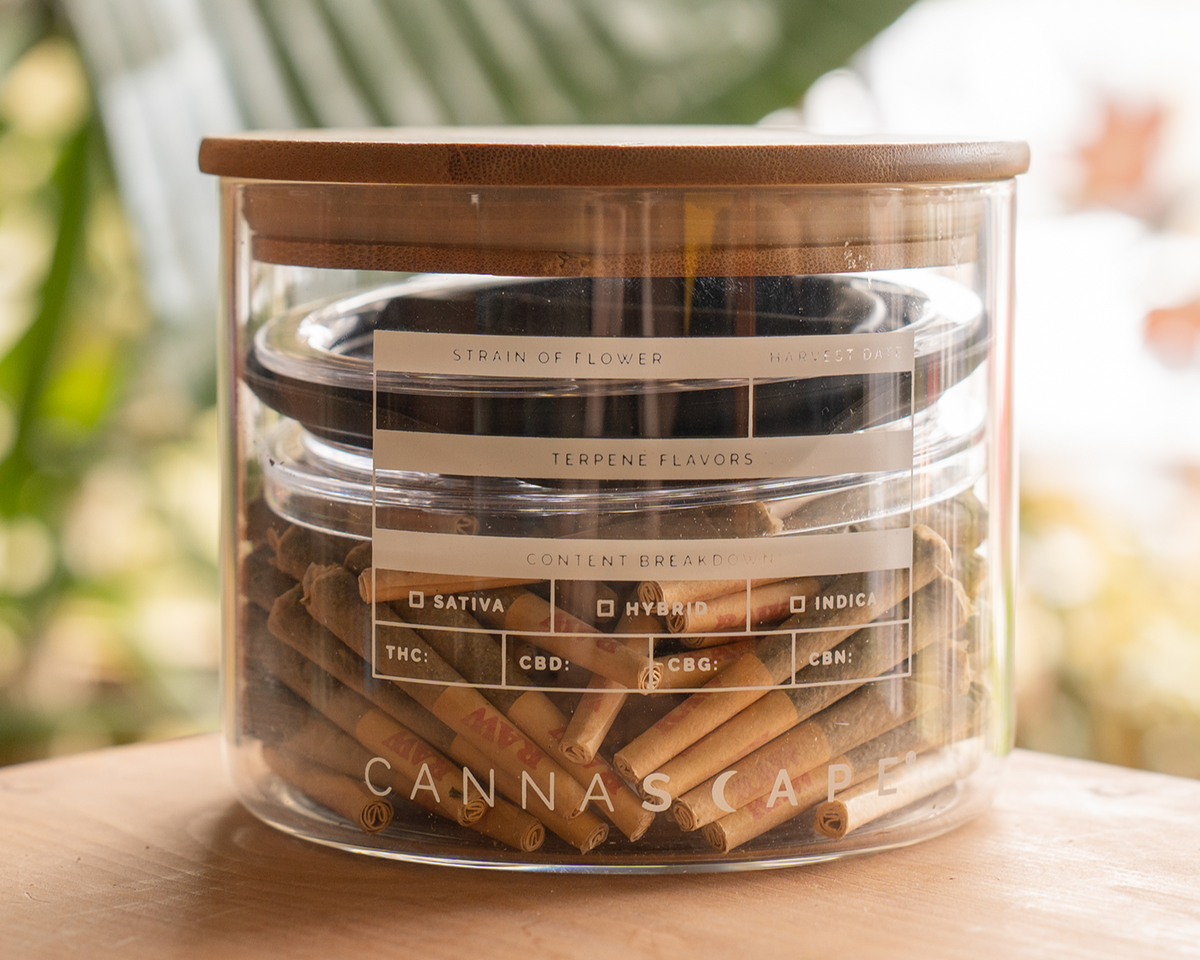
Mechanical air-removal systems work differently. A two-lid design, an outer lid that closes the container and an inner plunger lid that descends directly onto the flower, forces air out through a one-way valve as the inner lid moves down. The valve lets air leave but not return, creating an active seal rather than a passive one. This is the mechanism behind Cannascape® stash jars, which apply the same airless-valve engineering Planetary Design built for coffee storage to cannabis flower.
The valve is also self-degassing, which matters because fresh flower continues to off-gas CO2 after harvest. A fully rigid airtight seal builds pressure inside the jar. The self-degassing valve lets the jar "burp" itself without you opening it and admitting new oxygen.
Material choice affects both preservation and odor containment. Glass and stainless steel don't absorb odors or stains the way plastic does. A plastic jar that permanently smells of the last strain you stored is a real failure mode: it's not just unpleasant, it's evidence of material porosity that compromises the seal over time.
Borosilicate glass is chemically inert and doesn't interact with terpenes. Stainless steel blocks light completely and is nearly indestructible. Both materials are BPA-free and can be hand-washed without degrading.
Your storage setup should match how you actually use your flower. A single-jar solution works for some people; others need a two-container system to minimize how often they expose the bulk of their stash to air and light.
|
Use Case |
Recommended Setup |
Key Features |
|---|---|---|
|
Daily use, single strain |
One airtight jar with humidity pack |
Opaque or dark glass, 58–62% RH, refill every 1–2 weeks |
|
Multiple strains, frequent rotation |
Multiple small jars with strain labels |
Built-in strain tables for logging harvest date and terpene profile |
|
Bulk storage with daily access |
Two-jar system: one bulk, one working |
Large sealed jar for bulk, small jar for daily use to limit exposure |
|
Long-term archive (3+ months) |
Vacuum-sealed jar with 58% RH pack |
Mechanical air removal, cool storage (60°F), check humidity pack every 3 months |
The two-jar approach is increasingly common in 2026 consumer guidance. You keep the majority of your flower sealed in a larger container and transfer a small amount to a working jar that you'll open daily or every few days. This limits how often your main stash gets exposed to oxygen and light.
Mylar pouches are now a default retail packaging format, especially for portioning flower at dispensaries. They're light-blocking and reasonably airtight when heat-sealed, but they're harder to reseal reliably at home and they don't support humidity packs as cleanly as rigid containers. Glass jars remain the most common home-storage recommendation because they're reusable, easy to inspect without opening, and compatible with two-way humidity control.
Humidity control is not passive. Cannabis doesn't naturally stay at 58–62% RH, you have to maintain it with two-way humidity packs. These packs absorb excess moisture when RH is too high and release moisture when RH is too low, creating a stable band around a target percentage.
Boveda® packs are the most widely cited brand in 2026 guidance. They're sized by gram capacity (Size 8 for small jars and bags, larger sizes for bulk containers) and by target RH (58% or 62% are the standard options for cannabis). Replace packs roughly every three months, or when they become stiff and dry.
Do not use desiccant packs, the silica gel packets that come with electronics or shoes. Those are designed to remove all moisture, which is correct for coffee but wrong for cannabis. You need two-way control, not one-way drying.
For moisture-sensitive storage or long-term archiving, inert gas flushing adds a layer of protection. Argon gas is heavier than oxygen, non-reactive, odorless, and food-safe. A 2-second flush through a Fresh-Port® valve lid lays a barrier between the flower and any remaining oxygen in the jar. Airgone® argon canisters provide roughly 75 flushes per canister and work with Fresh-Port®-compatible lids.
This is optional for most users, but it's a proven method for extending freshness when you're storing expensive strains for months.
Properly stored flower (airtight, dark, 60–65°F, 58–62% RH) stays aromatic and effective for months. A 2024 peer-reviewed study found that vacuum storage under optimal temperature and humidity kept cannabinoid and mono-terpene concentrations stable over extended periods, and that research remains relevant in 2026 discussions.
Practical shelf life depends on how often you open the container. Flower in a sealed archive jar can stay fresh for six months or longer. Flower in a working jar you open daily will degrade faster because of repeated oxygen exposure; plan to consume it within a few weeks.
Terpenes degrade faster than cannabinoids, so aroma loss is often the first sign of aging flower. If your buds smell faint or hay-like instead of strain-specific, terpenes have volatilized. Potency follows: THC oxidizes into CBN over time, which changes the effect profile from stimulating to sedating.
Refrigeration is gaining traction in commercial cannabis supply chains because it measurably slows terpene degradation. Cold storage below 65°F is now being framed as a 2026 priority in industry coverage, with some operations citing terpene preservation improvements up to 5% under refrigerated conditions.
For home storage, refrigeration works if you can control humidity and prevent condensation. The challenge is that refrigerators are dry environments, so you need a humidity pack inside an airtight container to prevent the flower from drying out. You also need to let the container come to room temperature before opening it, or condensation will form on the cold buds.
Freezing is more controversial. It stops degradation almost entirely, but it also makes trichomes brittle; they can break off during handling, taking cannabinoids and terpenes with them. If you freeze flower, handle it gently and let it thaw completely before opening the container.
Concentrates and edibles have different storage requirements than flower. Concentrates (wax, shatter, live resin) are more stable than flower because they've already been processed, but they still degrade with heat and light exposure. Store concentrates in small, airtight containers (often silicone or glass) in a cool, dark place. Refrigeration is common for live resin and other terpene-rich concentrates.
Edibles follow standard food-storage rules. Baked goods stay fresh for a few days at room temperature or a week refrigerated. Gummies and hard candies last longer, weeks to months in airtight containers away from heat. Check expiration dates on commercial edibles; homemade edibles follow the shelf life of their base ingredients.
Smell-proof storage serves two purposes: discretion and preservation. A container that lets aroma escape is also letting terpenes volatilize, which means you're losing both scent and effect. Odor containment is not just about keeping the smell inside the jar; it's evidence that the seal is working.
Cannascape® stash jars are designed to be odor-resistant through a combination of material choice (stainless steel or borosilicate glass, neither of which absorbs odors) and the airless inner-lid seal. The smoked or bamboo top lid sits over the working valve lid, creating a two-layer barrier. This is not a novelty feature; it's functional engineering applied to a substrate where aroma loss is both measurable and expensive.
Clear glass on a windowsill is the most common failure mode. Light degrades THC directly, and heat from sunlight accelerates every other degradation process. If you're using clear glass, store it in a drawer or cabinet.
Overfilling jars is another mistake. Packing flower tightly crushes trichomes and leaves no room for air removal if you're using a plunger-lid system. Fill to 75–80% capacity.
Forgetting to replace humidity packs is a slow failure. Packs don't last forever; they dry out after a few months and stop regulating moisture. If your flower is getting brittle, check the humidity pack first.
Opening the jar too often defeats the purpose of airtight storage. Every time you open the container, you admit new oxygen. This is why the two-jar system works: you limit how often you expose your bulk stash.
How long does cannabis stay fresh in an airtight jar? Properly stored flower in an airtight jar with humidity control stays fresh for six months or longer if kept at 60–65°F and 58–62% RH. Flower in a working jar you open frequently will degrade faster; plan to consume it within a few weeks. Terpene loss is usually the first sign of aging.
Can you store cannabis in a mason jar? Yes, mason jars work if you add a humidity pack and store them in a dark place. Standard mason jar lids seal around a headspace of oxygen, so they're not as effective as mechanical air-removal systems, but they're a functional option for short-term storage. Fresh-Port® lids convert mason jars to airless-valve storage.
Should cannabis be stored in the fridge? Refrigeration slows terpene degradation and is increasingly common in commercial supply chains. For home storage, it works if you use an airtight container with a humidity pack and let the container come to room temperature before opening to prevent condensation. Refrigerators are dry environments, so humidity control is critical.
What humidity percentage is best for storing weed? 58–62% relative humidity is the standard 2026 target. Within that range, 62% RH is often recommended for flower you'll open frequently, while 58% RH works better for long-term archive storage or if you prefer a drier texture. Two-way humidity packs maintain this band automatically.
How do you know if your cannabis storage is working? Your flower should stay aromatic, springy to the touch, and maintain its color. If buds become brittle, lose their strain-specific aroma, or smell like hay, your storage isn't controlling humidity or oxygen exposure properly. Check your humidity pack and make sure your container is truly airtight and light-blocking.
Cannabis storage isn't complicated, it's just specific. Control oxygen, light, temperature, and humidity, and your flower stays aromatic and effective for months. The difference between a jar that traps oxygen and one that removes it is measurable in terpene retention and potency preservation.
Cannascape® stash jars apply the same airless-valve engineering we built for coffee to cannabis flower. The inner plunger lid forces air out through a one-way valve, creating an active seal rather than a passive one. The result is odor-resistant, light-blocking storage that keeps your flower fresh without requiring a vacuum pump or battery. Add a Boveda® humidity pack, store it at 60–65°F, and you've built a preservation system that works.
Browse Cannascape® stash jars and Fresh-Port® accessories to see how mechanical air removal changes what's possible in cannabis storage. Your flower deserves better than a pop-top container.Jacob Copple
Can You Store Coffee and Cannabis Together? A Side-by-Side Storage Guide
Caffeine and Cannabis: What the Research Actually Says
How to Store Pre-Rolls So They Don't Dry Out
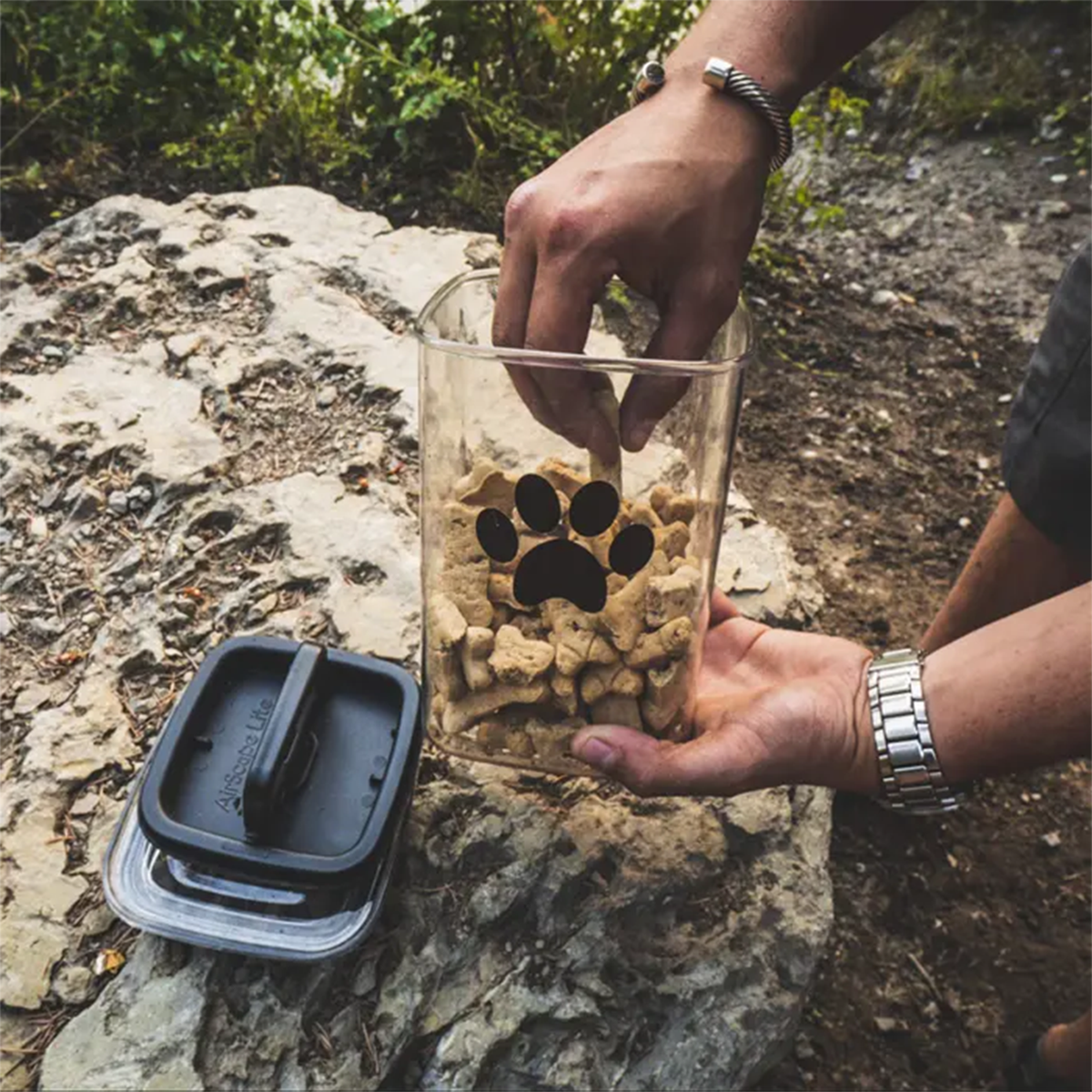
How to Store Dry Dog Food: Keep Kibble Fresh to the Last Scoop
Sustainable Food Storage Containers That Actually Work
Share:
French Press vs Moka Pot: Which Brews Better Coffee?
Glass vs Plastic Storage Containers: Which Is Right for You?