





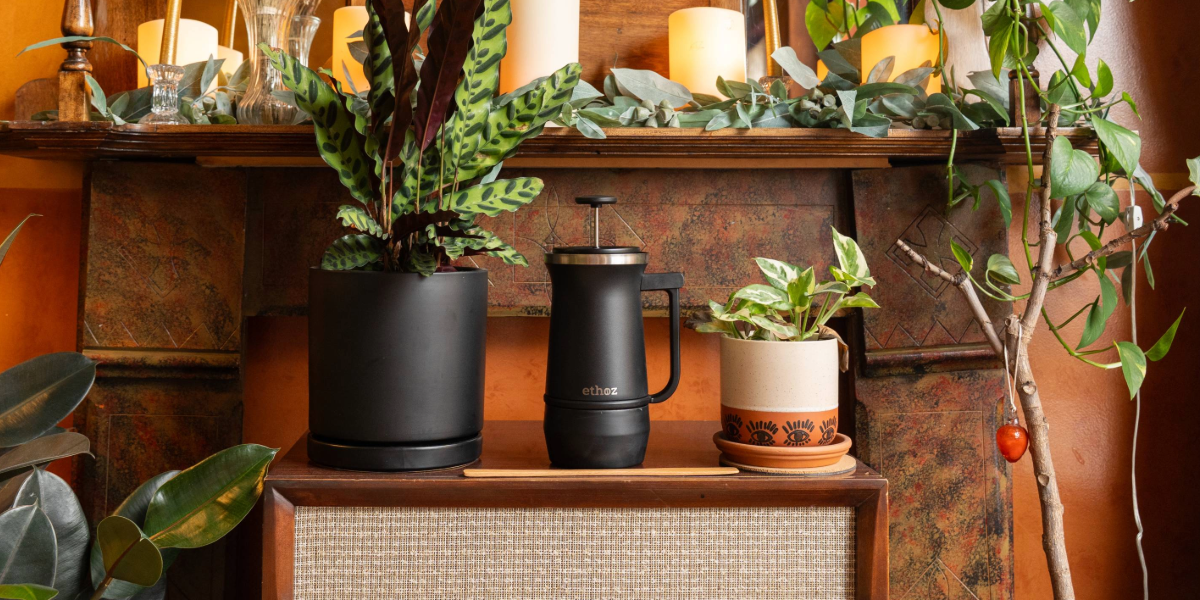
- by Madeline Staples
French Press vs Moka Pot: Which Brews Better Coffee?
- by Madeline Staples
A French press makes full-bodied coffee with a rich mouthfeel by steeping coarse grounds in hot water for four minutes. A moka pot forces pressurized steam through fine grounds to produce concentrated, espresso-style coffee in about five minutes on the stove. Both deliver strong coffee without electricity, but they're built for different tastes and routines.
This guide is for home brewers deciding between these two manual methods, whether you're setting up your first coffee corner in 2026 or replacing gear that hasn't delivered. We'll compare brewing process, flavor profile, ease of use, cleanup, durability, and cost so you can choose the brewer that fits your mornings.
Here's what we'll cover:
A French press steeps coarse coffee grounds in hot water, then uses a metal mesh plunger to separate grounds from brewed coffee. You heat water to about 200°F, pour it over coarse grounds (roughly two tablespoons per six ounces of water), stir once, and let it steep for four minutes. Press the plunger slowly, and the coffee is ready to pour.
The mesh filter allows coffee oils and fine particles to pass through, which is what gives French press coffee its signature full body and rich texture. You'll notice more sediment in the cup compared to paper-filtered methods. That's the tradeoff for fuller flavor.
Standard French presses keep brewing after you press the plunger because the grounds remain in contact with the coffee. That's why most guides tell you to drink it within 15 minutes before bitterness sets in. The BruTrek® line solves this with Bru-Stop®, a flexible stainless steel plate and silicone gasket that seal the grounds off after pressing. The result: bold coffee with no bitterness and no rush to finish the pot.
Total time from boil to first sip: about five minutes. The brewing process is forgiving and hard to ruin, which makes it approachable for beginners and reliable for camp or travel.
A moka pot uses steam pressure to force hot water up through finely ground coffee, producing concentrated coffee that sits between drip and espresso. The three-chamber design has water in the bottom, a filter basket of grounds in the middle, and an empty upper chamber where brewed coffee collects.
You fill the bottom chamber with water just below the pressure valve, load the filter basket with fine grounds (don't tamp), screw the top on, and place it over medium heat. As the water heats, steam pressure builds and pushes water up through the grounds into the top chamber. You'll hear a hissing, bubbling sound when it's done, usually in four to six minutes depending on your stove.
The brewing process produces coffee with roughly 2.5–3.0% total dissolved solids, compared to 1.2–1.5% for French press. That higher concentration gives moka pot coffee its espresso-like strength and makes it a natural base for milk drinks like lattes or cappuccinos.
Moka pots require attention. If the heat is too high, the coffee extracts too fast and tastes burnt. If it's too low, extraction stalls. You're also stuck with the capacity you bought: an eight-cup moka pot won't brew a good single serving. It's a method that rewards practice but punishes inattention.
French press coffee tastes full-bodied and aromatic, with a heavier mouthfeel than drip or pour-over. The metal mesh filter lets oils and fine particles through, which carries more flavor compounds into the cup. You'll taste the bean's natural character clearly (fruity notes in a light roast, chocolate or caramel in a darker one) without paper filtering them out.
The sediment at the bottom of the cup is part of the experience. Some drinkers love the texture; others find it gritty. Coarse grind size matters here; fine grounds slip through the mesh and turn your coffee muddy.
Moka pot coffee is concentrated and bold, closer to espresso than drip. The pressure extraction pulls out more dissolved solids, which creates a thicker body and stronger flavor. It tends to emphasize darker, roasted notes, think bittersweet chocolate or toasted nuts, and can taste slightly metallic if your aluminum pot isn't clean or your heat was too high.
Because it's concentrated, moka pot coffee works well with milk. A shot of moka coffee with steamed milk makes a solid homemade latte. French press coffee is already diluted to drinking strength, so adding milk softens it rather than balancing concentration.
Moka pot coffee tastes stronger because it's more concentrated. French press coffee has more body and richness, but it's brewed to drinking strength. If you want a bold, sippable black coffee, French press delivers. If you want concentrated coffee to drink straight or mix with milk, moka pot is the move.
French press is simpler. Heat water, pour, wait four minutes, press. The process is consistent across all French presses, and the only variable you control is steep time. Cleanup means rinsing grounds out of the carafe and washing the plunger: quick if you do it right after brewing, annoying if grounds dry and stick.
Moka pot requires more attention. You need to dial in the grind size, manage stovetop heat, and listen for the hissing that signals the brew is done. Leave it on heat too long and the last bit of coffee that comes through tastes burnt. Underfill the basket and extraction is weak. It's not complicated, but it's less forgiving than a French press.
Cleanup is straightforward but frequent: rinse all three chambers, wipe the gasket, and check the filter screen for clogs. Aluminum moka pots develop a patina over time that some say improves flavor; stainless models stay cleaner but cost more.
If you want coffee with minimal thinking at 6 a.m., French press wins. If you're willing to pay attention for concentrated coffee, moka pot delivers.
Both take about five minutes from start to finish, but the time is spent differently. French press is mostly passive: you pour, wait, and press. Moka pot requires you to stay nearby and listen for the brew to finish so you can pull it off the heat.
French press fits distracted mornings. You can start the steep, pack your bag, and come back to press. Moka pot demands presence: walk away and you risk burnt coffee or an empty pot boiling dry.
For camp or travel, the BruTrek® BaseCamp and travel press models add double-walled vacuum insulation, which keeps water hot through the steep even in cold weather. That's a genuine advantage outdoors where ambient temperature would otherwise cool an uninsulated glass press too fast for proper extraction.
Durability depends on material. Glass French presses shatter when dropped: fine at home, a liability in a backpack. Stainless steel French presses like the BruTrek® line are built for durability: drop them, pack them, toss them in a camp bin, and they keep working. Double-walled vacuum insulation also means no external condensation and no burnt fingers on a hot carafe.
Moka pots are stovetop-tough by design. Aluminum models dent but don't break. Stainless models are heavier and more expensive but handle induction stovetops and last longer without corrosion. The gasket and filter screen are the only parts that wear out, and both are cheap to replace.
If you're brewing at home on a counter, either method will last years. If you're brewing outdoors, at a cabin, or on the road, stainless steel wins. Glass doesn't belong in a duffel bag.
French press cleanup is fast if you do it immediately: knock the grounds into compost or trash, rinse the carafe, and wash the plunger. Let it sit and grounds stick to the mesh, which means disassembling the plunger and scrubbing. Plan to deep-clean the mesh filter weekly to prevent oil buildup.
Moka pot cleanup is more frequent but simpler: rinse all three chambers after every brew, wipe the gasket, and check the filter screen. Don't use soap on aluminum models; it strips the protective patina and can leave a soapy taste. Stainless models tolerate soap but still benefit from a hot water rinse.
Both methods create compostable waste, just coffee grounds, no paper filters or plastic pods. That's part of why manual brewing has grown in 2026: zero-plastic hot paths and less landfill waste compared to single-serve machines.
Basic glass French presses start around $20 to $30. Stainless and insulated models run $40 to $70 depending on size and features. The BruTrek® Double Shot 4.0 (16 oz) is $48, the Steel Toe 3.0 (20 oz) is $42, and the BaseCamp (32–48 oz) is $59. You're paying for double-walled insulation, Bru-Stop® anti-bitterness technology, and durability that outlasts glass.
Moka pots range from $25 for a small aluminum stovetop model to $80+ for larger stainless versions with induction compatibility. Bialetti remains the category leader, with the Brikka and other models consistently ranked in 2026 guides. Electric moka pots exist but cost more and defeat the off-grid appeal.
Both methods are one-time purchases with no recurring costs beyond coffee beans. Compare that to pod machines, where the capsules add up fast, or drip makers that need paper filters. Manual brewing saves money and reduces waste, two reasons the French press market hit $1.37 billion in 2026 and is projected to reach $2.11 billion by 2035 at a 4.94% compound annual growth rate.
Choose a French press if you want full-bodied, aromatic coffee that's easy to brew and hard to mess up. It's the better choice for black coffee drinkers who value richness and mouthfeel, for beginners who want a forgiving method, and for anyone brewing outdoors or traveling where durability and insulation matter. The BruTrek® line adds Bru-Stop® to prevent over-extraction, so your coffee stays bold without turning bitter, even if you don't drink it right away.
Choose a moka pot if you want concentrated, espresso-style coffee and you're willing to manage heat and timing. It's the better choice for milk-drink lovers who want a latte or cappuccino base at home, for drinkers who prefer strong, intense coffee, and for anyone with a stovetop and five minutes of focus. Stainless models work on induction and last longer, but aluminum classics still dominate the category.
Yes, and many home brewers do. French press for lazy mornings and full pots, moka pot for concentrated shots and milk drinks. They're complementary, not competitive. The French press market and moka pot market are both growing in 2026, $1.37 billion and $1.2 billion respectively, because manual brewing appeals to different needs on different days.
Feature |
French Press |
Moka Pot |
|---|---|---|
Brewing method |
Immersion steeping with mesh filter |
Pressurized steam extraction |
Flavor profile |
Full-bodied, aromatic, rich mouthfeel |
Concentrated, bold, espresso-style |
Strength (TDS) |
1.2–1.5% |
2.5–3.0% |
Grind size |
Coarse |
Fine |
Brew time |
~5 minutes (mostly passive) |
~5 minutes (requires attention) |
Ease of use |
Very easy, forgiving |
Moderate, requires heat management |
Cleanup |
Quick rinse, weekly deep clean |
Rinse after every brew, simple |
Durability |
Glass breaks; stainless lasts |
Aluminum dents; stainless lasts longest |
Best for |
Black coffee, outdoor use, beginners |
Milk drinks, concentrated coffee, stovetop brewing |
Price range |
$20–$70 |
$25–$80+ |
Can you make espresso with a French press or moka pot? No. True espresso requires nine bars of pressure, which neither brewer produces. A moka pot generates about 1.5 bars and makes concentrated coffee that's closer to espresso than drip, but it's not the same. French press doesn't use pressure at all, it's an immersion method. Both make strong coffee, but if you want real espresso, you need an espresso machine.
Which brewer is better for camping? French press, especially an insulated stainless model like the BruTrek® BaseCamp. Glass presses shatter in packs, and moka pots need a stable stove and careful heat control. An insulated press keeps water hot through the steep even in cold weather, doubles as a drinking vessel to save pack weight, and survives drops and rough handling. The BruTrek® travel presses (Double Shot, Steel Toe, OVRLNDR®) are brew-and-drink designs built specifically for backpacking and van life.
Do you need a grinder for French press or moka pot? Yes, for best results. French press requires coarse grounds; pre-ground coffee is usually too fine and produces grit. Moka pot needs fine grounds, closer to espresso than drip. A burr grinder gives you consistent particle size, which matters more for these methods than for drip. If you're buying pre-ground, ask for "French press coarse" or "espresso fine" depending on your brewer.
How do you prevent bitter coffee in a French press? Use coarse grounds, steep for exactly four minutes, and press slowly. Bitterness comes from over-extraction, either steeping too long or using water that's too hot (above 205°F). Standard French presses keep extracting after you press because grounds stay in contact with the coffee, which is why most guides say to pour immediately. The BruTrek® Bru-Stop® system uses a flexible stainless steel plate and silicone gasket to seal grounds off after pressing, which stops extraction and prevents bitterness even if the coffee sits.
Can you use a moka pot on an induction stove? Only if it's stainless steel. Aluminum moka pots don't work on induction because aluminum isn't magnetic. Stainless models cost more but handle induction, gas, and electric stovetops. Check the base before you buy: if a magnet sticks to it, it'll work on induction.
French press and moka pot both deliver strong, manual-brewed coffee without electricity or waste, but they're built for different tastes. French press makes full-bodied, aromatic coffee that's easy to brew and forgiving to learn. Moka pot makes concentrated, espresso-style coffee that works beautifully with milk but demands attention on the stove. Choose based on how you drink your coffee and where you brew it.
If you're brewing outdoors, traveling, or want gear that survives daily use without breaking, the BruTrek® line brings durability and Bru-Stop® technology to the French press category. Insulated stainless steel construction, a seal that stops over-extraction, and Montana-designed reliability for coffee anywhere you roam. Explore the full BruTrek® collection and find the press that fits your mornings, at home, in camp, or on the road.
Can You Store Coffee and Cannabis Together? A Side-by-Side Storage Guide
Caffeine and Cannabis: What the Research Actually Says
How to Store Pre-Rolls So They Don't Dry Out
How to Store Dry Dog Food: Keep Kibble Fresh to the Last Scoop
Sustainable Food Storage Containers That Actually Work
Share:
How Much Caffeine in Different Teas: A Complete Guide
Best Way to Store Cannabis Buds: Complete 2026 Guide