





- by Madeline Staples
Caffeine and Cannabis: What the Research Actually Says
- by Madeline Staples
Research on caffeine and cannabis is limited, and it doesn't support the popular idea that coffee "cancels out" a high. A 2025 Johns Hopkins trial in people found that caffeine produced minimal changes in how THC felt, how it impaired performance, or how the body processed it. Animal studies suggest the two do interact in the brain, mainly through adenosine receptors, but not always in the balancing way people expect.
This guide is for anyone who's heard that coffee sharpens a cannabis high, or that a strong cup will sober you up, and wants to know what the science actually shows. Most of what circulates online is anecdote passed off as fact, while the real studies are smaller, more specific, and more interesting than the myths. We'll walk through how each substance works, what the key studies found, and where the evidence still runs out.
Here's what we'll cover:
How caffeine and THC each act on the brain
Where the adenosine and endocannabinoid systems overlap
What animal studies found about memory and reward
What a 2025 human trial found about caffeine, CBD and THC
Common myths, and what the evidence doesn't support
This article is for general information and isn't medical advice. If you have a heart condition, anxiety disorder, or take medication, talk to your doctor before combining caffeine and cannabis.
Both are everyday habits for millions of Americans. The National Coffee Association's Spring 2026 National Coffee Data Trends report found that 66% of U.S. adults drank coffee in the past day. A Gallup poll published in August 2026 found that 17% of Americans say they smoke marijuana, tying the record high. With that much overlap, the combination was bound to become a ritual of its own, and "wake and bake" has been part of cannabis culture for decades.
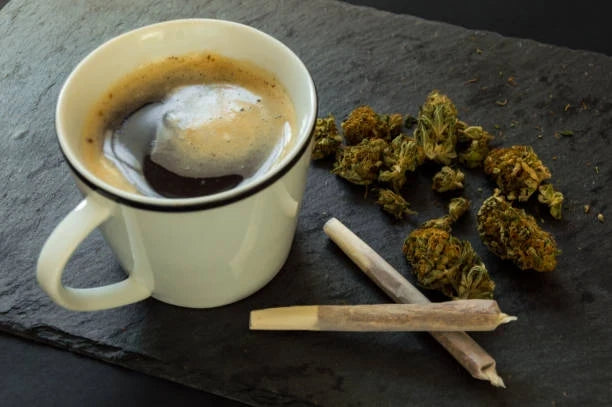
The appeal is easy to understand in theory. Caffeine is a stimulant, cannabis is often relaxing, and the idea of one balancing the other sounds tidy. We covered the history and flavor side of that ritual in Caffeine Meets Cannabis. This post focuses on the science, which turns out to be less tidy than the theory.
Caffeine works mainly by blocking adenosine. Adenosine is a compound that builds up in your brain over the course of the day and binds to receptors that slow nerve activity, which is part of why you feel tired by evening. Caffeine has a similar shape, so it sits in those receptors without activating them. Adenosine can't do its job, and you feel more alert.
There are several types of adenosine receptors, and two matter most here. A1 receptors are spread throughout the brain, including the hippocampus, which handles memory. A2A receptors are concentrated in areas tied to movement, motivation and reward. Caffeine blocks both, and that detail becomes important when you look at how it might interact with cannabis.
THC acts on the endocannabinoid system, a signaling network your body uses to help regulate mood, memory, appetite, pain and stress. Your body makes its own cannabinoid compounds, and THC mimics them closely enough to activate cannabinoid receptors, especially the CB1 receptors found throughout the brain.
When THC activates CB1 receptors, it changes how neurons release other chemical messengers. That's behind the familiar effects of cannabis, from relaxation and altered perception to changes in short-term memory and coordination. CB1 receptors are dense in the same regions where adenosine receptors are active, including the hippocampus and the brain's reward circuitry.
The overlap is in location and in signaling. Adenosine receptors and cannabinoid receptors sit in many of the same brain regions, and research suggests they influence each other. In other words, changing adenosine signaling with caffeine may change how the brain responds to THC, and vice versa.
That's the scientific basis for the idea that caffeine and cannabis interact. What it doesn't tell you is which direction the interaction goes. The overlap could, in theory, make the effects of THC stronger, weaker, or simply different depending on the dose, the brain region, and the person. That's exactly what researchers have tried to test.
One of the most cited studies came from the National Institute on Drug Abuse and was published in The Journal of Neuroscience in 2014. Researchers worked with squirrel monkeys that could give themselves THC freely, and they tested drugs that block A2A adenosine receptors, mimicking part of what caffeine does in the brain.
The results depended on dose and on which receptors were blocked. As reported by Medical Daily, low caffeine-like doses led the monkeys to take less THC, while high caffeine-like doses led them to take more. Blocking receptors on one side of the synapse reduced THC use, and blocking them on the other side increased it.
There are important limits here. The researchers used a caffeine-like compound called MSX-3, not caffeine itself. The subjects were monkeys, not people. And the authors said directly that it was too early to know whether the same effect happens in humans. The study is useful because it shows that adenosine signaling can change how the brain responds to THC, not because it tells anyone how coffee will affect them.
A 2012 study in the British Journal of Pharmacology looked at exactly this question in rats. Researchers led by Leigh Panlilio tested working memory, the short-term memory you use to hold information for a few seconds, under THC, caffeine, and the two combined.
THC on its own impaired working memory at higher doses. The surprising part came when the researchers combined caffeine with a dose of THC too low to cause problems on its own. Together, memory performance dropped. The authors' conclusion was direct: "Caffeine did not counteract memory deficits induced by THC but actually exacerbated them," according to the published abstract.
The researchers tied this to adenosine A1 receptors, which help regulate cannabinoid signaling in the hippocampus. Again, these were rats, not people, and the results don't translate directly to a cup of coffee. But they point in the opposite direction from the common belief that caffeine sharpens the mind while cannabis is active.
A 2018 Northwestern University study came at the question from the coffee side. Researchers followed 47 adults in Finland for three months: one month with no coffee, one month at four cups a day, and one month at eight cups a day. They measured more than 800 metabolites in the participants' blood.
According to Northwestern's summary of the study, published in the Journal of Internal Medicine, heavy coffee drinking lowered levels of metabolites linked to the endocannabinoid system, especially at eight cups a day. That's the opposite of what cannabis does, since cannabis activates that system. This finding led to a wave of headlines calling coffee "the opposite of cannabis."
The study's lead author, Marilyn Cornelis, framed the results as new hypotheses rather than conclusions. It isn't known whether caffeine or another compound in coffee caused the change, and the study didn't involve cannabis at all. What it shows is that coffee touches the same biological system cannabis does, which is a good reason to keep studying how the two interact.
The most useful evidence so far comes from a 2025 Johns Hopkins study published in Neuropsychopharmacology. Twenty healthy adults, ten men and ten women, took oral THC alone and in combination with caffeine or CBD across separate sessions. The study was double-blind, randomized, and placebo-controlled, which is the gold standard for this kind of research.
The headline finding for coffee drinkers: "Caffeine co-administration produced minimal changes in Δ9-THC-induced subjective effects, performance, or metabolism." In plain terms, adding caffeine didn't meaningfully change how strong THC felt, how much it impaired performance on tests, or how the body processed it. The researchers did note some signals around participants' perceived driving impairment.
CBD was a different story. In the same study, combining CBD with THC increased THC's effects and impairment and raised THC levels in the blood. That's worth knowing, because CBD is often described as something that softens THC. In this trial, it did the reverse.
The study has limits of its own. It used oral doses rather than smoked or vaporized cannabis, it involved a small group of healthy adults, and it tested specific amounts. But it's the closest thing to a direct answer we have, and it doesn't support the idea that caffeine is a reliable counterweight to THC.
|
Study |
Year |
Subjects |
What Was Tested |
Main Finding |
Key Caveat
|
|---|---|---|---|---|---|
|
NIDA, Journal of Neuroscience |
2014 |
Squirrel monkeys |
Caffeine-like A2A blocker and THC self-administration |
Low doses reduced THC use; high doses increased it |
Used MSX-3, not caffeine; animal study |
|
Panlilio et al., British Journal of Pharmacology |
2012 |
Rats |
Caffeine and THC on working memory |
Caffeine made THC's memory deficits worse |
Animal study; specific doses |
|
Northwestern, Journal of Internal Medicine |
2018 |
47 adults |
Four and eight cups of coffee a day |
Lowered endocannabinoid-related metabolites |
No cannabis involved; cause within coffee unknown |
|
Johns Hopkins, Neuropsychopharmacology |
2025 |
20 adults |
Oral THC with caffeine or CBD |
Caffeine changed little; CBD increased THC's effects |
Small sample; oral dosing only |
Both substances affect the cardiovascular system. THC commonly raises heart rate, an effect documented in research reviews such as this overview of cannabis and cardiovascular health from the National Library of Medicine. Caffeine is a stimulant, and some people notice a faster heartbeat or jitteriness after coffee, especially in larger amounts.
There isn't strong research on what the two do to heart rate together, so no one can promise the combination is safe or unsafe for everyone. What's clear is that both can contribute to feelings of restlessness or anxiety in some people. If you have a heart condition, high blood pressure, or an anxiety disorder, that's a conversation for your doctor, not a blog post.
"Coffee cancels out a high" is the first and most common myth. The best human evidence available, the 2025 Johns Hopkins trial, found caffeine made minimal difference to THC's effects or impairment. Feeling more awake isn't the same as being less impaired.
"Caffeine keeps your memory sharp on cannabis" is the second. The only controlled study on this question, in rats, found the opposite: caffeine made THC's working memory problems worse.
"Animal studies tell you what will happen to you" is the third. The monkey and rat studies are valuable because they reveal mechanisms, but their authors are careful to say the results may not transfer to people. Headlines are usually less careful.
"CBD always mellows out THC" is the fourth, and it's the one that surprised researchers. In the Johns Hopkins trial, CBD increased THC's effects and blood levels rather than softening them.
"Coffee is the opposite of cannabis" is the last. The Northwestern study found heavy coffee drinking lowered endocannabinoid-related metabolites, which is an intriguing link. But it didn't test cannabis, and it doesn't mean coffee reverses a cannabis high.
The research above is about chemistry inside the body. The chemistry inside the container matters too, and it's the part you control completely. Much of what people love about both coffee and cannabis is aroma: the volatile compounds in roasted beans and the terpenes in flower. Both are fragile, and both fade when they're exposed to oxygen, light, heat, and the wrong moisture.
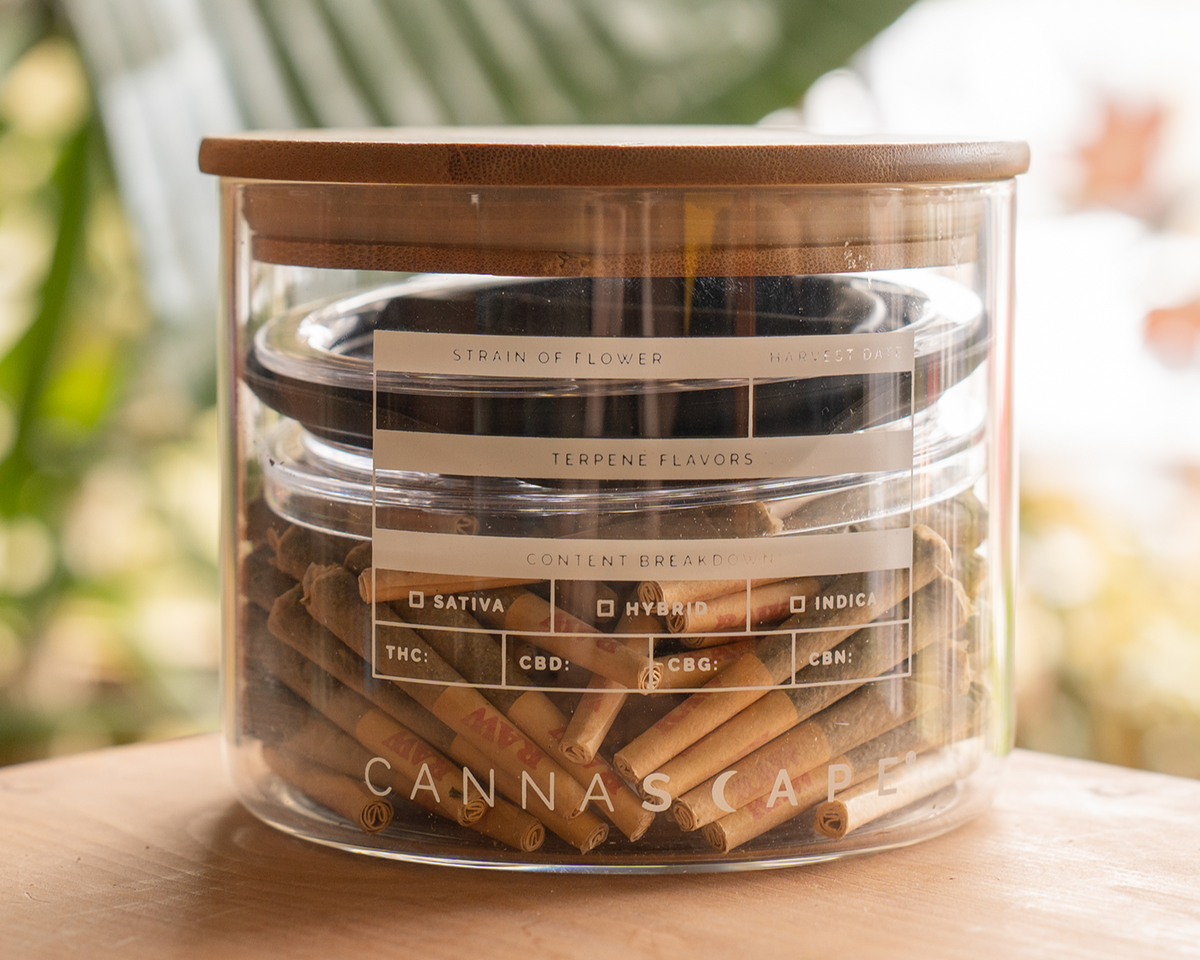
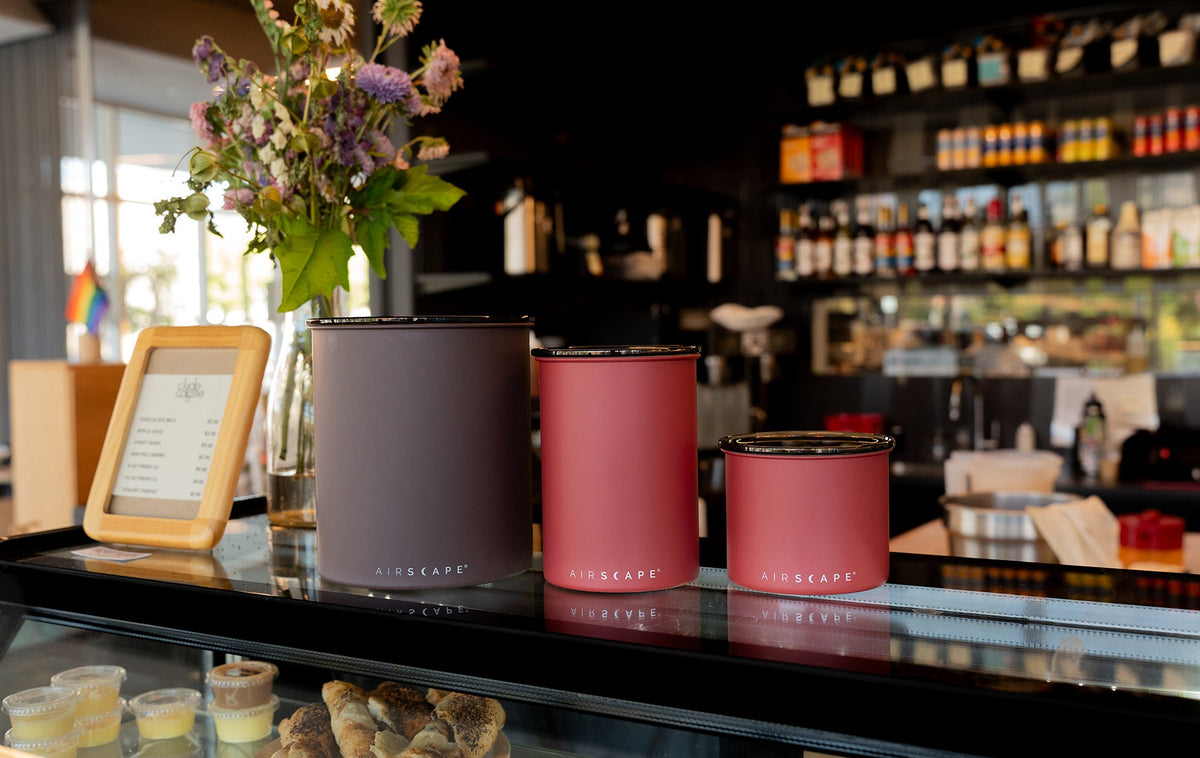
That's where storage comes in. Airscape® canisters and Cannascape® stash jars use the same airless-valve design: an outer lid closes the container, and an inner lid descends onto the contents, pushing air out through a one-way valve as it goes. The valve lets air out but won't let it back in, so you remove oxygen instead of trapping it. Coffee stays dry in its canister. Flower stays at 58–62% relative humidity in its jar with a two-way humidity pack. For the full side-by-side setup, see our guide to storing coffee and cannabis together.
Does coffee make you less high? The best available human evidence says no. A 2025 Johns Hopkins study found that caffeine produced minimal changes in THC's subjective effects, performance impairment, or metabolism. Coffee may make you feel more awake, but that isn't the same as reducing impairment.
Is it safe to mix caffeine and cannabis? There isn't enough research to give a blanket answer, and it depends on your health and other factors. Both can raise heart rate and contribute to anxiety in some people. If you have a heart condition, an anxiety disorder, or take medication, talk to your doctor first.
Why do people say coffee is the opposite of weed? That idea comes from a 2018 Northwestern study that found heavy coffee drinking lowered blood levels of metabolites linked to the endocannabinoid system, the same system THC activates. The study didn't involve cannabis, though, and the researchers presented the findings as hypotheses to explore, not proof that coffee counteracts cannabis.
Does caffeine affect memory when combined with THC? In a 2012 rat study published in the British Journal of Pharmacology, caffeine made THC's effects on working memory worse rather than better. The researchers linked this to adenosine receptors in the hippocampus. It hasn't been confirmed in humans, but it challenges the common belief that coffee sharpens your thinking on cannabis.
Does CBD reduce the effects of THC? Not in the most recent controlled study. The 2025 Johns Hopkins trial found that combining CBD with oral THC increased THC's effects and impairment and raised THC levels in the blood. Results may differ with other forms and amounts, but the idea that CBD always softens THC isn't supported by this research.
The science on caffeine and cannabis is still young, and the honest summary is more modest than the myths. The two substances do act on overlapping brain systems. In animals, that overlap can change how THC affects reward and memory, sometimes for the worse. In the best human study so far, caffeine barely changed THC's effects at all. Anyone who tells you exactly what coffee will do to your high is getting ahead of the evidence.
What isn't in doubt is that both coffee and cannabis are at their best when they're fresh. The aromas that make a great cup and a great strain are volatile compounds that oxygen, light, and heat steadily wear down.
Airscape® canisters and Cannascape® stash jars apply the same airless-valve engineering to both, creating an active seal rather than a passive one. Shop Airscape® for your beans and Cannascape® for your flower, and keep both tasting the way they're supposed to.
Can You Store Coffee and Cannabis Together? A Side-by-Side Storage Guide
Caffeine and Cannabis: What the Research Actually Says
How to Store Pre-Rolls So They Don't Dry Out
How to Store Dry Dog Food: Keep Kibble Fresh to the Last Scoop
Sustainable Food Storage Containers That Actually Work
Share:
How to Store Pre-Rolls So They Don't Dry Out
Can You Store Coffee and Cannabis Together? A Side-by-Side Storage Guide