The best reusable grocery tote is the one you'll carry for years. Life cycle studies show a cotton tote has to be reused dozens to thousands of times before it beats a single-use plastic bag, depending on which impacts you count, so durability, structure and a design you actually want to bring to the store matter more than the material label. Wash or wipe it regularly, too: one study found coliform bacteria in about half of reusable bags tested.
This guide is for anyone standing in a kitchen with a drawer full of reusable bags they rarely use, wondering which one is worth keeping and whether any of them is doing the planet a favor. It's also for people who want to buy one good grocery tote instead of collecting ten mediocre ones. We'll walk through what the research says, how common materials compare and what to look for in a bag that earns its footprint.
You'll learn:
- What life cycle assessments actually say about canvas, paper and plastic bags
- Why the number of times you reuse a bag matters more than its material
- How cotton canvas, polypropylene and other materials compare side by side
- Which design features make a grocery tote worth carrying for years
- How to keep a reusable bag clean and food-safe
Are Reusable Grocery Bags Really Better for the Environment?
They can be, but only if you use them. That's the short, slightly uncomfortable answer from the research.
A reusable bag takes more material and energy to make than a thin single-use bag. Its environmental advantage comes from replacing many single-use bags over its lifetime. If it sits in a drawer, it never pays back what it cost to produce. If it goes to the store every week for years, it does.
The most cited study here is the 2018 life cycle assessment of grocery carrier bags by the Danish Environmental Protection Agency. It compared bags across a wide range of environmental impacts, from climate change to water use and toxicity, and calculated how many times each alternative would need to be reused to match a conventional plastic bag that's reused once as a bin liner.
How Many Times Do You Need to Use a Cotton Tote?
This is where the numbers get eye-opening. According to the Danish EPA study, a conventional cotton bag would need to be reused about 7,100 times to match a plastic bag across all the environmental indicators it measured, and an organic cotton bag about 20,000 times, largely because organic cotton yields less per acre. When the same study looked only at climate impact, the number for cotton dropped to about 52 uses.
A 2020 United Nations Environment Programme review of ten life cycle studies, reported by CNN, put the climate break-even for a cotton bag at roughly 50 to 150 uses. The same reporting notes that a thick, durable woven polypropylene bag needs an estimated 10 to 20 uses to beat one single-use plastic bag on climate.
Those ranges are wide, and the researchers themselves caution that life cycle results depend heavily on assumptions. But the takeaway is consistent. Fifty uses is one year of weekly shopping. Seven thousand is more than a lifetime. Climate payback is very achievable for a canvas tote you love. Full payback across every impact is not, which is exactly why the worst outcome is a pile of bags you never use.
What This Means for Your Choice
Don't chase the "greenest" material on paper. Pick a bag you'll use every single week for many years, and stop accepting free totes you don't need. One durable bag used five hundred times beats ten bags used fifty times each.
Which Grocery Tote Material Should You Choose?
Each common material has honest trade-offs. Here's how they stack up for everyday grocery shopping.
Cotton canvas is strong, breathable and comfortable to carry. Heavyweight canvas holds its shape better than thin cotton, resists tearing and can last for years. Its weaknesses are a higher production footprint and a tendency to absorb stains and moisture, so it needs a protectant and regular spot cleaning.
Woven polypropylene, the familiar stiff supermarket bag, is cheap, light and wipeable. It has a lower climate break-even than cotton. The trade-off is lifespan: seams and handles often wear out, the material can crack, and it's still plastic.
Non-woven polypropylene, the thin fabric-feel bags often given away at events, is the least durable of the reusable options. It tears and frays and frequently ends up in the trash long before it's paid for itself.
Paper bags are recyclable and compostable, but they tear when wet and rarely survive more than a few trips. They're better treated as an occasional backup than a reusable system.
Jute and other natural fibers are sturdy and biodegradable, but can be scratchy, shed fibers and absorb moisture.
Reusable Grocery Bag Materials Compared
This table summarizes the trade-offs for everyday grocery use. Reuse figures are climate-only estimates from the studies cited above and are meant as rough guides, not precise targets.
| Material |
Durability |
Holds Its Shape |
Easy to Clean |
Approx. Climate Break-Even |
Best For |
| Heavyweight cotton canvas |
High, years of use |
Good, excellent with a structured base |
Spot clean, protectant helps |
About 50–150 uses |
Weekly shopping for many years |
| Woven polypropylene |
Moderate |
Fair |
Wipes clean |
About 10–20 uses |
Budget everyday bag |
| Non-woven polypropylene |
Low |
Poor |
Wipes clean, frays |
Varies, often not reached |
Occasional backup |
| Paper |
Very low |
Poor when wet |
Not washable |
A few uses |
Emergency backup |
| Jute |
High |
Good |
Hard to clean |
Not well studied |
Dry goods, produce |
Notice the pattern. The materials with lower break-even numbers also tend to wear out sooner. A canvas tote takes longer to pay off, but it also lasts long enough to get there, provided you keep using it.
What Makes a Grocery Tote Worth Carrying for Years?
If durability and daily use are what make a reusable bag worthwhile, design is what makes you reach for it. Five features matter most.
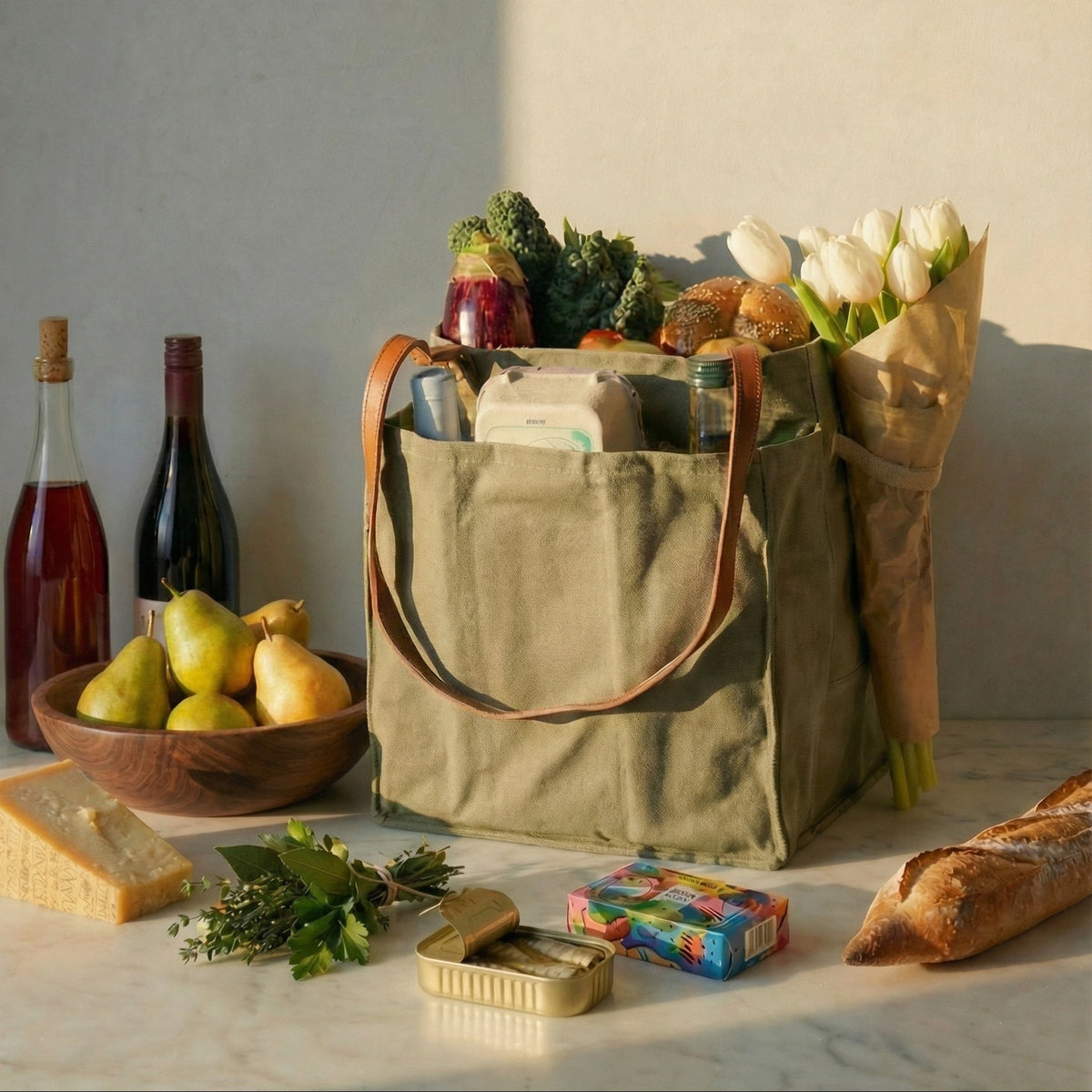
A structured base is the first. Bags that collapse when you set them down are annoying at checkout and dangerous for eggs in the trunk. A rigid base keeps the bag upright, which makes it easier to pack and less likely to spill.
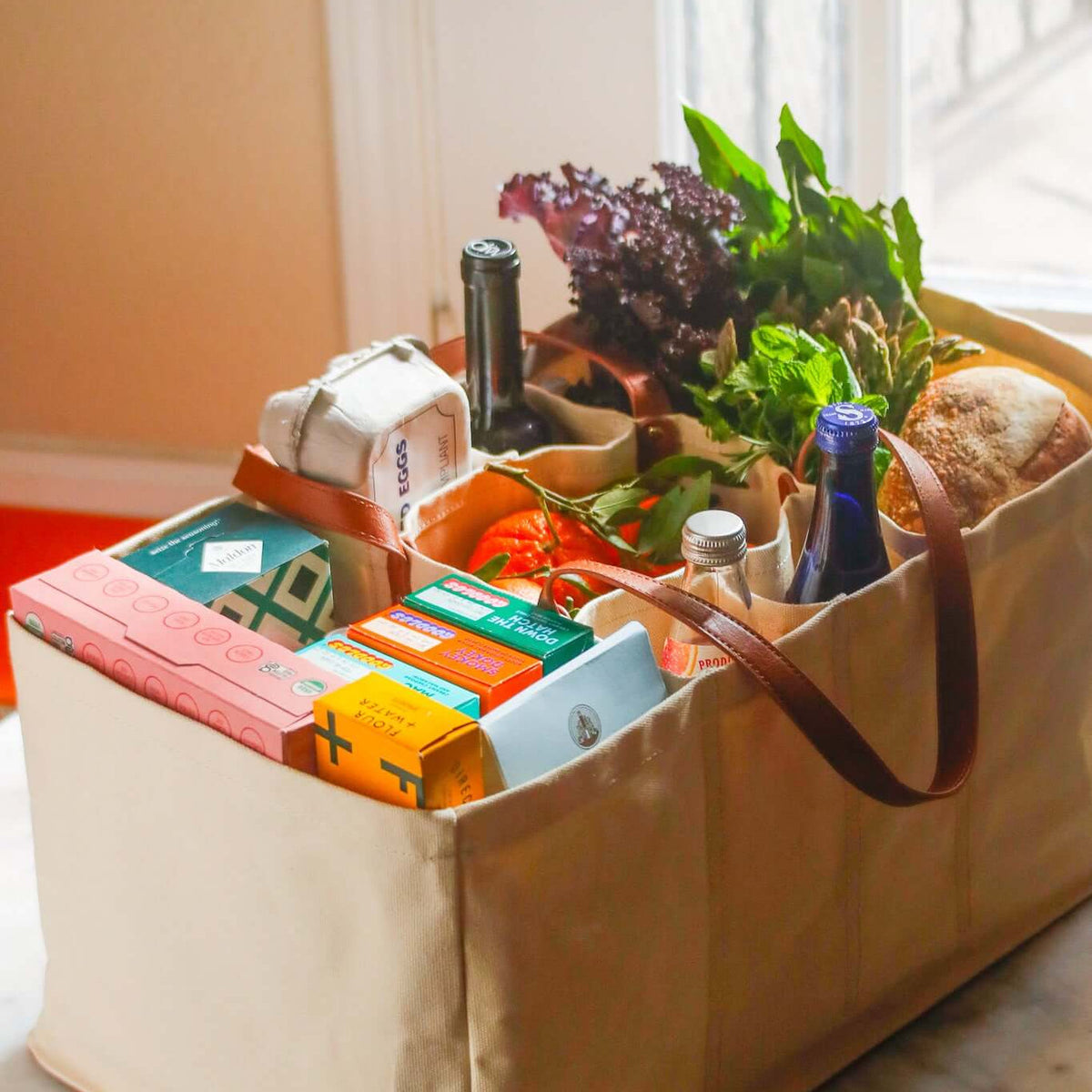
Compartments are the second. A single open pouch piles everything together, so fragile items end up crushed. Pockets sized for eggs, bottles and bread keep groceries separated and upright.
Strong handles are the third. Handles are where cheap bags fail first. Wide, well-attached handles make a heavy load comfortable and give the bag a long life.
A realistic size is the fourth. A bag that's too big gets overloaded and painful to carry. One that's too small gets left at home because it can't handle a real trip.
A design you actually like is the fifth, and it isn't vanity. You're far more likely to grab a bag you enjoy carrying, and every trip it makes is another step toward paying off its footprint.
How Our Grocery Totes Approach It
At Planetary Design, the CapaBunga® totes were built around those five features. The Large Multi-Pocket Grocery Tote is canvas with a vegan leather base that lets it stand on its own. It measures 19.5" x 12" x 10", carries at least 55 pounds and is divided into four internal pockets, one mid-size pocket and two large sections, so eggs, bottles and fragile produce each get their own space. Food & Wine named it the best splurge in its roundup of tote bags for groceries.
For smaller weekly trips, the Multi-Pocket Canvas Market Tote is the original: 11.5" x 11" x 13", six external pockets, a flower holder, an interior phone pocket and a built-in carabiner, rated to carry at least 35 pounds. If you prefer genuine leather, the Deluxe Market Tote swaps the vegan leather base and handles for genuine leather.
Do Reusable Grocery Bags Carry Bacteria?
They can, and it's the part of the reusable bag story that gets the least attention.
A peer-reviewed study by researchers at the University of Arizona and Loma Linda University, published in Food Protection Trends, tested reusable bags collected at random from shoppers in California and Arizona. The researchers found large numbers of bacteria in almost all of the bags and coliform bacteria in about half. When meat juices were added to bags and left in a car trunk for two hours, bacteria counts increased tenfold. The good news: hand or machine washing reduced bacteria in the bags by more than 99.9%.
The researchers also found that 97% of the shoppers they interviewed had never washed their reusable bags, and many used them for gym clothes and other non-food items between grocery trips.
None of this means reusable bags are dangerous. It means they need the same basic care as a cutting board or a dish towel.
How Do You Keep a Reusable Grocery Tote Clean?
The right cleaning method depends on the material. Always follow the care instructions for your specific bag.
Plain cotton totes without structure can usually go through the washing machine. Plastic-lined and insulated bags should be scrubbed with hot, soapy water and air dried, a method Kansas State University and University of Missouri Extension recommend for those bags. Woven polypropylene wipes clean with a soapy cloth.
Structured canvas totes with leather or vegan leather bases need gentler treatment. Machine washing can warp the base and damage the leather. For our totes, we recommend treating the canvas with a spray-on fabric protectant such as Scotchgard™ before the first use, then spot cleaning the canvas and vegan leather with warm, soapy water and a sponge and letting the bag air dry.
Because a structured tote can't go in the washing machine, the most important habit is keeping raw meat out of it. FoodSafety.gov advises putting raw meat and poultry in a separate bag from fruits and vegetables. Our Black Insulated Insert fits the center section of the Market Tote and gives meat, fish and dairy their own chilled zone. Wipe it down after any trip that involved raw protein and let it dry open. Please check the product page for the latest care guidance on the insert.
What Are the Most Common Reusable Bag Mistakes?
Collecting too many bags is the first and most common mistake. Every free tote you accept adds to the production footprint without replacing a single plastic bag unless you actually use it. Keep the bags you use, and donate or pass along the rest to a food pantry or someone who will.
Leaving bags at home is the second. A reusable bag only helps when it comes with you. Keep it by the door, hang it on your keys or store it in the car so it's there when you need it. A bag with a built-in carabiner or a spot by the front door makes this a lot easier.
Never cleaning them is the third. Bags that carry food every week and never get wiped or washed can harbor bacteria. Clean them on a schedule that matches how you use them, and always after a leak.
Mixing raw meat with produce is the fourth. Keep raw meat and poultry in their own bag or insulated section, even when the packaging seems secure.
Using grocery bags for everything is the fifth. Gym clothes, garden tools and children's toys can bring dirt and bacteria into the same bag that carries your lettuce. If you love a tote for everything, give it a good cleaning before it goes back to grocery duty, or keep a dedicated one for food.
How Long Should a Good Grocery Tote Last?
There's no official lifespan, but here's a useful way to think about it. If a canvas tote needs roughly 50 to 150 uses to pay back its climate footprint, then weekly shopping gets you there in one to three years. Everything after that is a genuine environmental gain on climate, and good value on cost per use.
A well-made canvas tote with strong handles and a protected base should comfortably outlast that window with basic care. The main things that end a bag's life early are torn handles, failed seams and stains that make you stop wanting to carry it. Choosing heavyweight canvas, treating it before the first use and spot cleaning regularly address all three.
When a bag finally does wear out, give it a second job before it leaves the house: storage for garden tools, a car trunk organizer or a bag for donations.
Frequently Asked Questions
What is the most eco-friendly grocery tote? The most eco-friendly grocery tote is the one you reuse the most times. Life cycle studies show cotton has a higher production footprint than plastic, but a durable canvas bag used weekly for years can more than pay back its climate impact. A bag that sits unused, whatever its material, never does.
Are canvas grocery bags better than plastic reusable bags? It depends on how long you'll use them. Woven polypropylene bags pay back their climate footprint faster, in about 10 to 20 uses, but they tend to wear out sooner. Heavyweight canvas takes longer to pay off but lasts much longer, is more comfortable to carry and holds up better under heavy loads.
How often should you wash reusable grocery bags? Clean them regularly based on use, and always after a spill or any trip with raw meat. Researchers found that washing reduces bacteria in reusable bags by more than 99.9%. Follow the care label: machine wash plain cotton, scrub insulated bags by hand and spot clean structured canvas totes with leather bases.
Can you put a canvas grocery tote in the washing machine? Plain, unstructured cotton totes usually can. Structured totes with leather or vegan leather bases and handles generally shouldn't, because the base can warp and the leather can be damaged. Spot clean those with warm, soapy water and a sponge, then air dry.
How much weight can a reusable grocery tote hold? It varies widely by construction. Thin non-woven bags may only handle a few pounds before the handles fail, while heavyweight canvas totes can carry far more. Our Market Tote is rated to carry at least 35 pounds and our Large Multi-Pocket Grocery Tote at least 55 pounds.
One Good Bag Beats a Drawer Full
The research on reusable bags points to a simple, practical conclusion. Materials matter, but use matters more. The best thing you can do for the environment and your groceries is choose one durable, well-designed tote, carry it every week and keep it clean.
Look for a bag with a structured base, real compartments, strong handles and a size that fits how you shop. Treat it before the first use, wipe it after messy trips and keep raw meat in its own section. Do that, and a single tote can serve you for years and actually earn its footprint.
If you're ready to trade the drawer full of giveaways for one bag built to last, explore our Market Tote collection, including the original Multi-Pocket Market Tote, the Large Multi-Pocket Grocery Tote and an insulated insert for perishables.







Share:
What to Bring to the Farmers Market: How to Pack a Farmers Market Tote Bag So Nothing Gets Crushed