





- by Madeline Staples
Odor Proof Storage Containers: What Works and Why
- by Madeline Staples
Odor proof storage containers work by creating a physical barrier between the contents and surrounding air, typically through airtight seals, activated carbon linings, or airless valve systems that mechanically remove oxygen. The most effective designs combine multiple mechanisms rather than relying on a gasket alone.
This guide is for anyone storing aromatic materials (coffee, tea, herbs, cannabis, or pungent food) who needs genuine odor containment, not just marketing claims. We'll explain the science behind odor control, compare materials and sealing methods, and show you what to look for when a container's performance actually matters.
True odor containment requires stopping volatile aromatic compounds from escaping into the air. A container marketed as "smell proof" might have a rubber gasket that seals the lid to the body, but if there's still a headspace of air trapped inside, those volatile compounds continue to off-gas into that air. Over time, they permeate the seal or escape when you open the container.
The most effective odor-proof containers address this in one of three ways. First, activated carbon linings absorb odor molecules before they reach the seal. This is why 2026 buying guides now describe carbon lining as a baseline feature rather than an upgrade. Second, genuinely airtight seals using silicone or food-grade rubber create a barrier tight enough that molecules can't pass through. Third, airless valve systems physically remove the headspace air, eliminating the medium that carries odor in the first place.
Material matters as much as the seal. Glass and stainless steel don't absorb odors or stains, so a jar that held pungent garlic won't permanently smell like it. Plastic can absorb and retain odors over time, which is why premium 2026 containers increasingly use Tritan Renew or borosilicate glass instead of standard polypropylene.
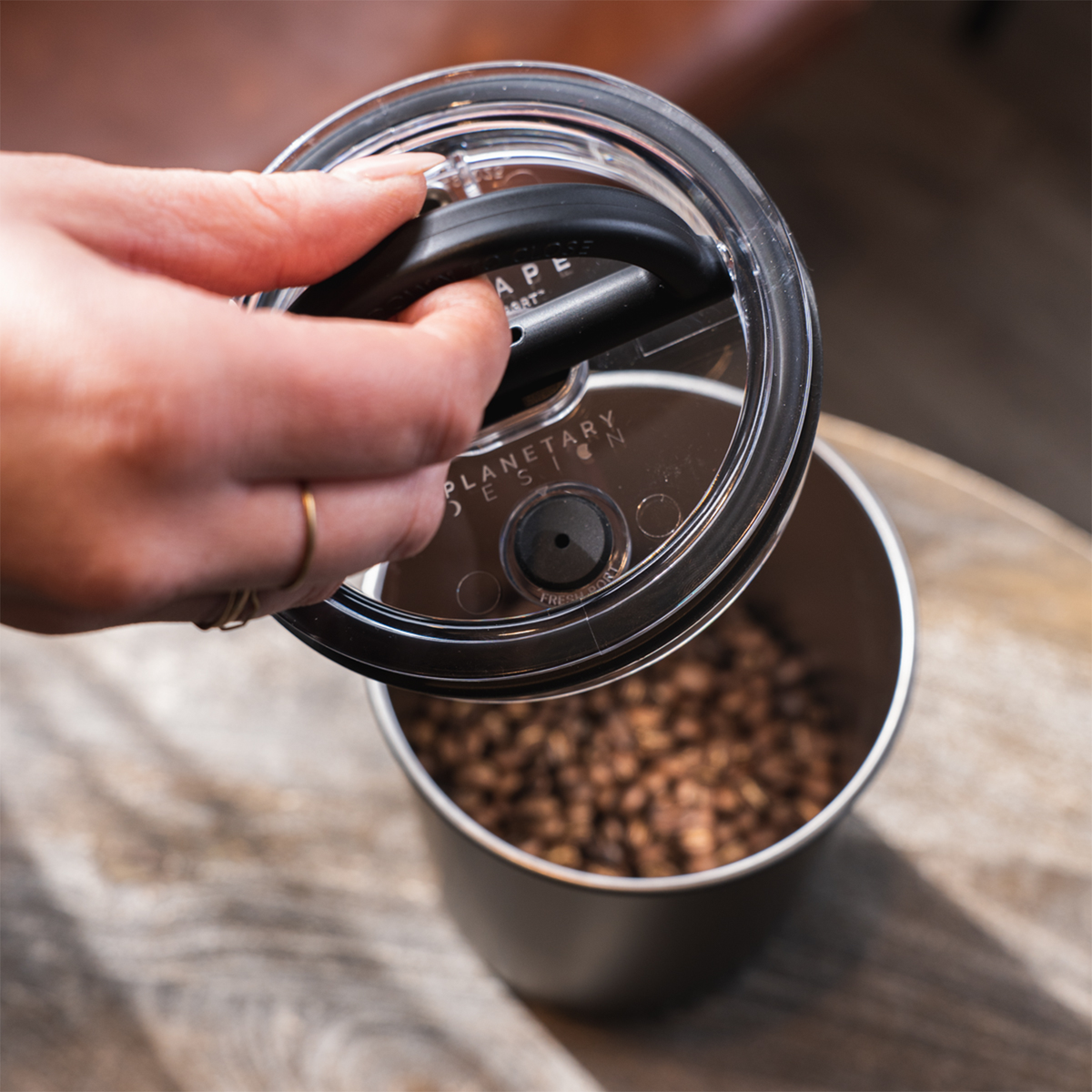
Airless valve systems use a two-lid design: an outer lid closes the container, and an inner lid descends directly onto the contents, forcing air out through a one-way valve as it goes. This creates an active seal by physically removing oxygen rather than just trapping it inside.
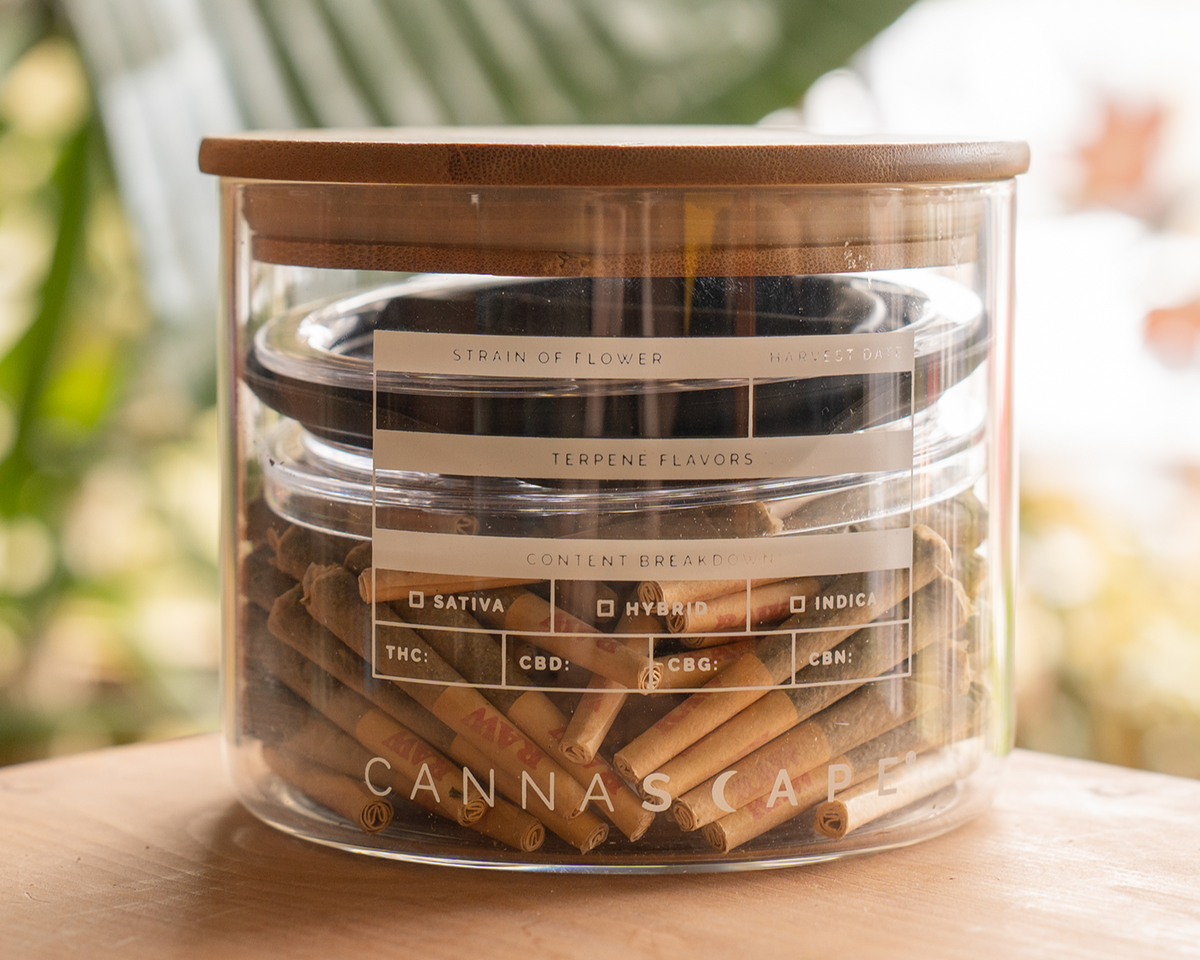
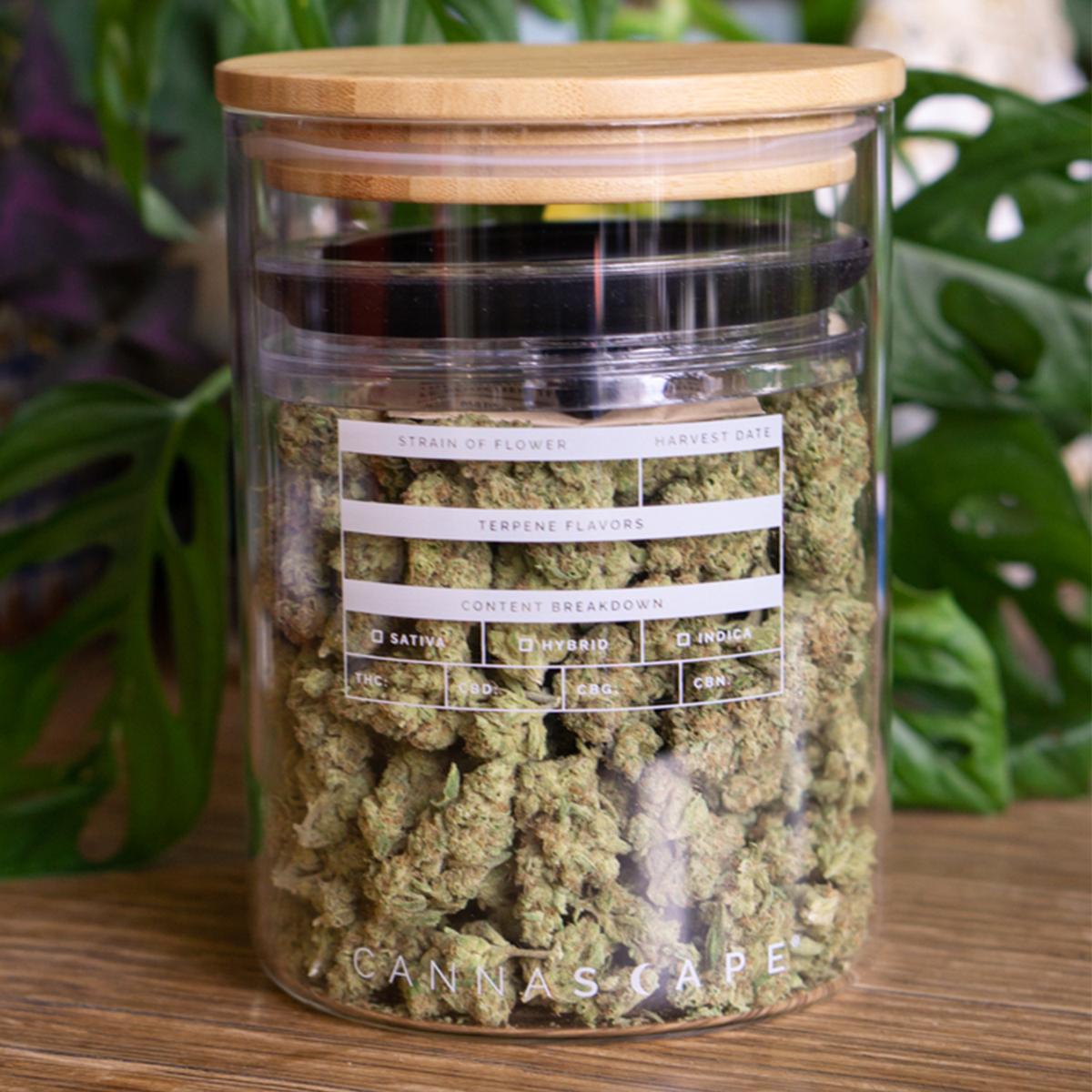
The Cannascape® stainless steel and glass stash jars use this exact mechanism. The inner plunger lid pushes air out as you press it down, then the one-way valve prevents air from returning. There's no headspace left to carry volatile terpenes or aromatic compounds, which is why this design works for cannabis flower, coffee beans, and other materials where odor control and freshness preservation overlap.
The valve is also self-degassing, which matters for contents that emit CO2 like fresh cannabis flower, freshly roasted coffee, or certain herbs. A fully rigid airtight seal would build pressure and eventually leak. The airless valve lets gas escape without breaking the seal or admitting oxygen back in.
A standard airtight container with a silicone gasket seals around the perimeter but leaves air trapped inside. That air carries odor molecules to the seal, and over time, some permeate through or escape when the lid is opened. An airless system removes the air first, so there's no medium for odor to travel through.
This is why Cannascape jars are described as odor-resistant rather than "100% smell proof", no seal is absolute, but removing the headspace air drastically reduces what escapes. For cannabis, this also slows terpene volatilization, preserving aroma and flavor longer than a standard pop-top or mason jar.
Activated carbon is a porous material with a massive surface area that traps odor molecules through adsorption. They stick to the carbon rather than passing through to the seal. Containers with carbon linings or inserts absorb volatile compounds before they reach the edges of the container.
This is most common in soft-sided storage bags and boxes designed for travel or discreet storage. The carbon layer sits between an inner and outer fabric layer, creating a buffer zone. It's effective for moderate odor control, but carbon eventually saturates and loses effectiveness. It doesn't prevent oxidation or preserve freshness the way an airless seal does, it just contains the smell.
For long-term storage of aromatic materials like coffee or cannabis, carbon is a secondary feature. The primary mechanism should be a genuine airtight or airless seal. Carbon helps, but it's not a substitute for removing oxygen.
Glass and stainless steel are the gold standard for odor-resistant storage because neither absorbs smells, stains, or flavors. A borosilicate glass jar that stored coffee beans can be washed and used for tea without cross-contamination. An 18/8 restaurant-grade stainless steel container won't retain garlic odor after a thorough cleaning.
Plastic is more variable. Standard polypropylene and polyethylene can absorb odors over time, especially from pungent or oily contents. Tritan and Tritan Renew, used in Rubbermaid's 2026 Brilliance containers, are engineered to resist stains and odors better than conventional plastics, but they're still not as inert as glass or metal.
The Cannascape® line uses either 18/8 stainless steel or borosilicate glass specifically because cannabis flower is stored in small, expensive quantities and cross-strain contamination is unacceptable. A jar that permanently smells like the last strain defeats the purpose. The same principle applies to coffee, tea, or any aromatic material you're storing in rotation.
Light doesn't directly cause odor, but it degrades the compounds that produce it. UV exposure breaks down terpenes in cannabis and volatile oils in coffee, which changes the aroma profile and can make contents smell stale or off. Opaque containers or smoked glass lids slow this degradation.
The Cannascape® stainless steel jar blocks light completely. The glass version uses a smoked bamboo top lid to reduce UV transmission while still showing contents. Both preserve the aromatic compounds that give cannabis or coffee their characteristic smell. When you open the jar, the odor is fresh rather than degraded.
Start by asking what mechanism the container uses. If the product description only mentions "airtight" or "smell proof" without explaining how the seal works, it's likely a standard gasket. That's fine for moderate odor control but not for strong-smelling materials or long-term storage.
Look for specific features: activated carbon lining, one-way valve, airless seal, silicone or food-grade rubber gasket. The 2026 smell-proof bag market, estimated at $378.90 million, is growing partly because buyers now evaluate reusability, material quality, and ease of cleaning alongside odor containment. A bag that works once but can't be washed and reused is less valuable than a jar you'll use for years.
Material transparency matters. If a container is marketed as premium but doesn't specify whether it's borosilicate glass, Tritan, or standard plastic, that's a red flag. The same goes for stainless steel: 18/8 restaurant-grade is a verifiable standard, "stainless steel" alone could be anything.
Humidity affects odor indirectly. Cannabis stored too dry becomes brittle and loses terpenes, which weakens its aroma. Stored too wet, it grows mold, which produces a completely different (and undesirable) smell. The Cannascape® jars support Boveda® two-way humidity packs, which maintain a stable moisture band without adding external odors.
This is distinct from desiccant packs, which remove all moisture. Coffee, tea, and dry pantry goods need desiccants. Cannabis needs regulated humidity. Confusing the two is one of the most common storage mistakes, and it directly affects how the contents smell over time.
The 2026 market is shifting toward premium materials, clearer performance claims, and reusability. The smell-proof bag market grew from $349.41 million in 2025 to $378.90 million in 2026, with a projected 7.99% CAGR through 2032. That growth is driven partly by buyers who want containers they can clean and reuse rather than disposable packaging.
Product design is emphasizing activated carbon more explicitly, with carbon lining now described as a standard feature in mid-tier and premium containers. Material upgrades are common. Rubbermaid's 2026 Brilliance containers use Tritan Renew for stain and odor resistance, and brands like Stash Locker are positioning reusable smell-proof bags around privacy and intentional design rather than novelty.
Another shift: buyers are evaluating end-of-life disposal, leak resistance, tamper evidence, and ease of cleaning alongside odor control. A container that's difficult to clean or can't be recycled has less value than one designed for long-term use. This aligns with Planetary Design's durability-first approach. A Cannascape® jar bought once and used for years displaces a stream of single-use dispensary containers.
For cannabis flower, you need odor resistance, light blocking, humidity stability, and a seal that self-burps CO2 without admitting oxygen. The Cannascape® stainless steel stash jar handles all four: it blocks light completely, supports Boveda® humidity packs, and uses an airless inner plunger lid with a self-degassing valve. The glass version offers the same seal with visibility into contents.
For coffee beans, odor control overlaps with freshness preservation. Volatile aromatic oils degrade on contact with oxygen, so an airless seal that removes headspace air keeps beans fresh and aromatic longer. The Airscape® line uses the same valve system as Cannascape®, sized for coffee and tea storage.
For dry food or pantry goods, prioritize materials that won't absorb flavors and seals that prevent cross-contamination. Glass or stainless steel with a silicone gasket works well for garlic, onions, spices, or anything pungent. If you're storing in rotation, avoid plastic unless it's specifically engineered for odor resistance like Tritan Renew.
If you need odor control on the go, soft-sided bags with activated carbon linings are lighter and more compact than rigid containers. They're effective for short-term transport but less reliable for long-term storage because carbon saturates over time and fabric seals aren't as airtight as metal or glass lids.
For backcountry or outdoor use, durability matters as much as odor control. A glass jar that shatters in a pack is worse than a slightly less effective seal that survives the trip. Stainless steel splits the difference, it's as odor-resistant as glass but won't break if dropped.
Hand wash glass and stainless steel containers with warm soapy water, then dry them completely before refilling. Don't put them in the dishwasher. High heat can warp silicone gaskets or bamboo lids, and the airless valve mechanism isn't designed for dishwasher pressure.
If a container starts to retain odors, soak it in a baking soda solution (one tablespoon per cup of water) for a few hours, then rinse and dry. For stubborn smells in plastic containers, try a vinegar rinse, but if the odor persists, the material has absorbed it and won't fully release.
Check gaskets and valve seals periodically. Silicone gaskets can degrade or tear over time, especially if exposed to oils or high heat. The one-way valve in airless systems should move freely. If it's sticky or blocked, clean it gently with a damp cloth.
No container is absolutely odor proof. Materials and seals vary in effectiveness, and even the best designs allow trace amounts of odor to escape over time. Containers described as "odor-resistant" or "smell proof" reduce odor significantly but aren't undetectable. Airless valve systems and activated carbon linings are the most effective mechanisms currently available.
Yes, if the container is glass or stainless steel. Both materials resist absorbing odors and can be thoroughly cleaned between uses. Plastic containers, even high-quality ones, may retain faint odors from pungent contents like garlic or strong-smelling herbs. For rotation storage, glass or stainless steel is the safer choice.
Humidity packs don't directly control odor, but they prevent degradation that changes how contents smell. Cannabis stored too dry loses terpenes and smells stale; stored too wet, it grows mold. Coffee and tea should be kept dry, so they need desiccants instead. Match the humidity control method to what you're storing.
Activated carbon saturates over time and loses effectiveness, typically after several months of continuous use depending on how pungent the contents are. Containers with replaceable carbon inserts let you refresh the lining; soft-sided bags with built-in carbon layers eventually need to be replaced entirely.
Airtight storage seals the container to prevent outside air from entering, but it leaves a headspace of air trapped inside with the contents. Airless storage uses a valve system to physically remove that headspace air, eliminating the oxygen that carries odor and causes oxidation. Airless systems offer better odor control and freshness preservation for aromatic materials.
Odor proof storage isn't about finding a magic container that makes smells disappear. It's about understanding which mechanisms work for your specific needs. Airless valve systems remove the air that carries odor. Activated carbon absorbs molecules before they reach the seal. Glass and stainless steel resist absorbing odors long-term. The best containers combine multiple features rather than relying on a gasket alone.
If you're storing cannabis, coffee, or other aromatic materials where freshness and odor control overlap, the Cannascape® and Airscape® lines use patent-protected airless valve technology to remove headspace air and preserve contents longer. Both lines are built in Montana with restaurant-grade stainless steel or borosilicate glass, designed for years of use rather than disposable packaging. Explore the full line at Planetary Design and find the container that fits what you're storing.
How to Store Pre-Rolls So They Don't Dry Out
How to Store Dry Dog Food: Keep Kibble Fresh to the Last Scoop
Sustainable Food Storage Containers That Actually Work
Glass vs Plastic Storage Containers: Which Is Right for You?

Best Way to Store Cannabis Buds: Complete 2026 Guide
Share:
Stainless Steel vs Glass Food Storage: Which Lasts Longer?
Best Weed Storage Containers: Keep Cannabis Fresh Longer