






- by Madeline Staples
Coffee Grind Size Chart: Match Your Brew Method Perfectly
- by Madeline Staples
A coffee grind size chart matches particle sizes to brewing methods, helping you extract the right flavors from your beans. Espresso needs fine grounds around 200–400 microns, while French press works best with coarse particles at 800–1,100 microns. Getting this right makes the difference between balanced coffee and bitter or sour disappointment.
This guide is for anyone who wants better coffee. Whether you're dialing in pour-over at home, brewing in a cabin, or perfecting French press at camp. We'll walk you through grind sizes for every major brewing method, explain how particle size affects extraction, and show you how to adjust when something tastes off.
Grind size determines how quickly water extracts flavor compounds from coffee beans. Smaller particles expose more surface area to water, speeding up extraction. Larger particles slow it down.
When particles are too fine for your brewing method, water extracts too much too fast pulling bitter, astringent flavors along with the good stuff. When they're too coarse, water doesn't extract enough, leaving you with weak, sour coffee that tastes underdeveloped.
The brewing method dictates ideal grind size because each method controls contact time differently. Espresso forces water through grounds in 25–30 seconds, demanding fine particles for quick extraction. French press steeps for four minutes, requiring coarse grounds to prevent over-extraction. Match your grind to your brewer, and you control what ends up in your cup.
Grind size gets measured in microns (µm), one micron equals one-thousandth of a millimeter. Most 2026 grind charts now publish micron ranges alongside visual comparisons, giving you both technical precision and practical reference points.
A quality grinder produces a particle distribution, a range of sizes from the finest dust (fines) to the largest chunks. Burr grinders create tighter distributions than blade grinders, meaning more particles land in your target range instead of scattered across extremes.
You'll also see grinder-setting charts that list click counts or dial positions for specific models. These translate manufacturer settings into actual particle sizes, which helps when you're switching between brewing methods or trying to replicate someone else's recipe.
Micron measurements give you precision, but visual comparisons help when you're eyeballing consistency. Fine espresso grounds resemble table salt. Medium grounds for drip coffee look like coarse sand. French press particles match sea salt or breadcrumbs.
These analogies aren't perfect, table salt crystals vary by brand, but they get you close enough to start dialing in. From there, taste tells you what to adjust.
Different brewing methods need different particle sizes to balance extraction. Here's what works for the most common brewers, with micron ranges based on 2026 industry standards.
Turkish coffee requires the finest grind, almost powder. You're looking at particles smaller than 180 microns, similar to flour. The coffee steeps directly in water without filtration, so ultra-fine grounds create the thick, intense brew this method demands.
Espresso needs fine grounds between 200 and 400 microns. Water passes through under high pressure in 25–30 seconds, so particles must be small enough for rapid extraction but not so fine they choke the machine. Aim for the texture of table salt.
Dialing in espresso means adjusting grind size until extraction time and flavor hit the sweet spot. If your shot pulls too fast and tastes sour, grind finer. If it chokes and tastes bitter, go coarser.
Moka pots and AeroPress both work well with grounds between 360 and 660 microns. The moka pot uses steam pressure for extraction, while AeroPress combines immersion and pressure. Both methods need particles fine enough for good extraction in one to two minutes but coarse enough to avoid bitterness.
Start around 400 microns, slightly coarser than espresso, and adjust based on taste and brew time.
Pour-over methods like our ethoz® pour over and automatic drip makers need medium grounds between 400 and 950 microns. Water flows through the grounds by gravity, with total contact time around three to four minutes.
Medium grind looks like coarse sand. Too fine and you'll get slow drip times with bitter, over-extracted coffee. Too coarse and water rushes through, leaving you with weak, sour results.
Pour-over gives you more control than drip because you manage water flow. If your ethoz® brew tastes bitter, try slightly coarser grounds or a faster pour. If it's sour, grind finer or slow your pour to increase contact time.
French press works best with coarse grounds between 800 and 1,100 microns, about the size of sea salt or breadcrumbs. You're steeping coffee for four minutes before pressing, so larger particles prevent over-extraction.
Our French presses are built for backcountry durability, where you can't afford fussy equipment or wasted coffee. Coarse grinds also make cleanup easier when you're dumping grounds at camp: less sludge in your cup and less mess stuck in the mesh filter.
If your French press coffee tastes muddy or bitter, try grinding slightly coarser. If it's weak, either grind a touch finer or extend steep time by 30 seconds.
Cold brew demands the coarsest grind at 1,200 to 1,500 microns or larger. You're steeping grounds in cold water for 12 to 24 hours, so particles need to be big enough to withstand extended contact without turning bitter.
Think chunky breadcrumbs or cracked peppercorns. Anything finer and you'll extract harsh, astringent flavors during the long steep. The result should be smooth and naturally sweet, not sharp.
Extraction is what happens when water dissolves flavor compounds from coffee particles. Grind size controls extraction speed by changing the amount of coffee exposed to water.
Fine grounds have more surface area per gram than coarse grounds, so water extracts flavors faster. Espresso uses this principle: fine particles plus high pressure equals full extraction in under 30 seconds. French press does the opposite: coarse particles plus long steep time balances out to proper extraction without bitterness.
Under-extracted coffee tastes sour, sharp, or thin. Water didn't pull enough flavor compounds from the beans, leaving behind sweetness and body while extracting mostly acids.
This happens when grind is too coarse for the brewing method, water temperature is too low, or contact time is too short. If your pour-over tastes sour, grind finer to increase surface area and extraction speed.
Over-extracted coffee tastes bitter, dry, or astringent. Water pulled too many compounds from the beans, including unpleasant flavors that should stay locked inside.
This happens when grind is too fine, water is too hot, or contact time is too long. If your French press tastes bitter, grind coarser or reduce steep time. For pour-over, try a faster pour or slightly cooler water.
Properly extracted coffee tastes balanced, sweet, clean, and complex. You're pulling the right amount of flavor compounds without going too far in either direction.
Getting there means matching grind size to brewing method, using water between 195 and 205 degrees Fahrenheit, and hitting the right contact time. From there, small adjustments dial in the specific beans you're brewing.
Your grinder matters more than most people realize. A quality burr grinder produces consistent particle sizes with fewer fines (the dusty fragments) that over-extract and turn bitter. Blade grinders chop beans unevenly, creating a wide distribution of particle sizes that extract at different rates.
Burr grinders use two abrasive surfaces to crush beans uniformly. Flat burrs and conical burrs both work well, though they produce slightly different particle distributions. Either type gives you the consistency you need for repeatable results.
Many 2026 grind charts now include grinder-specific settings like click counts or dial positions for popular models. This helps when you're switching between brewing methods or following someone else's recipe.
If your grinder has 40 clicks from finest to coarsest, espresso might sit around clicks 8–12, pour-over around 18–24, and French press around 30–35. These numbers vary by manufacturer, so treat them as starting points and adjust by taste.
A consistent grind matters more than hitting exact micron targets. If your grinder produces uniform particles in the general range for your brewing method, you'll get good coffee. If it scatters particles across a wide range, even perfect average size won't save you. The coffee fines will over-extract while large chunks under-extract.
This is why we store our coffee in Airscape® containers after grinding. The patented valve system forces air out and locks freshness in, so your carefully ground coffee doesn't go stale before you brew it. Especially important when you're grinding a few days' worth at once for convenience.
Taste tells you what to change. Start with your brewing method's recommended grind size, brew a cup, and adjust from there.
If coffee tastes sour, sharp, or weak, it's under-extracted. Grind finer to increase surface area and extraction speed. Make small adjustments, one or two clicks on your grinder, and taste again.
If coffee tastes bitter, dry, or astringent, it's over-extracted. Grind coarser to reduce surface area and slow extraction. Again, small steps. You're looking for the sweet spot where flavors balance.
Grind size isn't the only extraction variable. Water temperature, coffee-to-water ratio, and contact time all matter.
If you've adjusted grind size and coffee still tastes off, check water temperature. Too hot (above 205°F) and you'll over-extract. Too cool (below 195°F) and you'll under-extract. Use a thermometer or let boiling water rest 30 seconds before brewing.
Coffee-to-water ratio changes strength without changing extraction. A common starting point is 1:16: one gram of coffee per 16 grams of water. Adjust up or down to taste, but keep extraction variables consistent while you dial in ratio.
Contact time depends on brewing method, but you can tweak it slightly. For pour-over, a faster pour reduces contact time and extraction. For French press, steeping an extra 30 seconds pulls more flavor. Make one change at a time so you know what's working.
Ground coffee goes stale fast. Once you break beans into particles, you expose oils and aromatics to oxygen. Within 15 minutes, you've lost noticeable flavor. Within a day, you've lost a lot.
Grinding right before brewing gives you the freshest, most flavorful cup. If you're grinding ahead for convenience, like prepping a few days' worth for a cabin trip, store grounds in an Airscape® container. The valve forces oxygen out and seals freshness in, slowing staling significantly.
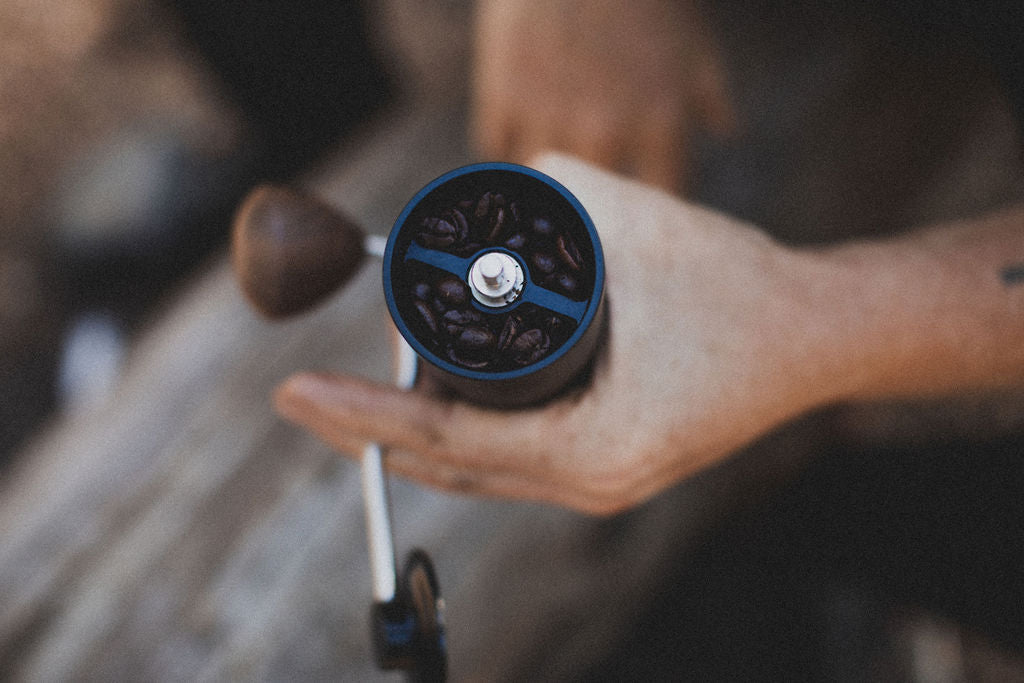
Whole beans stay fresh longer than grounds, so if you're heading into the backcountry for a week, bring beans and a hand grinder instead of pre-ground coffee. You'll taste the difference on day five.
Brewing at camp or on the road adds variables like inconsistent water temperature, limited equipment, changing altitude. Grind size becomes even more important because you can't easily adjust other factors.
For backcountry brewing with our BruTrek® French press, grind coarse before you leave and store in an Airscape® canister. The press handles rough treatment, and coarse grinds are forgiving if water temperature isn't perfect. You'll get solid coffee even when conditions aren't ideal.
Pour-over works well outdoors too, especially with the ethoz® brewer. Medium grind gives you flexibility. If the water's slightly too hot or too cool, you can adjust pour speed to compensate. Pack pre-ground coffee in an airtight container, or bring a hand grinder if you want maximum freshness.
Cold brew is perfect for road trips and warm-weather camping. Grind extra coarse, combine with cold water in a sealed container, and let it steep overnight. No heat source needed, and the concentrate keeps for days in a cooler.
Whole beans stay fresh for weeks when stored properly. Grounds stay fresh for days at most. Both need protection from oxygen, light, moisture, and heat.
Our Airscape® storage containers use a patented valve system that pushes air out as you close the lid. Less oxygen means slower staling, whether you're storing beans or grounds. The valve makes a tangible difference. You'll smell the difference when you open the container days later.
Store coffee in a cool, dark place. Not the freezer. Temperature swings create condensation that damages beans. Room temperature in a sealed container works best.
If you're grinding several days' worth at once, portion grounds into smaller Airscape® containers so you're not exposing the whole batch to air every time you brew. Open one, use it up, move to the next.
Use medium grind between 400 and 950 microns for automatic drip makers. The grounds should look like coarse sand. This size allows proper extraction during the three to four minute brew cycle without clogging the filter or letting water rush through too quickly.
No. Each brewing method needs a specific grind size based on contact time and extraction method. Espresso needs fine grounds for quick, pressurized extraction. French press needs coarse grounds for long, immersion brewing. Using the wrong size produces sour or bitter coffee.
Grind espresso between 200 and 400 microns or about the texture of table salt. Start around 300 microns and adjust based on extraction time and taste. Your shot should pull in 25 to 30 seconds. If it's faster, grind finer. If it's slower, grind coarser.
Grind size affects extraction speed, which influences how much caffeine ends up in your cup. Finer grinds extract caffeine faster, but brewing method and contact time matter more. A four-minute French press with coarse grounds extracts similar caffeine to a 30-second espresso with fine grounds because steep time compensates for particle size.
Too-fine grounds in French press create muddy, over-extracted coffee. Small particles slip through the mesh filter, leaving sediment in your cup. They also extract too quickly during the four-minute steep, pulling bitter flavors. Stick with coarse grounds between 800 and 1,100 microns for clean, balanced French press coffee.
Getting grind size right transforms your coffee. Match particle size to brewing method, adjust when something tastes off, and you'll extract balanced, flavorful cups whether you're at home or in the backcountry.
Start with the ranges in this post: espresso around 200–400 microns, pour-over around 400–950 microns, French press around 800–1,100 microns. Grind fresh when possible, store carefully in an Airscape® container when you can't, and let taste guide your adjustments. Small changes in grind size make big differences in your cup. We've spent 15 years building gear that helps you brew better coffee anywhere: from patent-protected storage that keeps grounds fresh to adventure-ready brewers that handle rough conditions. Browse our collection and find the tools that match how you brew.
How Many Scoops of Coffee Per Cup? A Measuring Guide for Every Brewer

What Is Argon Gas Used For? How It Keeps Coffee, Wine and Pantry Goods Fresh
Can You Store Coffee and Cannabis Together? A Side-by-Side Storage Guide
Caffeine and Cannabis: What the Research Actually Says
How to Store Pre-Rolls So They Don't Dry Out
Share:
Best Airtight Coffee Containers: Expert Guide for 2026
How Long Does Cannabis Stay Fresh? The 60–70°F Storage Range Explained