






- by Madeline Staples
Dishwasher Safe Food Storage Containers That Last
- by Madeline Staples
Dishwasher safe food storage containers need to survive repeated high-heat cycles without warping, staining, or losing their seal. Glass, silicone, and stainless steel containers (including specialized options like coffee bean storage) generally handle dishwasher heat better than plastic, though lid materials and placement matter as much as the container body itself.
This guide is for anyone tired of hand-washing containers or replacing warped lids. We'll cover what makes a container genuinely dishwasher safe, which materials hold up best, and how to keep your storage system working through hundreds of wash cycles.
A dishwasher safe eco friendly food storage container can withstand water temperatures up to 200°F, high-pressure spray jets, and harsh detergents without warping, cracking, or degrading its seal. The label means the manufacturer tested the product under those conditions, but it doesn't mean every part of the container gets the same treatment.
Most dishwasher damage happens to lids, not container bodies. Plastic lids warp on the bottom rack where temperatures run hottest. Silicone gaskets trap food particles and develop mold if they're not removable. Metal components can corrode if the detergent is too aggressive. A 2026 Wirecutter review found that removable lid gaskets prevent mold buildup better than permanently attached seals, which is why top-performing containers now feature detachable parts you can clean separately.
Top-rack safe is not the same as fully dishwasher safe. Top-rack placement keeps plastic parts away from the heating element, which reduces warping risk but doesn't eliminate it. If a product says "top-rack only," expect the lid to eventually lose its shape if you ignore that guidance.
Glass, silicone, and stainless steel are the three materials that consistently survive dishwasher cycles without degrading. Each has specific advantages depending on what you're storing and how often you're washing.
Borosilicate and tempered glass containers handle dishwasher heat without issue because glass tolerates temperatures well above 200°F. Glass doesn't absorb odors, doesn't stain from tomato sauce or turmeric, and won't leach chemicals into your food. A 2026 Consumer Reports review confirmed that glass containers are dishwasher safe across both bodies and lids in most tested products, though some glass-lid sets still require top-rack washing for the lids.
The downside is fragility. Water jets can jostle containers against each other, and a dropped glass container on a tile floor ends badly. If you're carrying storage to a cabin, on the road, or out trekking, glass adds weight and breakage risk.
Food-grade silicone withstands dishwasher temperatures without warping or releasing chemicals. Silicone containers collapse for compact storage, which makes them useful for travel or small kitchens. Consumer Reports notes that silicone generally handles dishwasher heat well, though you still need to follow the manufacturer's specific instructions.
Silicone picks up odors more readily than glass or steel, especially from garlic or onions. It's also less rigid, so silicone containers don't stack as neatly in the fridge or pantry.
Non-insulated stainless steel containers are dishwasher safe and nearly indestructible. Steel doesn't absorb odors, doesn't stain, and survives drops that would shatter glass. A 2026 review confirmed that non-insulated steel containers can go in the dishwasher without issue.
Steel is opaque, so you can't see what's inside without opening the lid. It also conducts heat, which means a steel container won't insulate cold or hot contents the way an insulated mug would.
BPA-free plastic containers marked dishwasher safe will survive cycles if you place them on the top rack, but plastic degrades faster than glass or steel. Tomato-based foods stain plastic. High heat causes warping over time, especially if the container shifts to the bottom rack. Plastic lids lose their seal faster than silicone or steel alternatives.
If you're using plastic, expect to replace containers every couple of years rather than every decade.
Lids fail first because they're the most complex part of a storage system. A container body is a single piece of material. A lid includes a seal, a locking mechanism, and sometimes a valve or vent. Each added component is another failure point.
Plastic lids warp when exposed to bottom-rack heat, which breaks the seal even if the container body stays intact. Silicone gaskets trap moisture and food particles in the grooves, which leads to mold growth if you don't remove and clean them separately. Metal clasps corrode if detergent sits in the mechanism too long.
The 2026 trend toward removable gaskets addresses this directly. If you can pull the gasket out, clean it, and inspect it for wear, you'll catch problems before the lid stops sealing. Containers with permanently attached gaskets hide trapped food and moisture until the seal fails completely.
Place plastic lids and containers on the top rack, away from the heating element. Bottom-rack heat warps plastic faster than any other factor. If your dishwasher has a heated dry cycle, turn it off for plastic items and let them air dry instead.
Rinse tomato-based sauces, turmeric, and beet juice off containers before loading them into the dishwasher. These foods stain plastic even in a single cycle. Glass and steel don't stain, but rinsing still prevents dried-on residue that dishwashers struggle to remove.
Remove and clean gaskets separately. Pull silicone seals out of lids, rinse them under hot water, and inspect for trapped food or mold. This takes 30 seconds per lid and prevents the mold buildup that ruins seals.
Don't overload the dishwasher. Containers need space for water jets to reach all surfaces. Overloading traps food particles in corners and prevents lids from getting fully clean.
If you've already invested in mason jars, ceramic canisters, or other containers that work for your pantry, you don't need to replace them. You need a better lid system.
The Fresh-Port® Wide Mouth Mason Jar Lid converts standard mason jars into oxygen-free storage for $16.00. It's a one-way valve lid that forces air out as you press down, then seals to keep oxygen from returning. This is the same mechanism that runs through Planetary Design's entire storage line, adapted to fit the jars you already have.
Mason jars are dishwasher safe. The Fresh-Port lid is dishwasher safe. You're upgrading the preservation system without replacing your entire pantry setup.
For larger containers, Fresh-Port also makes valve lids for paint cans and wine bottles. The logic is the same across all of them: force oxygen out, seal it off, preserve what's inside. Oxygen is what turns flour rancid, makes opened wine taste flat, and causes paint to skin over. Remove the oxygen and you remove the problem.
Airtight food containers trap oxygen inside along with your food. The seal keeps new oxygen from entering, but it also locks in the oxygen that was already there when you closed the lid. That trapped oxygen continues to degrade fats, oxidize oils, and break down volatile compounds.
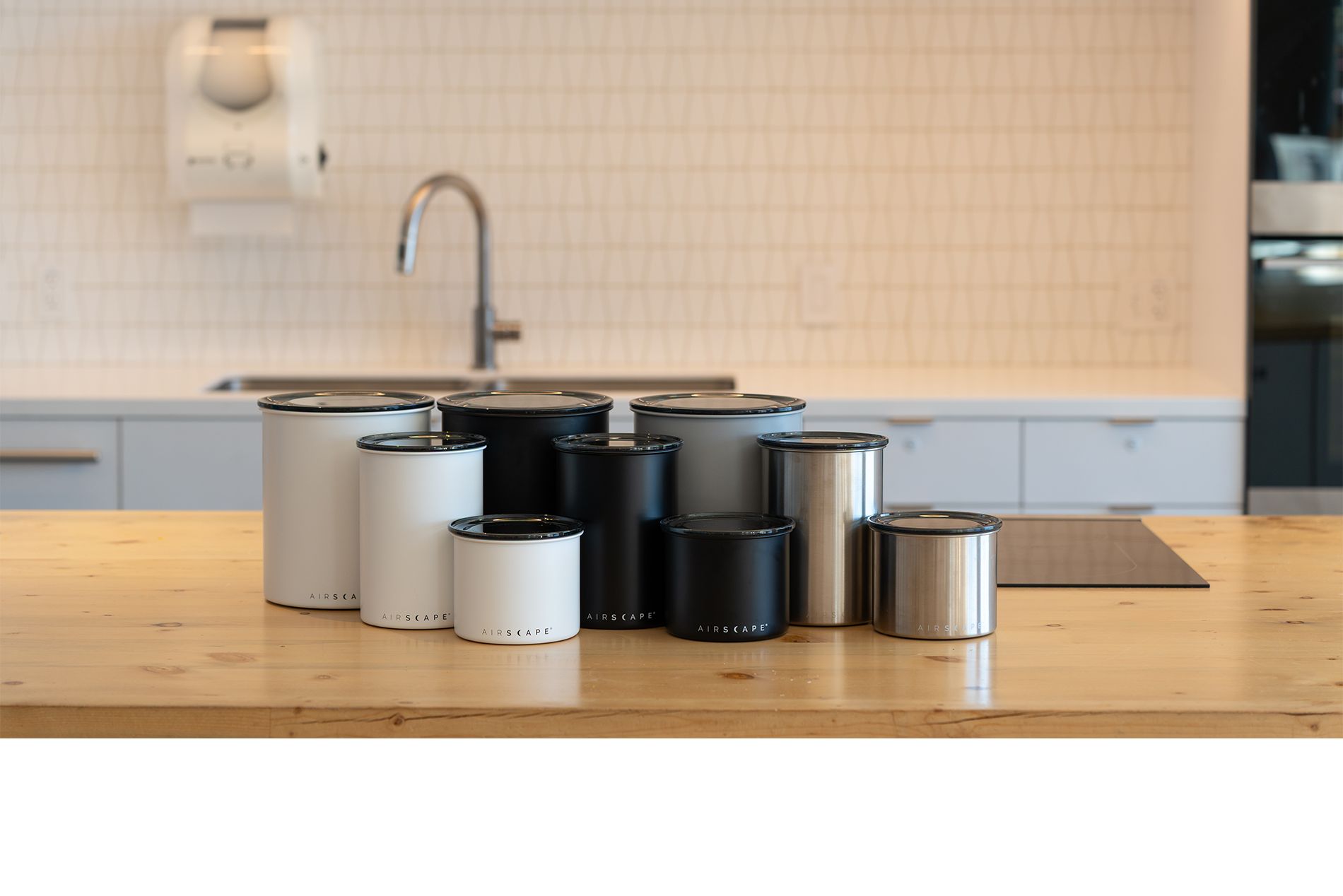
Oxygen-free storage removes the air first, then seals. Airscape® canisters use a two-lid system: the outer lid closes the container, and the inner lid descends directly onto the contents, forcing air out through a one-way valve as it goes. You're creating a true vacuum seal by physically removing air from the container, not just trapping it in.
This matters most for fatty foods like nuts, seeds, whole grains, and pet kibble. Fat oxidation is what makes these items go rancid, and oxygen exposure is the variable that controls the rate. An airtight container slows oxidation. An oxygen-free container nearly stops it.
Fresh-Port takes this a step further by adding argon gas. Spray food-safe argon through the valve lid and it forms a protective barrier that displaces oxygen. Argon is heavier than oxygen, non-reactive, and odorless. A two-second flush gives you roughly 75 uses per canister. This is the same preservation technique commercial roasters use for high-end coffee, now available for your pantry.
Bulk dry goods need larger capacity than standard canisters provide. A 25 lb bag of flour or a 40 lb bag of dog kibble won't fit in a quart-sized container, and decanting into multiple small jars defeats the purpose of buying in bulk.
The Airscape® Bucket Insert Lid converts a standard five-gallon bucket into an oxygen-free container for $32.00. This is the only product in Planetary Design's line sized for bulk quantities, and it's the right recommendation for anyone storing large bags of flour, rice, oats, or pet food.
The bucket itself is dishwasher safe if it's food-grade plastic. The Airscape insert lid is dishwasher safe on the top rack. You're getting the same valve mechanism that removes oxygen from smaller canisters, scaled up to handle bulk storage.
Pet food specifically benefits from this setup because kibble is coated in fat, and fat oxidation is the primary spoilage route. Rancid kibble smells noticeably off and animals often refuse it. A five-gallon bucket with an Airscape lid keeps a 40 lb bag of kibble fresh from the first scoop to the last, which is something a simple bin with a snap-on lid can't match.
Valve lids are dishwasher safe, but the valve itself needs occasional manual cleaning to prevent buildup. Run the lid through a normal top-rack cycle to clean the exterior surfaces, then inspect the valve opening for trapped food particles or residue.
If the valve looks clogged, rinse it under hot water and use a toothpick or small brush to clear the opening. The valve is a one-way mechanism, so debris can block airflow if it accumulates. A quick inspection every few washes keeps it working correctly.
Inner plunger lids for Airscape canisters are sold separately as replacement parts. If the plunger seal wears out after years of use, you can replace just that component rather than buying a new canister. This is deliberate design: containers should last decades, and replaceable parts mean they actually can.
Look for containers that specify dishwasher safety for both the body and the lid, not just one or the other. A 2026 Yahoo Shopping comparison found that many leading brands are dishwasher safe overall but still require top-rack placement for lids, which means you need to read the fine print.
Removable gaskets are worth the extra effort. If you can pull the seal out and clean it separately, you'll prevent mold and extend the lid's working life. Permanently attached gaskets trap moisture and fail faster.
Material matters more than brand. Glass, silicone, and stainless steel will outlast plastic in dishwasher cycles, even if the plastic is marked dishwasher safe. If you're replacing a storage system, choose the material that matches your actual use: glass for pantry visibility, steel for durability, silicone for collapsible travel storage.
Valve-based preservation systems cost more upfront but reduce food waste over time. If you're throwing away rancid nuts, stale flour, or refused kibble, the cost of spoiled food adds up faster than the cost of better storage. An oxygen-free system pays for itself by keeping food usable longer.
Yes. Airscape stainless steel and BPA-free plastic canisters are dishwasher safe, as are the inner plunger lids. Place lids on the top rack to avoid direct heating-element exposure. The valve mechanism itself is dishwasher safe but benefits from occasional manual inspection to clear any trapped debris.
Most borosilicate and tempered glass containers are dishwasher safe, but you still need to check the manufacturer's guidance. Glass lids may require top-rack placement even when the container body can go anywhere. Water jets can jostle glass containers against each other, so load them with space between to prevent chipping.
Plastic lids warp when exposed to bottom-rack heat near the dishwasher's heating element. Even BPA-free plastic softens at high temperatures, and repeated cycles cause permanent deformation. Top-rack placement reduces warping risk but doesn't eliminate it entirely. Glass, silicone, and stainless steel lids don't warp.
Glass and stainless steel containers last decades if the seals and lids are maintained. Plastic containers need replacement every two to three years as they stain, warp, and lose seal integrity. Silicone containers fall somewhere in between. Replaceable gaskets and lids extend the working life of any storage system.
Yes, if the gasket is removable. Pulling the silicone seal out lets you clean trapped food and moisture that dishwashers can't reach. Removable gaskets also dry faster, which prevents mold growth. If the gasket is permanently attached, inspect it regularly and replace the lid when mold appears.
Dishwasher safe food storage containers save time, but only if they're built to survive repeated cycles without warping or losing their seal. Glass, silicone, and stainless steel outperform plastic in durability and longevity. Removable gaskets prevent mold. Oxygen-free valve systems preserve food better than simple airtight seals.
If you're tired of replacing warped lids and throwing away stale pantry staples, start with containers designed to last. Airscape canisters, Fresh-Port valve lids, and bucket inserts are dishwasher safe, built in Montana, and backed by patent-protected preservation technology that removes oxygen instead of trapping it in. Your food stays fresh longer, your containers survive the dishwasher, and you're not replacing storage systems every couple of years.
Explore Airscape and Fresh-Port storage solutions at Planetary Design and build a pantry system that works as hard as you do.
How Many Scoops of Coffee Per Cup? A Measuring Guide for Every Brewer

What Is Argon Gas Used For? How It Keeps Coffee, Wine and Pantry Goods Fresh

Can You Store Coffee and Cannabis Together? A Side-by-Side Storage Guide

Caffeine and Cannabis: What the Research Actually Says
How to Store Pre-Rolls So They Don't Dry Out
Share:
How Long Does Cannabis Stay Fresh? The 60–70°F Storage Range Explained
Stainless Steel vs Glass Food Storage: Which Lasts Longer?