





- by Madeline Staples
Pour Over Coffee Water Temperature: The Complete Guide
- by Madeline Staples
The ideal water temperature for pour-over coffee is 195–205°F (90–96°C), with most professionals starting at 200°F (93°C) for consistent, balanced extraction. This range extracts the full spectrum of flavors without pulling bitter compounds or leaving desirable acids behind in the grounds.
This guide is for home brewers who want to understand how temperature affects your morning cup and outdoor coffee enthusiasts who need reliable brewing methods at camp or on the trail. We'll cover the science behind temperature extraction, practical brewing techniques, and how to adjust for different roast levels.
Why the 195–205°F range produces balanced extraction
How to adjust temperature for light and dark roasts
Practical methods for hitting your target temperature without a thermometer
Equipment considerations for maintaining thermal stability
Common temperature mistakes and how to fix them
Water temperature directly controls extraction speed and which compounds dissolve from your coffee grounds. Higher temperatures extract faster and pull more compounds, while lower temperatures extract more slowly and selectively.
When water contacts coffee grounds, it dissolves soluble compounds in a specific order. Acids and bright, fruity notes extract first at lower temperatures. Sugars and body-building compounds extract in the middle range. Bitter compounds and astringent tannins extract last, primarily at higher temperatures. The 195–205°F range hits the sweet spot where you extract desirable flavors without over-extracting bitter compounds.
Temperature stability matters just as much as your starting temperature. A 10-degree drop during brewing can leave you with under-extracted, sour coffee even if you started at 205°F. This is why professionals preheat their brewing vessels and use insulated kettles, maintaining consistent heat throughout the 3-4 minute brew time ensures even extraction from first pour to last drop.
Start at 200°F (93°C) for most coffees. This temperature works reliably across medium roasts and provides a neutral baseline for adjusting based on taste.
The Specialty Coffee Association recommends 198–205°F (92–96°C) for optimal extraction, and 200°F sits comfortably in the middle of this range. You'll extract balanced sweetness, acidity, and body without the harsh bitterness that develops above 205°F or the sour, tea-like flavors that appear below 195°F.
If you don't own a thermometer, let boiling water (212°F) rest for 30–45 seconds before pouring. This naturally cools the water to approximately 200°F and remains the most cited practical method in 2026. At higher altitudes, water boils at lower temperatures; in Montana's mountains where we're based, water boils around 200°F at 5,000 feet, which means you can pour almost immediately after boiling.
Light roasts need hotter water at 201–205°F (94–96°C) because their dense cell structure resists extraction. These coffees often come from high-altitude regions where beans develop slowly and retain more complex acids and fruit notes. The higher temperature helps break down these dense structures and extract the floral and citrus characteristics that make light roasts special.
Dark roasts perform better at 195–200°F (90–93°C) because roasting breaks down cell walls and makes compounds more accessible. Lower temperatures slow extraction and prevent pulling excessive bitterness from the already-developed roast flavors. You'll preserve the chocolate and caramel notes while avoiding the acrid, burnt taste that develops when dark roasts meet high heat.
Use a digital instant-read thermometer for accuracy, measuring the water temperature immediately before pouring. Clip-on kettle thermometers work well for monitoring during heating, but verify with a probe thermometer at pour time since kettle gauges can read 5-10 degrees off.
Thermal stability starts before you brew. Preheat your brewing device by rinsing with hot water, which prevents the cold vessel from stealing heat from your brewing water. This single step can prevent a 10-15 degree temperature drop that would otherwise occur when hot water hits a room-temperature brewer.
Our ethoz® pour over brewers feature double-wall insulation that maintains temperature throughout the brew cycle. When you're brewing at camp or in a cabin where ambient temperature varies dramatically, this thermal stability ensures your second cup tastes identical to your first. The insulated design eliminates the temperature variability that plagues single-wall glass and ceramic brewers in outdoor conditions.
Gooseneck kettles with built-in thermometers give you real-time temperature feedback, but electric kettles with preset temperature controls remove guesswork entirely. Variable temperature kettles let you dial in 200°F and walk away, ensuring consistency across multiple brews.
Insulated brewing vessels matter more than most brewers realize. A standard glass carafe can lose 15-20 degrees during a four-minute brew, effectively under-extracting your coffee even if you started at the correct temperature. Thermal carafes and insulated servers maintain temperature stability, which is why cafés in 2026 increasingly prioritize data-backed consistency over aesthetic brewing equipment.
Water that's too hot (above 205°F) over-extracts bitter compounds and creates harsh, astringent coffee. You'll taste burnt notes, excessive bitterness, and a dry, puckering sensation on your tongue. The coffee might also taste flat because high heat destroys delicate aromatic compounds before they reach your cup.
Water that's too cool (below 195°F) under-extracts, leaving desirable compounds in the grounds. Your coffee tastes sour, thin, and tea-like with prominent acidity but no balancing sweetness or body. You're essentially making weak coffee because the water lacks the energy to dissolve the full range of soluble compounds.
Temperature inconsistency during brewing creates muddy, confused flavors. If your water starts at 205°F but drops to 190°F by your final pour, the first grounds over-extract while the last grounds under-extract. You end up with both problems in the same cup, bitterness and sourness competing instead of complementing each other.
If your coffee tastes bitter despite using the correct temperature range, you might be grinding too fine or brewing too long. Temperature interacts with grind size and brew time, so adjust one variable at a time. Try a slightly coarser grind before lowering temperature.
Sour coffee at 200°F usually indicates under-extraction from grind size, not temperature. Grind finer or extend your brew time slightly. Only lower temperature if you've confirmed your grind and timing are correct, and the coffee still tastes harsh.
Water boils at lower temperatures as altitude increases, approximately one degree lower for every 500 feet of elevation gain. At 5,000 feet, water boils around 203°F instead of 212°F at sea level. This means your "boiling" water is already near the ideal brewing temperature.
High-altitude brewers don't need to wait as long after boiling. At 7,500 feet, water boils at 198°F, which sits at the lower end of the ideal extraction range. You might pour immediately after boiling or wait just 10-15 seconds instead of the 30-45 seconds recommended at sea level.
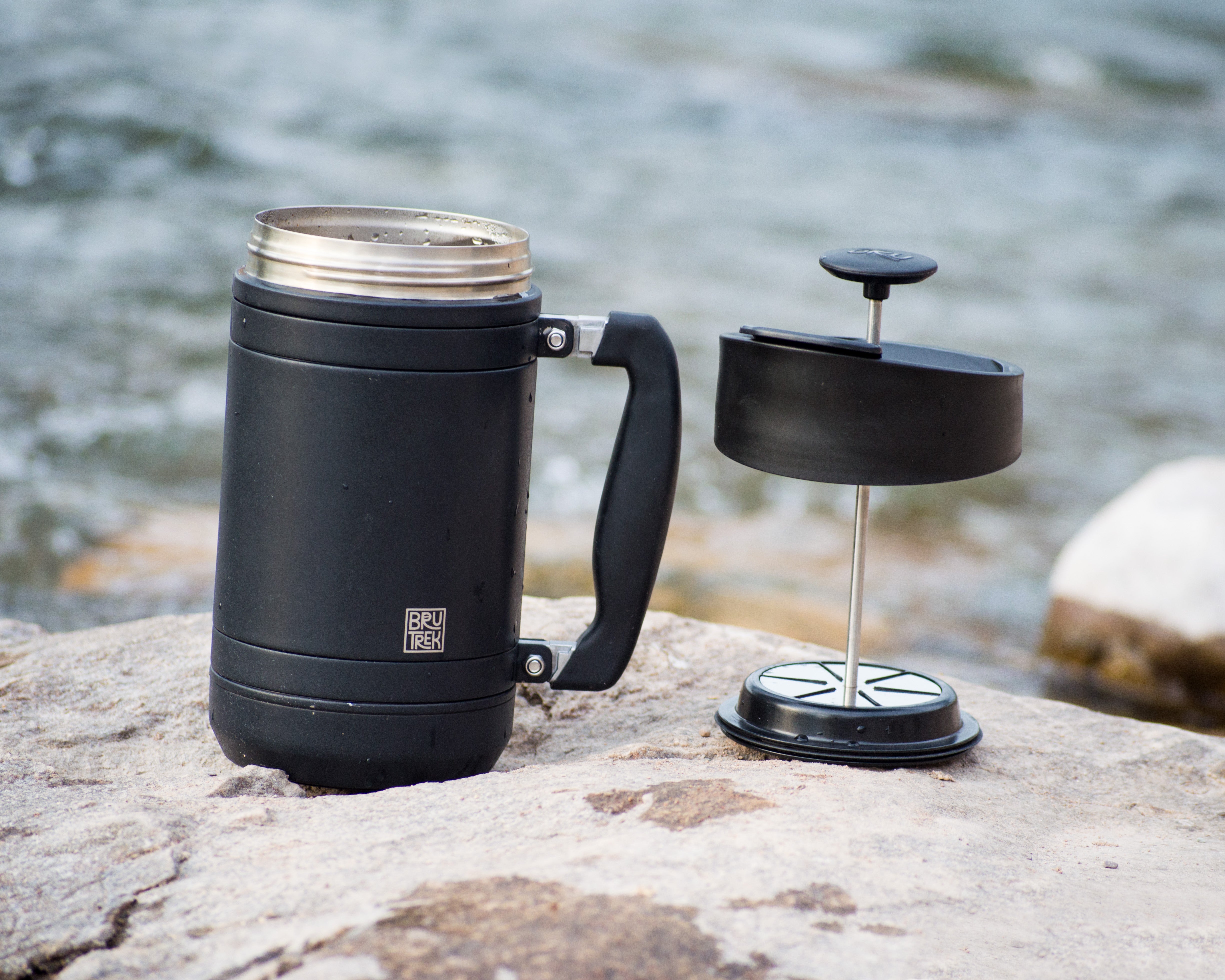
Our BruTrek® line is designed for backcountry brewing where altitude varies dramatically. The insulated construction maintains whatever temperature you achieve, whether you're brewing at sea level or at 10,000 feet on a mountain pass. You're not fighting heat loss to cold air while trying to extract properly at reduced boiling temperatures.
Use the same temperature throughout your brew for consistency and predictable extraction. The 2026 industry trend emphasizes repeatable, data-backed brewing over complex multi-temperature techniques that introduce variables without clear benefits.
The bloom phase (initial 30-45 second saturation) releases carbon dioxide trapped in fresh grounds. Some brewers experiment with slightly cooler water for the bloom to prevent over-extraction during this gas-release phase, but this adds complexity without measurable improvement for most home brewers. Starting at your target temperature and maintaining it throughout produces more consistent results.
A niche trend involves using cooler water for the final pour, but experts caution against dropping temperature mid-brew for light roasts. The final pour extracts from already-saturated grounds that need consistent heat to finish extraction properly. Dropping temperature at the end risks leaving desirable compounds behind.
Professional cafés in 2026 are moving away from variable-temperature recipes toward consistent parameters that produce identical cups across shifts. When you change temperature during brewing, you're essentially conducting a different extraction on different portions of your grounds. This might create interesting complexity, but it also makes troubleshooting impossible when something tastes off.
Stick with one temperature per brew until you've mastered grind size, brew time, and water-to-coffee ratio. These variables affect extraction more dramatically than mid-brew temperature adjustments, and they're easier to control and repeat.
Bring water to a full boil, remove from heat, and wait 30-45 seconds before pouring. This method works reliably at most altitudes and requires no equipment beyond your heat source and brewing device.
Watch for visual cues if you're brewing over a campfire or portable stove. When bubbles stop breaking the surface vigorously, your water has dropped into the ideal range. The water should look calm but still steaming; if steam dissipates completely, you've waited too long.
Our BruTrek® brewing systems are built for this exact scenario. The insulated construction means you're not racing against heat loss while you wait for water to cool or while you're pouring. At camp, where you're juggling a stove, grounds, and potentially wind or cold temperatures, thermal stability removes variables. You can focus on your pour technique instead of worrying whether your water temperature dropped 20 degrees between kettle and grounds.
In freezing temperatures, preheat everything: your brewing device, your carafe, even your mug. Cold equipment steals enormous amounts of heat in winter conditions. Pour a small amount of hot water through your entire brewing setup before you start your actual brew.
Wind affects temperature more than ambient air temperature. A 20-mph wind can cool your brewing water 10-15 degrees faster than still air at the same temperature. Brew in a sheltered spot or use your body to block wind from your brewing setup. Insulated gear matters more in windy conditions than in cold, still air.
Water quality affects extraction independently of temperature, but poor water can amplify temperature-related problems. Hard water (high mineral content) can taste chalky and dull even at perfect temperature. Soft water (low mineral content) can taste flat because it lacks minerals that help extract and carry flavor compounds.
Chlorinated tap water tastes worse at higher temperatures because heat volatilizes chlorine compounds, making them more noticeable. If you're using tap water, consider filtering or letting it sit overnight to off-gas chlorine before brewing.
Ideal brewing water contains 50-175 ppm (parts per million) total dissolved solids, with a balance of calcium and magnesium for extraction and sodium bicarbonate for buffering. Temperature can't fix bad water, but good water at the right temperature produces noticeably better coffee than good water at the wrong temperature.
Finer grinds increase surface area and speed extraction, which means they're more sensitive to temperature. A fine grind at 205°F might over-extract and taste bitter, while the same grind at 195°F produces balanced flavor. Coarser grinds are more forgiving because they extract slower.
If you're experimenting with temperature, keep your grind size constant. Changing both variables simultaneously makes it impossible to identify which adjustment improved or worsened your coffee. Dial in your grind first at 200°F, then adjust temperature if needed based on taste.
The relationship works both ways. If you're stuck with a grind that's slightly off, maybe your grinder settings are limited or you're using pre-ground coffee, temperature becomes your adjustment tool. Too coarse? Increase temperature slightly to compensate for slower extraction. Too fine? Lower temperature to prevent over-extraction.
Boiling water (212°F at sea level) is too hot and will over-extract bitter compounds while destroying delicate aromatics. Let boiling water rest for 30-45 seconds to cool to the ideal 195–205°F range before brewing. The exception is high-altitude brewing above 7,000 feet, where water boils at 198°F or lower and can be used immediately.
Cold brew uses room temperature or cold water (60–70°F) and extracts over 12-24 hours instead of minutes. The low temperature prevents extracting bitter compounds, which is why cold brew tastes smooth and sweet. This is a completely different extraction method from pour-over and requires a different grind size (very coarse) and brew time.
Caffeine extracts readily at any temperature above 160°F, so the 195–205°F range fully extracts available caffeine. Hotter water doesn't mean more caffeine, it means faster extraction of all compounds, including undesirable bitter ones. Your caffeine content depends more on coffee-to-water ratio and brew time than temperature within the standard range.
Origin matters less than roast level for temperature adjustment. A light-roasted Ethiopian coffee and a light-roasted Colombian coffee both need higher temperatures (201–205°F) regardless of origin. Focus on roast level first, then make minor adjustments based on taste. Dense, high-altitude coffees might benefit from the higher end of your roast-level range.
Use an insulated carafe or thermal server to hold brewed coffee at drinking temperature without continued heating, which degrades flavor. For brewing multiple batches, keep your kettle on low heat between brews and verify temperature before each pour. Preheating your brewing device between batches prevents temperature loss to cold equipment.
Water temperature between 195–205°F produces balanced pour-over coffee by extracting desirable flavors without pulling excessive bitterness. Start at 200°F for medium roasts, adjust to 201–205°F for light roasts, and lower to 195–200°F for dark roasts. Maintain thermal stability by preheating your equipment and using insulated brewing vessels, especially when brewing outdoors or in variable conditions; regular cleaning of pour-over coffee makers helps preserve optimal heat transfer and flavor quality.
At Planetary Design, we've spent 15+ years designing coffee gear that works reliably whether you're brewing in your kitchen or at 10,000 feet. Our ethoz® pour over brewers and BruTrek® adventure brewing systems maintain temperature stability so you can focus on technique instead of fighting heat loss. Explore our brewing equipment designed for consistent extraction anywhere you make coffee.
How Long Does Wine Last After Opening? A Guide by Wine Type
Gifts for Wine Lovers: Practical Picks They'll Actually Use
How Many Scoops of Coffee Per Cup? A Measuring Guide for Every Brewer

What Is Argon Gas Used For? How It Keeps Coffee, Wine and Pantry Goods Fresh
Can You Store Coffee and Cannabis Together? A Side-by-Side Storage Guide
Share:
How to Clean Pour Over Coffee Maker: Complete Guide
How to Store Coffee Beans Long Term: Expert Guide