






- by Madeline Staples
How Long Does Cannabis Stay Fresh? The 60–70°F Storage Range Explained
- by Madeline Staples
Store cannabis flower at 58–62% relative humidity and 60–70°F to preserve cannabinoids, terpenes, and aroma. Below 58% RH, flower becomes brittle and harsh; above 65%, mold risk increases. Temperature stability matters more than hitting an exact number: fluctuations accelerate degradation even within the recommended range.
This guide explains the science behind those targets, how to maintain them without specialized equipment, and why cannabis storage differs fundamentally from storing coffee, tea, or dry pantry goods. You'll learn what degrades stored flower, how to monitor conditions, and which containers actually deliver on odor containment and preservation claims.
Cannabis flower is not shelf-stable the way dried herbs are. It's a living archive of volatile compounds (terpenes that carry aroma and flavor, cannabinoids that deliver effect), and those compounds degrade visibly within weeks of leaving a dispensary's pop-top container. The difference between flower stored well and flower stored poorly is not subtle: you lose scent, you lose smoothness, you lose the character that distinguishes one strain from another.
Four environmental factors drive that degradation, and temperature and humidity are two of them. Heat accelerates oxidation and volatilizes terpenes. Humidity extremes either dry flower to dust or create conditions for mold. Light degrades THC directly. Oxygen oxidizes cannabinoids and strips aromatic compounds. You can't eliminate all four, but you can control them enough to extend freshness from weeks to months.
Here's what makes cannabis storage different from every other substrate we work with at Planetary Design: flower needs a maintained moisture band, not bone-dry conditions. Coffee, tea, and pantry goods want zero humidity, any moisture is spoilage. Cannabis stored too dry becomes brittle, harsh, and loses terpenes. Stored too wet, it grows mold. The target is a narrow band where flower remains pliable and aromatic without inviting microbial growth.
Store cannabis at 60–70°F, with most 2026 guidance narrowing the ideal range to 60–65°F for longer-term storage. Room temperature works if your room is stable; the enemy is fluctuation, not a specific degree mark. A basement closet at a steady 62°F preserves flower better than a kitchen cabinet that swings between 55°F overnight and 75°F during the day.
Heat accelerates every degradation pathway. Above 70°F, terpenes volatilize faster, cannabinoids oxidize more readily, and humidity becomes harder to control because warmer air holds more moisture. A jar stored at 75°F in summer will feel damper inside than the same jar at 65°F in winter, even if you're using the same humidity pack. That's not the pack failing. That's physics.
Cold storage below 60°F slows degradation but introduces new risks. Refrigeration can cause condensation when you open a cold jar in a warm room, and freezing damages trichomes, the resinous glands that hold cannabinoids and terpenes. Some growers freeze flower for long-term archival, but it's a trade-off: you preserve potency at the cost of texture and some terpene loss. For most home storage, cool and stable beats cold and variable.
A jar kept at a steady 68°F will outperform a jar bouncing between 60°F and 72°F, even though both touch the recommended range. Temperature swings drive moisture movement: condensation forms on the inside of the jar during cooling, then evaporates during warming, cycling humidity up and down and creating wet spots where mold can start. Find a location in your home that doesn't see daily swings: a closet, a drawer, a cabinet away from exterior walls and heat sources.
The consensus target in 2026 is 58–62% relative humidity, with 62% RH commonly cited as the practical upper end for stored flower. Below 58%, flower dries out: terpenes evaporate, texture becomes brittle, smoke turns harsh. Above 65%, mold risk increases, particularly if temperature creeps above 70°F. The sweet spot is narrow, but it's achievable without specialized equipment.
Relative humidity is temperature-dependent, which is why you can't separate the two. A jar at 62% RH and 60°F behaves differently than a jar at 62% RH and 75°F; the warmer jar feels damper because warm air holds more moisture. This is why storage guidance always pairs a temperature range with a humidity range: you're managing both together, not one in isolation.
Two-way humidity packs like Boveda® solve the maintenance problem. They release or absorb moisture as needed to hold a target RH, so you're not manually adjusting conditions or opening the jar to check. A Size 8 pack rated for 62% RH will regulate a small jar or storage bag for weeks, self-correcting as room conditions change. Replace the pack when it becomes rigid: that's the signal it's exhausted its buffering capacity.
Mini hygrometers designed for small containers give you real numbers instead of assumptions. A digital hygrometer small enough to fit inside a jar shows both temperature and RH, so you know whether your storage location is stable or drifting. Check it weekly for the first month, then monthly once you've confirmed your setup holds steady. If readings creep above 65% RH or below 55%, adjust your humidity pack or move the jar to a cooler, more stable location.
Oxygen is the primary enemy in cannabis storage. Exposure oxidizes cannabinoids (THC degrades into CBN, which is less psychoactive and more sedative) and volatilizes terpenes, the aromatic compounds that carry both flavor and much of the character distinguishing one strain from another. You smell the loss: flower that's been sitting in a loosely sealed bag for a month smells muted compared to fresh flower from the same batch.
Most airtight containers trap a headspace of oxygen against the product. A mason jar with a screw-top lid seals around the rim, but the air inside remains, and that air is roughly 21% oxygen. Over weeks, that oxygen reacts with cannabinoids and terpenes, degrading quality even if temperature and humidity are perfect. Passive sealing is better than no sealing, but it's not preservation.
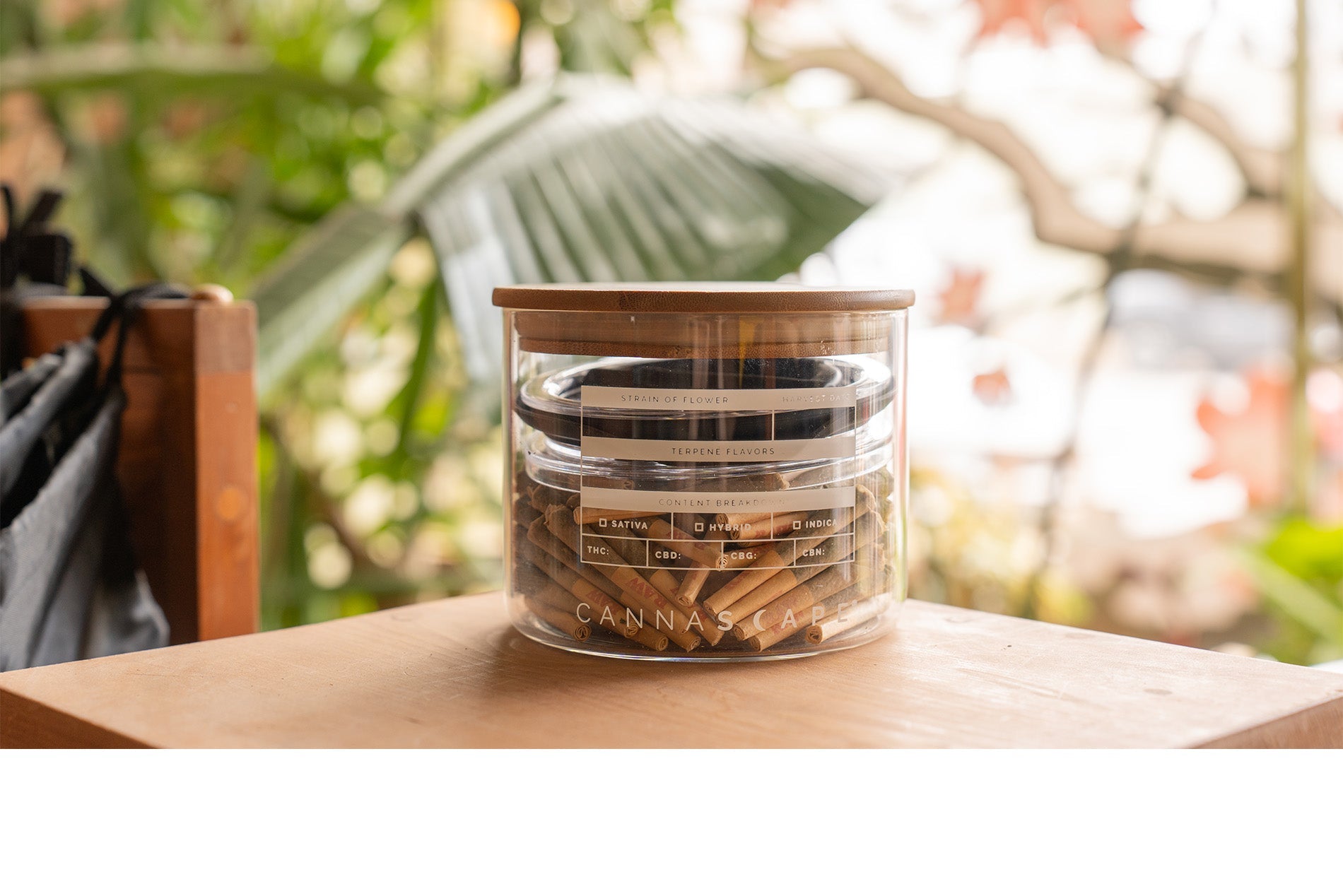
Mechanical air removal changes the equation. Cannascape® jars use a two-lid system: the outer lid closes the container, and the inner lid descends directly onto the contents, forcing air out through a one-way valve as it goes. This creates a true vacuum seal by physically removing air from the container before it can degrade the flower. The valve is one-way, so air leaves but doesn't return, and it's self-degassing: if the flower off-gases CO2, the jar self-burps without you opening it and admitting fresh oxygen.
Cannabis flower continues to emit CO2 after harvest, particularly if it's not fully cured. A fully rigid airtight seal traps that CO2, building pressure inside the jar. Cannascape's inner lid valve releases pressure automatically while keeping oxygen out, so you're not choosing between a true seal and a jar that pops open from internal pressure. The mechanism is entirely mechanical: no pump, no motor, no battery.
Light degrades THC directly. UV exposure converts THC into CBN and breaks down terpenes, which is why flower stored in clear glass on a windowsill loses potency faster than flower stored in an opaque container in a closet. The effect is measurable: studies show significant THC loss in flower exposed to direct light for even a few weeks.
Cannascape's stainless steel stash jar blocks light completely: 18/8 restaurant-grade stainless with a smoked top lid over the airless inner plunger lid. The glass line uses borosilicate with a bamboo top lid, which reduces light transmission but doesn't eliminate it. If you're using glass, store the jar in a drawer or cabinet rather than on an open shelf. Clear glass is the worst case for light protection, which is why we don't offer it.
An effective cannabis container addresses preservation and containment together. Preservation means keeping cannabinoids, terpenes, and aroma intact: controlling oxygen, light, humidity, and temperature. Containment means keeping the smell inside the jar, which matters both for discretion and because escaping aroma is escaping terpenes. Most containers do one or the other; few do both.
Cannascape® jars handle both with the same sealing system. The airless inner plunger lid removes oxygen before it can degrade cannabinoids, and the one-way valve creates an odor-resistant seal that doesn't rely on gasket compression alone. The outer lid (smoked glass or bamboo depending on the model) adds a second barrier. The result is a jar that can sit on an open shelf without announcing what's in it, which is the standard this buyer actually uses.
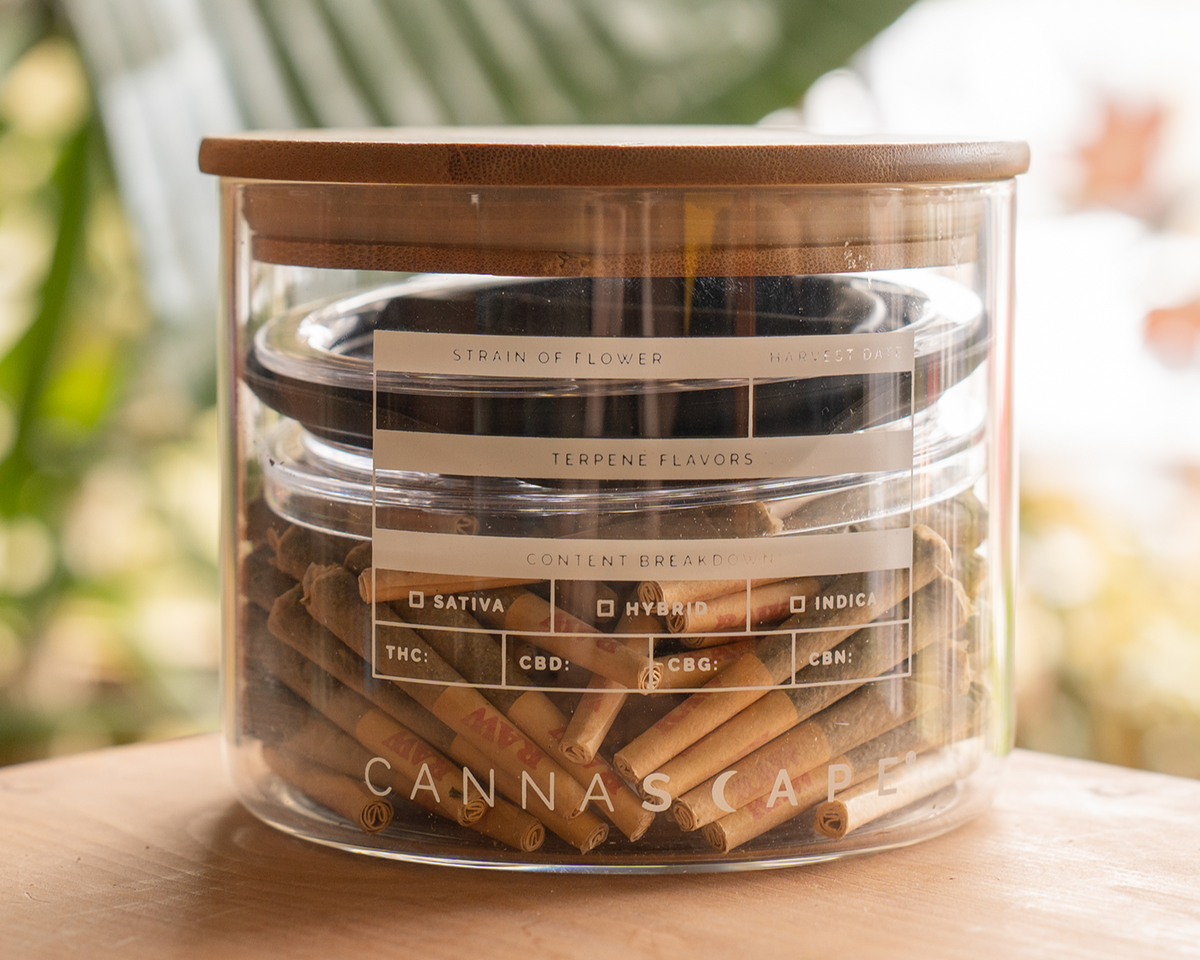
Stainless blocks light completely and doesn't absorb odor or stain the way plastic does. A jar that permanently smells of the last strain is a real failure mode for someone storing multiple varieties. The Cannascape® Stainless Steel Stash Jar holds up to two ounces of flower, comes in matte white or matte black, and includes a built-in writable strain table printed on the jar for logging strain name, harvest date, terpene profile, and potency. Hand wash only. BPA free.
Glass lets you see the flower without opening the jar, which reduces how often you break the seal and admit fresh oxygen. The Cannascape® Glass Stash Jar uses borosilicate glass with a bamboo top lid, available in 4-inch and 7-inch sizes holding up to 3.5 ounces. Both models support Fresh-Port® technology, which lets you flush inert gas like Airgone® argon onto the flower for added protection. Argon is heavier than oxygen, so a 2-second flush through the Fresh-Port® valve lid lays a barrier between the contents and any remaining oxygen. Roughly 75 flushes per canister.
Two-way humidity packs are the practical answer for home storage. Boveda® packs release or absorb moisture as needed to hold a target RH (62% is the most common rating for cannabis), so you're not manually adjusting conditions or cracking the jar to check. A Size 8 pack fits small jars and storage bags, regulating humidity for weeks until the pack becomes rigid and needs replacement.
The pack works by osmosis through a semi-permeable membrane, balancing the moisture inside the jar with the moisture in the pack's salt solution. If the jar is too dry, the pack releases moisture; if it's too damp, the pack absorbs it. This is why it's called two-way control: it self-corrects in both directions. You're not adding moisture and hoping you didn't overdo it; you're setting a target and letting the pack maintain it.
One pack per jar is standard for containers up to about a quart. Larger jars or jars opened frequently may need two packs to maintain stable RH. Replace the pack when it becomes stiff: that's the signal it's exhausted its buffering capacity. A fresh pack feels like a gel pack; a spent pack feels like a rigid wafer.
Desiccants remove moisture, which is the opposite of what cannabis needs. Silica gel packs are designed to keep products bone dry; they're standard in coffee and tea storage, where any humidity is spoilage. Cannabis stored with a desiccant will dry out, lose terpenes, and turn harsh. Never apply "keep it completely dry" advice to flower. If you're converting a container from coffee storage to cannabis storage, remove any desiccants first.
Check temperature and humidity weekly for the first month, then monthly once you've confirmed your setup is stable. A mini hygrometer inside the jar gives you real numbers; if RH drifts above 65% or below 55%, adjust your humidity pack or move the jar to a more stable location. If you're using a two-way pack, check the pack's condition monthly; replace it when it becomes rigid.
Minimize how often you open the jar. Every time you break the seal, you admit fresh oxygen and disrupt the humidity balance. If you're storing multiple strains, use multiple jars rather than opening one large jar repeatedly. The built-in strain table on Cannascape® jars lets you log details without opening the container to check: strain name, harvest date, terpene profile, potency.
The 60/60 rule (60°F and 60% RH) is an industry standard for drying and early curing, not long-term storage. Fresh-cut flower is dried at 60°F and 60% RH for roughly 7–14 days, then moved to jars for curing, where humidity is gradually reduced to the 58–62% range for storage. The rule is a drying benchmark, not a storage target, though the numbers are close enough that some growers use 60% RH for both stages.
Curing is a separate process from storage. During curing, flower is "burped": jars are opened daily to release moisture and admit fresh air while chlorophyll breaks down and flavors develop. Once curing is complete, the goal shifts to preservation: maintaining stable conditions without opening the jar. A self-degassing valve like the one in Cannascape® jars eliminates the need to burp during storage, letting the jar release CO2 without admitting oxygen.
Freezing slows degradation but damages trichomes, the resinous glands that hold cannabinoids and terpenes. Frozen flower becomes brittle; trichomes shatter when handled. Some growers freeze flower for long-term archival (six months or more), accepting the texture loss in exchange for preserved potency. For most home storage, cool and stable conditions at 60–70°F preserve quality better than freezing.
If you do freeze flower, use an airtight container to prevent freezer burn and condensation. Let the jar come to room temperature before opening it; opening a cold jar in a warm room causes condensation, which introduces moisture and mold risk. Freezing is a last resort for flower you won't use for months, not a routine storage method.
Concentrates (wax, shatter, live resin) have different storage needs than flower. They're less sensitive to humidity but more sensitive to heat and light. Store concentrates in opaque, airtight containers at 60–70°F, away from light. Silicone containers are common, but glass or stainless is better for long-term storage because silicone can absorb terpenes over time.
Concentrates don't need humidity packs. They're already moisture-free, and adding humidity can degrade texture. Focus on oxygen removal and light protection instead. Cannascape® jars work for concentrates (the airless inner lid removes oxygen, and the stainless model blocks light completely), but you'll skip the humidity pack..
Flower becomes brittle, harsh, and loses terpenes. Trichomes dry out and break off when handled. Smoke or vapor tastes harsh because the moisture that buffers combustion is gone. Add a fresh two-way humidity pack to bring RH back into the 58–62% range. Recovery isn't instant; the pack needs a few days to rehydrate the flower, but you'll regain some pliability and smoothness.
A mason jar with a screw-top lid provides a basic seal but traps oxygen inside. For short-term storage (a few weeks), it's adequate if you keep the jar cool, dark, and stable. For longer storage, convert the jar with a Fresh-Port® Wide Mouth Mason Jar Lid, which adds the airless inner plunger lid and one-way valve. This removes oxygen before it degrades cannabinoids and creates an odor-resistant seal.
Properly stored flower (58–62% RH, 60–70°F, airtight with oxygen removed, dark) retains quality for several months. You'll notice gradual aroma loss over time as terpenes volatilize, but cannabinoid degradation is slow. Flower stored in a Cannascape® jar with a humidity pack and mechanical air removal can stay fresh for six months or more, depending on starting quality and how often you open the jar.
Burping is part of curing, not storage. During curing, you open jars daily to release moisture and admit fresh air while chlorophyll breaks down. Once curing is complete and flower is at 58–62% RH, the goal is preservation: maintaining stable conditions without opening the jar. A self-degassing valve like the one in Cannascape® jars releases CO2 automatically, so you're not choosing between a true seal and a jar that builds pressure.
Use separate jars, one per strain, rather than mixing varieties or opening one large jar repeatedly. Every time you break the seal, you admit fresh oxygen and disrupt humidity. Smaller jars also let you match container size to quantity, minimizing headspace. The built-in strain table on Cannascape® jars lets you log strain name, harvest date, terpene profile, and potency without opening the container to check.
Cannabis storage is preservation science, not guesswork. The 58–62% RH and 60–70°F targets aren't arbitrary: they're the conditions that keep cannabinoids intact, terpenes present, and flower pliable without inviting mold. Stability matters more than precision: a jar kept at steady conditions outperforms a jar bouncing between extremes, even if both touch the recommended range.
Cannascape® jars bring the same airless preservation engineering we built for coffee to flower, where the stakes are higher: cannabis is bought in small, expensive quantities and degrades visibly within weeks. The inner plunger lid removes oxygen before it can oxidize cannabinoids. The one-way valve creates an odor-resistant seal. Two-way humidity packs maintain the moisture band flower needs. Together, they extend freshness from weeks to months, preserving the aroma, flavor, and effect that distinguish one strain from another.
Shop Cannascape® stainless steel and glass stash jars, designed in Montana for durability and built to keep your flower fresh. Every jar includes a writable strain table and supports Fresh-Port® technology for inert gas flushing. Visit Planetary Design to learn more.
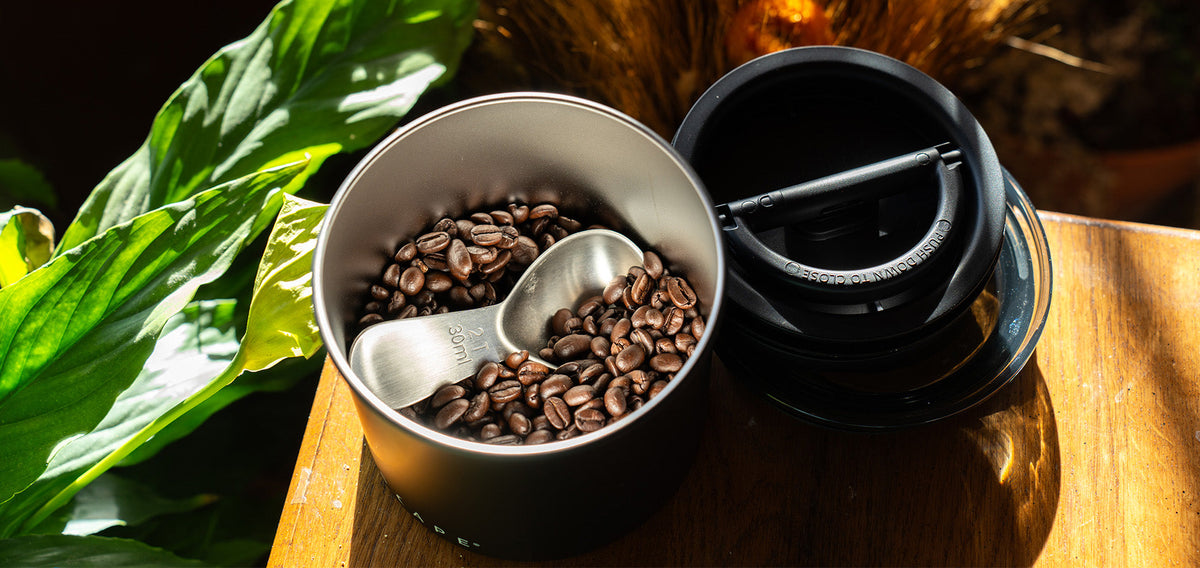
How Many Scoops of Coffee Per Cup? A Measuring Guide for Every Brewer

What Is Argon Gas Used For? How It Keeps Coffee, Wine and Pantry Goods Fresh
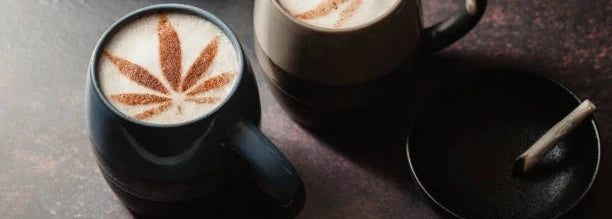
Can You Store Coffee and Cannabis Together? A Side-by-Side Storage Guide
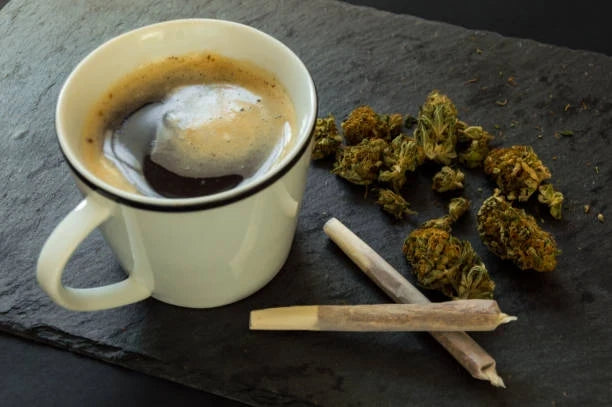
Caffeine and Cannabis: What the Research Actually Says
How to Store Pre-Rolls So They Don't Dry Out
Share:
Coffee Grind Size Chart: Match Your Brew Method Perfectly
Dishwasher Safe Food Storage Containers That Last