






- by Madeline Staples
How Long Does Coffee Stay Fresh? Storage Tips for Peak Flavor
- by Madeline Staples
Coffee stays fresh for one to three weeks after roasting when you're using whole beans, and one to two weeks for ground coffee, but only if you're storing it properly. Brewed coffee loses its best flavor within hours, while cold brew concentrate can last seven to 14 days in the refrigerator.
This guide is for anyone tired of stale coffee ruining their morning or wasting money on beans that lose their punch before you finish the bag. We'll cover exactly how long different coffee types stay fresh, what kills flavor fastest, and how proper coffee storage keeps your beans tasting as good on day 20 as they did on day one.
Here's what you'll learn:
Three factors kill coffee freshness: oxygen exposure, moisture, and light. Oxygen is the biggest culprit; it triggers oxidation, which breaks down the aromatic compounds that give coffee its flavor. Once you open a bag of roasted beans, the clock starts ticking.
Moisture increases the risk of mold and accelerates staling. Light degrades flavor compounds through photodegradation. Temperature swings cause condensation inside containers, which brings moisture and oxygen together in the worst possible way.
The roast date matters more than you think. Specialty roasters in 2026 commonly recommend starting brewed coffee three to five days after roasting and espresso five to seven days out, allowing beans to degas properly. Peak flavor typically hits between one and four weeks post-roast, depending on roast style and whether you use vacuum-sealed coffee containers or other storage methods.
Whole beans maintain peak flavor for one to three weeks after opening when stored in an airtight container at room temperature. Some sources extend this to two to six weeks depending on roast style, but you'll notice the difference after week three.
Unopened bags with one-way valves can preserve beans longer, sometimes four to six weeks from the roast date, because they allow CO2 to escape while keeping oxygen out. Once you break that seal, freshness drops faster.
Light roasts often benefit from a four- to 10-day rest period before brewing, according to 2026 freshness guidance. This degas window lets CO2 escape so you're not fighting excess gas during extraction. Dark roasts degas faster and hit their peak sooner, usually within the first two weeks.
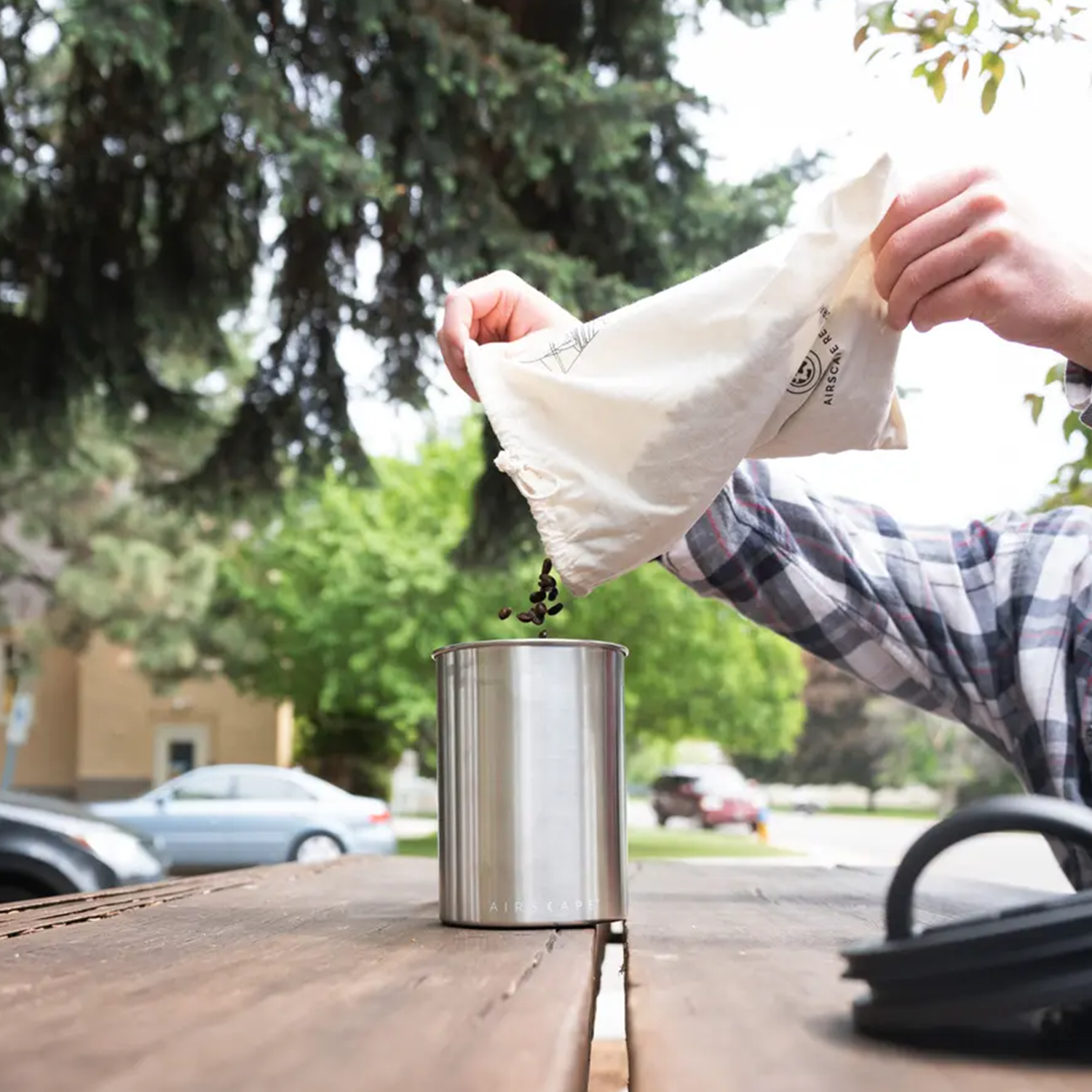
We've spent 15 years solving this exact problem. The Airscape® valve system removes air from the storage container after every use, creating a physical barrier between your beans and oxygen. It's not just an airtight seal; it's active air removal. When you're buying specialty beans at premium prices, investing in airtight coffee jars with a patent-protected valve pays for itself by keeping the coffee fresh throughout the entire bag.
Ground coffee loses freshness dramatically faster than whole beans; expect one to two weeks of peak flavor after opening, though some sources allow up to three weeks under ideal storage conditions. The increased surface area means more contact with oxygen, which accelerates oxidation.
Grind your beans right before brewing whenever possible. The difference between pre-ground and fresh-ground coffee is immediately noticeable in aroma and flavor complexity. If you must buy ground coffee, portion it into smaller airtight containers so you're not exposing the entire batch to air every morning.
For backcountry trips where you can't bring a grinder, pre-grind only what you'll use during that specific outing. Store grounds in an Airscape® container to minimize air exposure during the trip. We've tested this approach on multi-day treks; properly stored grounds still deliver solid filter brews even on day five or six, though they won't match the first morning's cup.
Brewed black coffee tastes best within 30 to 60 minutes of brewing and remains drinkable for two to four hours at room temperature. After that, oxidation and cooling degrade both flavor and aroma. Reheating doesn't restore what's lost; it just makes stale coffee hot.
If you've added milk or cream, consume within two hours for food safety reasons. Dairy introduces a risk of bacterial growth that room-temperature storage accelerates. Refrigerating brewed coffee with milk extends this slightly, but flavor quality still drops fast.
Cold brew concentrate is the exception. Stored in the refrigerator, it lasts seven to 14 days because the cold extraction process creates different flavor compounds that hold up better over time. Once you dilute cold brew or add milk, treat it like regular brewed coffee; consume within a day or two for best results.
For trail coffee, brew fresh each morning. The BruTrek® French press lets you make quality coffee at camp without complicated gear or cleanup. It's built for backcountry durability, not just outdoor aesthetics; double-wall insulation keeps coffee hot while you break camp, and the press mechanism works reliably even in cold conditions.
Coffee doesn't spoil like milk, but it absolutely goes stale. Stale coffee is safe to drink; it just tastes flat, sour, or cardboardy instead of bright and complex. You're not risking food poisoning, but you're wasting the money you spent on quality beans.
The shelf life distinction matters. Unopened coffee can remain safe to drink for months past its best-by date, but flavor quality drops steadily after four to six weeks from roasting. Opened coffee accelerates this timeline because of constant oxygen exposure.
Mold is the only real safety concern, and it requires moisture. Keep your glass coffee containers dry, and you won't have problems. If you see visible mold or smell anything musty, discard the coffee immediately.
Freezing extends the shelf life of roasted beans to three to four months, according to National Coffee Association guidance. Use airtight, freezer-safe containers, and freeze only what you won't use within a month. Let frozen beans come to room temperature before opening the container to prevent condensation.
Smell your beans first. Fresh coffee releases a strong, complex aroma when you open the bag. Stale coffee smells flat, faintly dusty, or barely smells at all. If you have to work to detect any scent, your beans are past their prime.
Look at the beans themselves. Fresh roasted beans have a slight sheen from natural oils. Extremely oily beans suggest over-roasting or age, while completely dry, dull-looking beans indicate staleness. Whole beans should feel slightly oily to the touch, not dusty or chalky.
Brew a cup and taste it. Stale coffee lacks brightness and complexity; it tastes one-dimensional, sometimes sour or bitter without the balancing sweetness and acidity. The finish is short and unpleasant, rather than lingering and satisfying.
Check the bloom during brewing. When you pour hot water over fresh grounds for pour-over or French press, they should bubble and expand noticeably. Stale coffee barely blooms because the CO2 has already escaped. This is especially obvious with light roasts within the first two weeks of roasting.
Store whole beans in an airtight container at room temperature, away from light and heat sources. Your pantry works better than a countertop container near the stove or in direct sunlight. Consistency matters; temperature swings create condensation that introduces moisture.
Skip the refrigerator for daily-use coffee. Cold storage creates condensation every time you open the container, and coffee absorbs odors from other foods. The freezer works for long-term storage of unopened bags, but it's not ideal for beans you're actively using.
Choose containers that actively remove air, not just seal it in. Standard airtight containers trap whatever air was inside when you closed the lid; that oxygen continues attacking your beans. The Airscape® valve system forces air out through a one-way valve, then creates a physical barrier between the remaining coffee and any new air. It's the difference between passive and active freshness protection.
For multi-day outdoor trips, portion your coffee into smaller containers. Opening a large container repeatedly exposes all your beans to air and temperature changes. We pack individual servings in small Airscape® canisters for weekend trips; each morning's coffee stays isolated until we're ready to brew it.
Container choice makes a measurable difference in how long coffee stays fresh. Glass jars with rubber seals are better than nothing, but they don't remove air; they just trap it inside with your beans. Ceramic containers with silicone seals work similarly.
Opaque containers beat clear glass because they block light. If you're using glass, store it in a dark cabinet. Stainless steel containers offer both light protection and durability, which matters for travel and outdoor use.
The Airscape® valve system is patent-protected because it solves a problem other containers don't address: residual air. After you scoop beans, standard containers leave an air gap above the remaining coffee. Our valve lets you push that air out manually, then locks the lid in place directly on top of the beans. Less air means slower oxidation, which means fresh-tasting coffee deeper into the bag.
We've tested this extensively, not in a lab, but on actual backcountry trips where coffee quality matters and resupply isn't an option. Beans stored in Airscape® containers on day seven of a trek still produce better flavor than beans stored in standard airtight containers on day three. That's not marketing language; it's what happens when you genuinely remove oxygen rather than just seal it in.
The roast date indicates when your freshness window began. Coffee roasted two months ago might technically be safe to drink, but it's well past peak flavor. Look for roasters who print the roast date on the bag, not just a generic best-by date.
Buy from roasters who move inventory quickly. Local roasters and specialty online sellers typically roast to order or in small batches, which means you're getting beans days or weeks off roast instead of months. The price premium pays for itself in flavor quality.
Plan your purchases around your consumption rate. If you drink two cups daily, a 12-ounce bag should last about two weeks, right in the peak freshness window. Buying a five-pound bag to save money backfires if the last two pounds go stale before you finish them.
For outdoor trips, buy fresh beans within a week of departure. Even with excellent storage, you want beans at their peak when you're brewing at camp. There's something particularly frustrating about mediocre coffee when you're watching the sunrise from a remote trailhead; you did the hard work to get there, and your coffee should match the moment.
Yes, with proper storage and planning. Vacuum-sealed bags work for long expeditions where weight and durability matter. Portion coffee into weekly amounts and only open what you need. Each unopened portion stays protected until you're ready to use it.
Freeze portions before extended trips if you have access to a freezer. Thaw each portion the night before you plan to open it, keeping the container sealed until it reaches ambient temperature. This prevents condensation from forming inside the package.
The BruTrek® line is specifically designed for adventure brewing where freshness and durability intersect. The French press handles backcountry conditions without the fragility of glass, and the pour-over brewer works reliably even when you're brewing on uneven ground at altitude. Quality brewing gear matters more when your coffee has been on the trail for days; proper extraction technique compensates for some loss of freshness.
Store coffee in the coolest part of your pack, away from heat sources like fuel canisters or the side facing the sun. Temperature stability extends freshness, even in less-than-ideal conditions. We've kept coffee drinkable for two-week wilderness trips using this approach; not perfect, but far better than throwing beans in a stuff sack and hoping for the best.
Coffee pods typically stay fresh for three to eight months from the production date when unopened, depending on the pod design and packaging. Single-serve pods with foil or plastic seals protect grounds better than paper filters. Once you open a pod box, use pods within a month for best flavor; the individual seals help, but they're not airtight like valve-sealed bags.
Freezing doesn't ruin coffee if you do it correctly. Use airtight, freezer-safe containers and freeze only what you won't use within a month. The main risk is condensation; always let frozen coffee return to room temperature before opening the container. Repeated freeze-thaw cycles damage flavor, so portion the coffee before freezing and thaw only what you'll use immediately.
Bad-tasting fresh coffee usually points to brewing problems, not freshness issues. Check your water quality; chlorinated or hard water ruins coffee regardless of bean freshness. Verify your grind size matches your brewing method. Clean your brewing equipment; old coffee oils create rancid flavors that overpower fresh beans. If you've ruled out brewing variables, the beans themselves might be low quality or poorly roasted.
Cold brew concentrate lasts seven to 14 days refrigerated in an airtight container. Once you dilute it or add milk, consume within one to two days. The concentrate's stability comes from the cold extraction process, which produces different flavor compounds than hot brewing does. Always smell cold brew before drinking; if it smells sour or off, discard it regardless of the timeline.
You can store coffee in the original bag if it has a one-way valve and resealable closure, but only if you're using the beans quickly. Most bags aren't designed for long-term storage after opening; the seal weakens with repeated use, and the bag material doesn't completely block light. Transfer the beans to a proper storage container once you break the original seal, especially if you won't finish the bag within two weeks.
Coffee freshness isn't complicated; it's about controlling oxygen, moisture, and light while respecting the roast date. Whole beans give you one to three weeks of peak flavor, ground coffee gives you one to two weeks, and brewed coffee gives you hours. The difference between good coffee and great coffee often comes down to how the coffee beans are preserved from the roaster to your cup.
We've built our entire product line around this reality. The Airscape® valve system isn't just another airtight container; it's 15 years of Montana-based engineering focused on removing air rather than just sealing it in. Whether you're brewing at home or six miles into the backcountry, your coffee deserves storage that matches the care that went into roasting it.
Ready to stop wasting money on stale coffee? Explore our patent-protected storage solutions and adventure-brewing gear designed for people who refuse to compromise on quality, wherever they make coffee.
How Many Scoops of Coffee Per Cup? A Measuring Guide for Every Brewer

What Is Argon Gas Used For? How It Keeps Coffee, Wine and Pantry Goods Fresh
Can You Store Coffee and Cannabis Together? A Side-by-Side Storage Guide
Caffeine and Cannabis: What the Research Actually Says
How to Store Pre-Rolls So They Don't Dry Out
Share:
How to Store Coffee Beans Long Term: Expert Guide
How to Brew Coffee While Camping: 7 Field-Tested Methods