





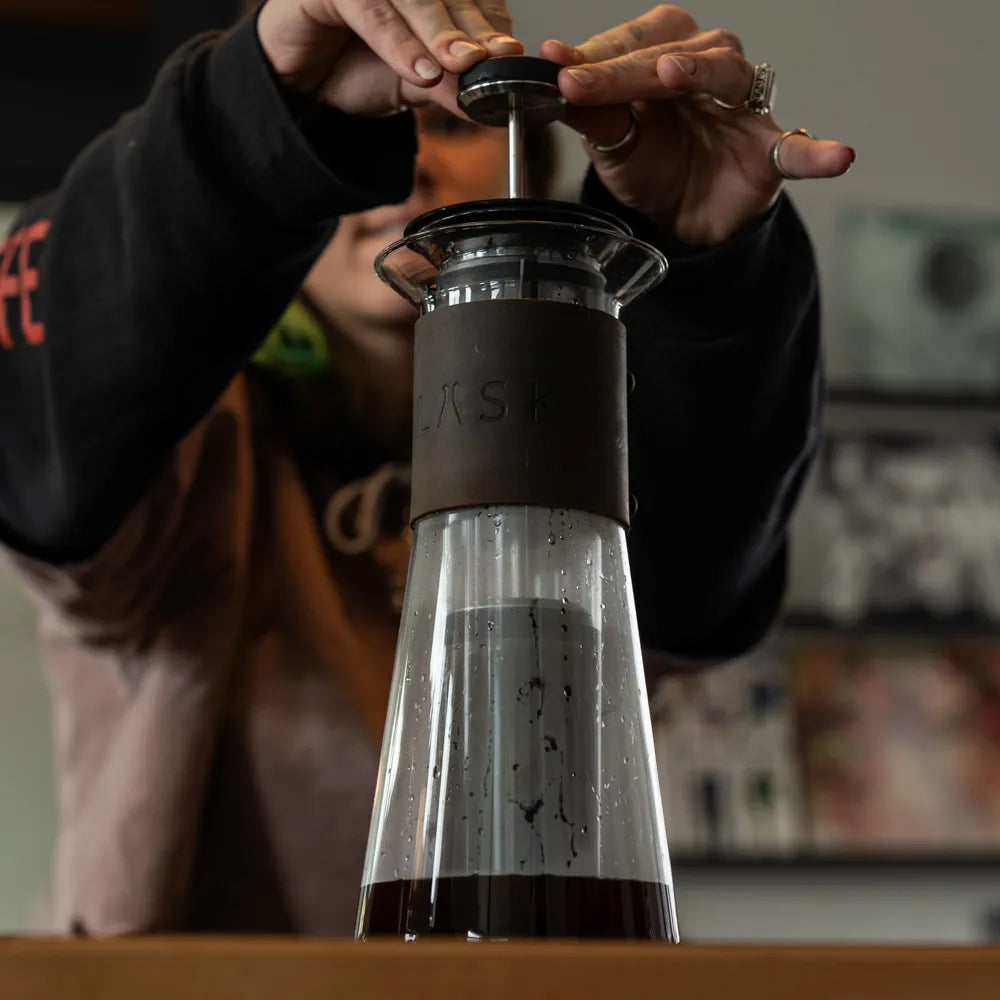
- by Madeline Staples
How Much Coffee for French Press: Perfect Ratios for 2026
- by Madeline Staples
For a balanced French press coffee in 2026, use a 1:15 ratio by weight; that's 1 gram of coffee per 15 grams of water. For a standard 500ml (16 oz) press, you'll need 33 grams of coffee and 500 grams of water. This ratio delivers rich flavor without bitterness, and you can adjust the ratio between 1:12 for a stronger brew and 1:16 for a lighter cup.
This guide walks you through precise measurements, grind size, French press brewing duration, and techniques we've refined over 15 years of crafting coffee gear in Montana. Whether you're brewing at home or packing our BruTrek® adventure press for backcountry mornings, you'll learn exactly how much coffee to use and why it matters.
You'll discover:
The 1:15 ratio is the most widely recommended standard in 2026, confirmed by specialty coffee experts and our own testing across hundreds of backcountry brews. This means 1 gram of coffee for every 15 grams of water, or roughly 6 to 7 level tablespoons of coarse coffee for a 500ml press.
The Specialty Coffee Association suggests a lighter 1:18 ratio (55 grams per liter), but most French press users find this too weak. The sweet spot sits between 1:12 and 1:16, depending on your preference. At 1:12, you'll get a powerful, full-bodied cup with 42 grams of coffee for 500 grams of water. At 1:16, you'll brew a milder, more delicate flavor profile.
Start at 1:15 and adjust from there. If your coffee tastes weak, move toward 1:14 or 1:13. If it's too strong or bitter, try 1:16. The ratio matters because French press is an immersion method; your grounds sit in contact with water the entire brew time, extracting flavor continuously. Too much coffee creates over-extraction and bitterness. Too little leaves you with thin, sour coffee that doesn't justify the effort.
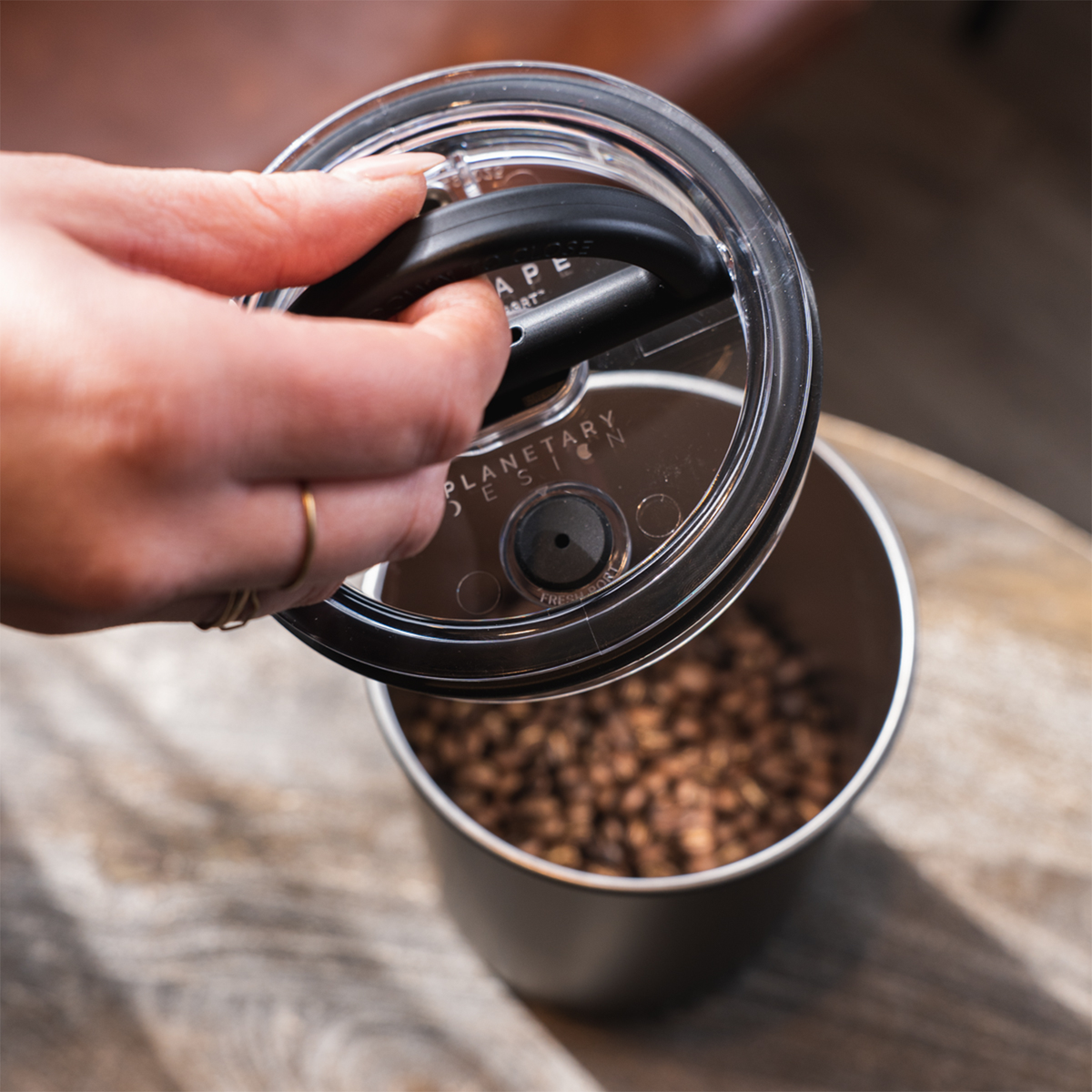
We recommend weighing both coffee and water with a simple kitchen scale. It's the only way to consistently replicate great results, especially when you're brewing in a cabin or at camp, where conditions vary. Our Airscape® storage canisters keep your beans fresh during multi-day trips, so you're always starting with quality coffee that deserves precise measurement.
French press sizes can be confusing because manufacturers label them in cups, but those "cups" rarely match an actual 8 oz serving. Here's what you actually need for common press sizes using the 1:15 ratio:
|
Press Size |
Water (grams) |
Coffee (grams) |
Tablespoons (approx.) |
|
2 cups (~475ml) |
475 |
32 |
6–7 |
|
3 cups (~350ml) |
350 |
23 |
4–5 |
|
4 cups (~600ml) |
600 |
40 |
7–8 |
|
8 cups (~850ml) |
850 |
56 |
10–11 |
|
32 oz (946ml) |
946 |
67 |
13 |
The eight-cup press (32 to 34 oz) is the most practical size for two people or solo brewing with leftovers. It gives you room to bloom the grounds properly without overflow, and you're not wasting coffee if you only want one large mug.
If you're measuring by tablespoons without a scale, use level tablespoons of coarse-ground coffee, not heaping. One level tablespoon weighs roughly 5 grams, but this varies with grind size and bean density. That's why we always come back to weighing. A $15 kitchen scale eliminates guesswork and pays for itself in better coffee and less waste.
For backcountry brewing, our BruTrek® Basecamp French Press is built for durability with double-wall insulation that keeps coffee hot while you break down camp. It holds 32 oz, perfect for the 67-gram measurement above, and the patent-protected design survives the kind of abuse that destroys glass presses.
Coarse grind is the single most important factor after getting your ratio right. French press coffee should look like coarse breadcrumbs or sea salt, not fine like espresso or even like drip coffee. Fine grounds slip through the metal filter, creating muddy coffee and over-extracting during the four-minute steep, which makes your brew bitter.
Coarse grind slows extraction, letting you hit that four-minute mark without bitterness. It also settles cleanly at the bottom when you press, leaving you with a cup of minimal sediment. If you're getting gritty coffee or bitterness you can't fix by adjusting your ratio, your grind is too fine.
Invest in a burr grinder, not a blade grinder. Blade grinders chop beans unevenly, creating a mix of powder and chunks that extract at different rates. Burr grinders produce uniform particle size, which means even extraction and consistent flavor. Set your burr grinder to the coarsest setting and adjust finer only if your coffee tastes sour or weak after you've confirmed your ratio and steep time are correct.
Fresh-ground coffee makes a noticeable difference, but only if you're storing your beans properly between grinds. Our Airscape® canisters use a patented valve system that forces air out and locks freshness in, critical when you're buying quality beans and want them to taste the same on day 10 as day one. Stale beans won't improve with better technique.
Heat your water to 90 to 93°C (200 to 203°F). If you don't have a temperature-controlled kettle, bring the water to a boil, then let it sit for 30 seconds. Water that's too hot extracts bitter compounds. Water that's too cool under-extracts, leaving you with sour, weak coffee.
Steep for exactly four minutes. Not three, not five. Four minutes is the standard that consistently produces balanced extraction across different coffee origins and roast levels. You can extend to five minutes if you prefer a heavier body, but beyond that, you're extracting unpleasant bitterness.
Here's the technique that's become standard practice in 2026:
That crust-breaking and skimming step is the difference between good French press and great French press. It's a technique professional tasters use for cupping, and it dramatically reduces sediment and bitterness in your final cup.
Start with 1:15, taste your results, then adjust in small increments. If your coffee tastes weak or lacks body, move to 1:14 (36 grams of coffee for 500 grams of water). Still not strong enough? Try 1:13 (38 grams for 500 grams). The boldest ratio most people enjoy is 1:12 (42 grams for 500 grams); beyond that, you're fighting bitterness even with perfect technique.
If your coffee tastes too strong, bitter, or harsh, move to 1:16 (31 grams for 500 grams of water). This lighter roast profile works well for bright, fruity coffees from Ethiopia or Kenya, where you want to highlight acidity and floral notes rather than body.
Change only one variable at a time. If you adjust your ratio, grind size, and steep time all at once, you won't know what fixed (or ruined) your coffee. Keep notes for the first few brews; it sounds tedious, but you'll dial in your perfect cup faster and stop wasting beans on experiments.
Remember that darker roasts typically need less coffee than lighter roasts to achieve the same perceived strength. Dark roasts are more soluble and extract faster, so you might prefer 1:16 for a dark roast and 1:14 for a light roast, even though you want similar strength in the cup.
The most common mistake is using fine grounds. Even if your ratio and steep time are perfect, fine grounds create muddy, bitter coffee. Always use coarse grounds that look like breadcrumbs.
The second mistake is over-steeping. Leaving coffee in contact with grounds for six, eight, or ten minutes extracts harsh, bitter compounds. Steep for four minutes, then immediately pour your coffee into mugs or a thermal carafe. Don't let it sit in the press.
Third is not cleaning your press thoroughly. Old coffee oils turn rancid and taint every brew. Disassemble the plunger and screen after each use, scrub with dish soap, and rinse completely. Replace the screen if it's bent or has gaps; a damaged screen lets grounds through and ruins your cup.
Fourth is using stale coffee. French press highlights coffee's natural oils and flavors, which means it also highlights staleness. Buy fresh-roasted beans, store them in an Airscape® canister to preserve freshness, and grind right before brewing. Stale beans taste flat and cardboardy no matter how perfect your technique.
Finally, press too hard or too fast. If you slam the plunger down, you'll agitate the grounds and force fine particles through the filter. Press slowly and steadily over 15 to 20 seconds, using gentle, even pressure. If the plunger feels stuck, your grind is too fine.
You can, but the ratio and process change completely. Cold brew uses a 1:8 to 1:5 ratio (much stronger than hot coffee) and steeps for 12 to 24 hours in the refrigerator. For a 500ml press, you'd use 100 grams of coarse coffee and 500 grams of cold water, steep overnight, then press and dilute the concentrate with water or milk.
Cold brew extracts different compounds than hot water. It's naturally sweeter and less acidic, with lower bitterness even after long steep times. The downside is that it also extracts less complexity; you'll get chocolate and nutty notes, but you'll miss the bright, fruity flavors that shine in hot French press.
If you're making cold brew for camping or road trips, brew a concentrate at home using the method above, store it in an Airscape® canister to prevent oxidation, and dilute it with cold water when you're ready to drink. The concentrate stays fresh for up to two weeks when stored properly, and you'll have cold coffee ready without needing ice or refrigeration on the trail.
For hot coffee in the backcountry, our BruTrek® line is built for adventure. The Basecamp French Press keeps coffee hot for hours thanks to double-wall insulation, and the shatterproof construction survives drops, freezing temperatures, and the chaos of a packed backpack. It's the press we take on every Montana trek because we know it won't fail when we need it most.
Use 13 level tablespoons of coarse-ground coffee for a 32 oz (946ml) French press at the 1:15 ratio. This equals roughly 67 grams of coffee. If you want a stronger brew, use 15 tablespoons (1:12 ratio). Always level your tablespoons; heaping measures throw off your ratio and create inconsistent results.
You can place a paper filter (like an AeroPress filter) on top of the metal screen to trap fine particles and oils, creating a cleaner cup with less sediment. This technique gained popularity in 2026 among coffee enthusiasts who want French press body with pour-over clarity. It's optional; traditional French press includes those oils and some sediment, which many people prefer for the fuller mouthfeel.
Bitterness comes from three sources: fine grind, over-steeping, or water that's too hot. Switch to coarse grind, steep for exactly four minutes (not longer), and use water between 200 and 203°F. If you've fixed all three and still taste bitterness, reduce your coffee amount slightly; try 1:16 instead of 1:15. Dark roasts are also naturally more bitter than light roasts.
You can, but it's not ideal. The coffee bed will be too shallow for proper extraction, and the grounds will cool faster. If you regularly brew single cups, get a smaller press (3- to 4-cup size). If you already own a large press, use the minimum amount that covers the bottom by at least half an inch, roughly 15 to 20 grams of coffee with 225 to 300 grams of water.
Pour your coffee into a preheated thermal carafe or insulated mug immediately after pressing. Leaving it in the press continues the extraction and makes it bitter. Our BruTrek® Basecamp French Press solves this with double-wall insulation that keeps coffee hot for hours without over-extracting, since the insulated walls prevent heat from continuing to brew the grounds once you've pressed.
The 1:15 ratio gives you a reliable starting point, but your perfect cup comes from experimentation. Start with 33 grams of coarse coffee and 500 grams of water at 200°F, steep for four minutes, break the crust, skim, and press slowly. Taste your results. Adjust the ratio in small increments until you hit the flavor you want, then stick with those numbers.
Great French press coffee requires three things: fresh beans stored properly, precise measurement, and consistent technique. We've spent 15 years building gear that supports all three, from Airscape® canisters that lock in freshness during multi-day trips to BruTrek® presses built for backcountry durability. Your coffee deserves the same attention to detail you give your outdoor gear, because the best mornings start with a cup that's worth the effort. Start weighing your coffee today, and you'll taste the difference tomorrow.
Best Way to Store Cannabis Buds: Complete 2026 Guide
French Press vs Moka Pot: Which Brews Better Coffee?

How Much Caffeine in Different Teas: A Complete Guide
Best Weed Storage Containers: Keep Cannabis Fresh Longer
Odor Proof Storage Containers: What Works and Why
Share:
The Perfect Pair: Airscape® and Your Moka Pot
How to Brew Coffee While Camping: 7 Methods That Work